Follow Us on Google
By Steve Agbota [email protected]
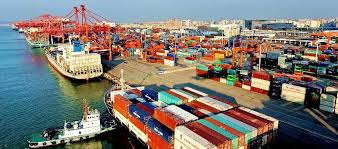
For decades, the eastern ports struggled to compete favourably with Lagos ports due to many challenges associated with them. The eastern port comprises Rivers, Onne, Calabar and Delta ports.
The ports have been witnessing low cargo throughput and patronage as a result of high freight rates as shippers choose Lagos as their preferred destination because it is cheaper to bring in cargo to Lagos ports than any of the eastern ports.
Due to freight differential, low infrastructural development, extortion by louts, insecurity, road networks and other technical challenges associated with these ports, international shipping firms have placed high-risk rating in the freight charges, a situation, which has made cost of shipments to the ports uncompetitive.
According to stakeholders operating at these ports, the reason importers prefer Lagos to eastern ports is because of cost. For instance, while it costs $1,500 to ship goods from China to Lagos, the same consignments going to Calabar costs between $4,000 and $4,500. Apart from insecurity and high freight rates, Daily Sun learned that the ports also have the challenge of berth depth, which is between six and 11 meters compared to that of Lagos which has berth depth ranging from nine to 13.5 meters.
A standard berth in other West African countries like Ghana is 19 metres, Togo, 16 metres, Cameroon, 16 metres and Cotonou, Benin Republic at 15 metres.
With this technical deficiency, the ports at the eastern and delta coastlines would not be able to take size of container-bearing vessels that normally call at standard ports, except for specialised vessels constructed as flat bottom which many international shipping firms have not been willing to use.
Meanwhile, stakeholders in the maritime industry have attributed the situation of the ports to government neglect despite the huge potential for development of the areas and the Nigerian economy.
Speaking with Daily Sun on why the eastern ports are not witnessing much activities like Lagos ports, the national president of the Association of Nigerian Licensed Customs Agents (ANLCA), Mr. Emenike Nwokeoji, who operated at one of the eastern ports, said the activities at these ports are not like Lagos. He said: “Lagos is a bigger market, If you drop a container in Lagos, one of your customers might come from neighbouring countries like Ghana. When you get to the border and you see trailers buying goods and going out of the borders, we don’t have that luxury in Port Harcourt or the eastern ports unless you talk of Calabar where some people come from Cameroun to buy.”
According to him, the major issue is the freight differential, adding that taking cargo from any part of the world to Lagos is cheaper than taking it to eastern ports.
He said because of that alone, the importer even before the cargo leaves is already there, that is the difference and everyday the thing is widening because the turnaround of a vessel is what matters to the shipper.
“We can load this vessel today within one week to go to Lagos instead of keeping it for three weeks to get enough cargo that will take him to the eastern ports. But if they are to pick cargo from Lagos and then then the east, it means they are going to call on two ports which means making double payments.
“You will pay for the call in Lagos and pay for the call in Port Harcourt, which is additional expenditure. It’s just freight differential that is the main cause. Before now, it wasn’t like that, but this started just like a joke when structural adjustments in cargo traffic to Nigeria dropped. So, the shippers will now say, okay, can we discount some money for you and drop it in Lagos for you and you can clock it to any part of the country? That was how it started and it was compounded by insecurity during the militancy dayy. Some ships or ship owners said their ship will not sail to the south because of what they read about the south-south. So, the few that were determined to come, claimed that they were paying a lot of money to some people,” he explained.
Nwokeoji said they pay money for unofficial security protection to access the ports and for that, the cost of freight to the east was raised.
He further revealed that up till now, ships coming to Lagos bay arrive faster than those going to the east because it takes longer to get enough cargo that can feed a vessel in any of the eastern ports.
“A vessel is not like a car. If you have a capacity of 400 containers, you can just put it with 100 containers going to the east,” he added.
Meanwhile, a clearing agent, Samson Ovie, said freight in the eastern ports is higher because shipping companies add extra charges on cargo going to eastern ports even when the issues of militancy had subsided.
“Though we still have issues of indigenes extorting traders and collecting illegal fees around these ports but that does not warrant the high freight rates by these shipping companies. These are the issues the authorities have look at and resolve if they want any the port in east to be viable.
“Two, insecurity and other technical problems are the reasons why importers are not patronising these ports. Importers are scared of bringing their cargo here. There was a time once you scheduled your vessel to any of these ports, they would tell you that they have to increase the freight rate. These are the issues we are facing here. We are grateful for the few ones bringing their cargo here because it is through them we have little work to do to feed our family,” he added.
He said the government has a lot of work to do in order to open up these ports and make them viable.
However, a freight forwarder, Tochukwu Eze, said Lagos being a hub, is one of the reasons importers take their consignments there.
According to him, the market is in Lagos and traders would like to go where they would sell their goods in time and make more profit.
“Apart from Lagos being a hub, it is easier and cheaper for any importer to get their goods cleared from Lagos ports and that is the reason they prefer going there. Ease of business in Lagos ports cannot be compared to other ports in the east or any other part of the country because they make trade facilitation easier there.
“Eastern ports struggle for cargo because they do not have the markets like the Lagos does. Again you know it is cheaper to use Lagos ports because freight charges are cheaper. Lagos ports do not struggle for cargoe like the ones we have in the east. So many factors are militating against the eastern ports and government is aware of these issues. That is what I can say for now,” he said.