Follow Us on Google

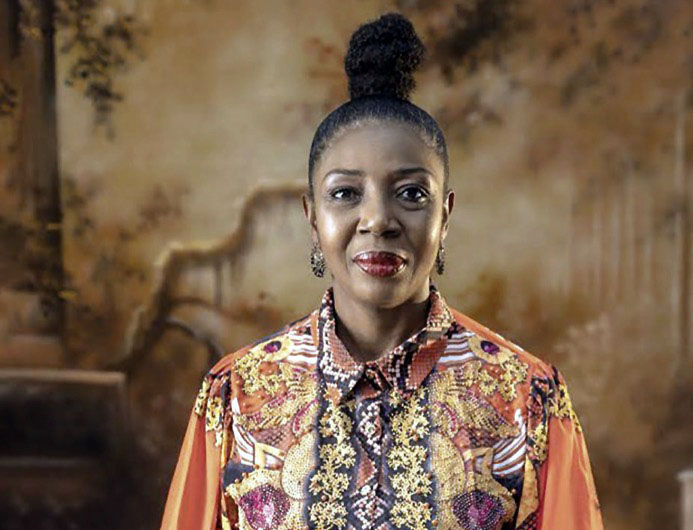
By Josfyn Uba
Broadcast journalism is more than just delivering the news. It is a public trust built on dedication, integrity, and passion. Few embody these virtues quite like Mrs. Stella Anwulika Amata, retired head of marketing at the Delta state broadcasting service, Asaba.
After years of experience telling the stories of Delta State through presentation of programmes and marketing, Amata told Daily Sun recently of her foray into the electronic media.
In her words, “we didn’t have a radio not to talk of television but I loved reading. It was from novels that I came across words like Journalists, broadcasters, air stewards and their glamorous lifestyles and I longed to be one”
Even though, earlier in her childhood, her maternal grandfather, Diokpa Ashiedu Diji, a world war 11 veteran, who cooked for the soldiers in Vietnam, had recognised her flare for reading.
“He would buy newspapers and make me read to him because he couldn’t read but understood English language. I was also reading letters from my uncles and aunts and replying them too, for grandpa. So, in retrospect, I would say that while grandpa sowed the seed of broadcasting in me, it was watered by the novels I read in my teenage years”.
Stella Amata shares her journey and her proudest moments behind the microphone,
Stay tuned—you won’t want to miss this conversation.
Let’s recall how you came into the broadcasting profession. Did broadcasting find you by accident you or you sought it?
I sought broadcasting like kilode as we say in Nigeria. As a girl growing up in the rural village of Onicha-Ugbo in Delta State, we didn’t have a radio not to talk of television. But, I became enthralled and obsessed with becoming a broadcaster from the pages of the novels I read then. I had a cousin who was a student of the University of Ife then, so, every holidays, he brought home stacks of novels ranging from Jackie Collins, Jacqueline Susann, James Hardly Chase et al.
And I loved reading. So, it was from the novels that I came across, for the first time, the words such as Journalists, broadcasters, air stewards and their glamorous lifestyles and I longed to be one. Although, earlier in my childhood, my maternal grandfather, Diokpa Ashiedu Diji, a ‘World War 11 veteran and a cook for the soldiers in Vietnam, had recognised my flare for reading.
He would buy newspapers and make me read to him because he couldn’t read but understood English language, a habit I guessed he must have imbibed from the white colonialists in his numerous travels across the seas. So, from when I was in primary 3, I was already reading to grandpa his Newspapers and letters from my uncles and aunts and replying them too, as grandpa would dictate to me.
So, in retrospect, I will say that my grandpa sowed the broadcasting seed in me and it was watered by the novels from my cousin. It is said that all things works for good for those who put their trust in God. I can’t forget one of broadcasting greats at the then, Bendel Broadcasting service, Chief Philip Chiazor. He facilitated my employment. Above all, I glorify God for granting me my heart desires.
Give me a sense of your first day on air…and who were your role models?
I was originally employed as a staff member in the Marketing department. But, I continued to nurse my dream of going on air. So, whenever I was alone in the office, I would read the day’s newspapers out loud as I used to do with my grandpa. What I didn’t know was that one of my senior colleagues, a producer, had been monitoring me and had taken interest in my unusual habit.
So, one evening while I was on afternoon shift, he came back to the office and handed me scripts to read. Of course, I delivered them perfectly, prompting Mr Alfred Omagbemi to offer me my first break.
He used to produce a 30 minutes program, Delta Panorama – featuring news and events that took place within Warri and it’s environs and sent to our headquarters in Benin – City for airing. Recall that at this time, the then Bendel Broadcasting Service was located in Benin City and Warri was an outstation. So, reporters in Warri were to cover activities in Warri and it’s environs, record and send the tapes to the Studios in Benin for airing
So, you can imagine my joy when the tapes carrying my voice were aired across the whole Bendel state. The feeling was indescribable. Like, it was finally happening. Oh, my goodness!
And after the creation of state, when we could broadcast from Warri studios, Mr Eric James put on the 6am Radio news. There were literally fireworks. When the TV studios were set up, Mr Joe Isiekwene argued that I was ‘ripe enough ‘ to be on television and that was how the award winning programme called ‘Showcase’ was created and I became the anchor person. That completed the circle for me.
Was there any time that you considered throwing in the towel for whatever reason?
There was never a time like that. I was so in love with broadcasting that nothing, absolutely nothing, not even, a demotion could dim that love.
When DBS made the push toward digital migration and expanding its footprint online, what were the biggest roadblocks you faced, and what advice would you give current state broadcasters trying to compete with private stations?
As head of marketing then, the 1st digital migration we did was with Metro digital. I think they were the first digital company to be introduced in Nigeria, so, we hopped on the idea. Later, when Star times debuted, DBS hooked up with them. That was before I retired from service and it’s been seven years now. Honestly, I don’t know. Therefore, cannot speak on what the current situation is now.
But, what I would say for sure is that, State owned media houses should remember that, first and foremost, they are the bridge between their government and the people, therefore, their priority should be, to help the people understand what government is doing, on – health care, schools, policies etc.
They will be less maternal deaths if the people knew that government has provided free health care for pregnant women and children up to 5 years of age, the importance of immunization and that it is free, that no child should be out of school because there’s free education in Basic and Secondary schools.
On the flipside, they should also send their reporters, correspondents or agents to the various villages to ascertain if these government policies are functioning as they should, if not, state the people’s concern unambiguously to the government. It’s not enough to state only the government’s angle while leaving out the people. The people, their opinion leaders should feel free to tell their stories. State owned media should of necessity; promote indigenous languages, cultures of their state for it is through their broadcasts that we can maintain them.
DBS I know for sure still reads the news in all the major ethnic languages in Delta State as well as programme presentations. These programmes should be sustained so that we don’t lose our cultural heritage. It is my opinion that state owned media should continue to put the people first and therefore, should still broadcast on terrestrial even though they want to go digital, so that the people will have free access to government policies! State run media has its own audience and should focus on satisfying them, they provide special and specific services to the people and have no need for comparison with privately owned media outfits, which are profit driven.
Can you share a specific instance early in your career where your capability was underestimated because you were a woman, and how you turned that challenge into a leadership lesson?
I never had such an experience. Apart from the fact that some men would always try to shoot their shot so to speak and some unscrupulous ones would want to threaten you but I never gave in to their sexual overtures. I remember one incident that occurred after I started voicing Delta Panorama, one of our managers came from Benin to Warri to meet me in person. He came during office hours, we all received him and he called aside and promised to make me a star by giving me more programs to present, I thanked him. He then invited me to his hotel. I accepted his invite and showed up with my boyfriend. He was livid with anger. We drank up what he offered us and went home.
Now, in retirement, how worried are you about the future of professional credibility in Nigeria?
I worry about the level of professionalism and credibility. We are losing them very fast. Journalism broadcasting has become an all comers affair and it is saddening.
Most people just jump into the studios and begin to do what they like. Professionalism has been thrown to the dust. Presentation unit is the worst hit. You hear all manners of unpreparedness on the part of the on air personalities, from their voices, to their delivery of the news or adverts.
As a veteran, from the way they take the news, I am able to accurately decipher if an announcer had settled down, taken the time to study the bulletin prior or merely rushed into the studios. Indiscipline is the order of the day. These days, they quarrel with their guests on air, they no longer stay neutral. We were taught not to take sides, research your topic and get an expert (s) on the topic. You are the anchor person, be in control but be civil. Dig deeper with your questions and allow the expert the opportunity to provide answers that will help the viewer to take a stand. You don’t have to force your views down their throat, right?
In all, there is the need for total overhaul of our beloved profession. Training and retraining cannot be over emphasized. The training schools of those days should be revitalized. Retired but not tried veterans should handle the training and impact the ethics of the profession to the younger generation. From my experience, that classroom setting would be more effective than in-house training.
How are you channeling your decades of media and administrative experience? Are you involved in mentoring younger women?
Of course, I don’t believe that true professionals ever fully retire! It’s a passion not a job. It is a way of life for some of us and it’s till death do us part. I am involved in trainings, in consultancy, in programme and production of advertisement materials. I will continue to upgrade my knowledge by attending seminars, workshops in and outside the country. I believe that she who waters should be watered too otherwise, you become rustic and outdated. Times are constantly changing. Therefore, you have to evolve.
What does fulfillment mean to you upon retirement?
Fulfillment to me means seeing the fruits of my labour flourishing and blossoming. When I look back from where I came from and where I am now, I marvel at God’s faithfulness. I have found fulfillment in my passion and love for broadcasting – it’s a dream come true for me.
Broadcasting gave me a voice and a recognisable face in my state. Above all, I am thankful for all the opportunities that broadcasting privileged me. I am thankful to the men and women that I met in the course of my career, the doors that it continues to open for me.
One of the greatest gifts that God blessed me with through broadcasting, was sending a blind young man, Augustine Ubaka, to my office in 2007, who refused to be handicapped by his circumstances. God used me to tell his story to the world after which he was offered automatic employment in the civil service. Today, he is well established.
What would you like to change in modern day broadcasting services?
If I have the chance, I would like to change our attitude towards the profession. Broadcasting should be highly respected. It should be given it’s pride of place among other professions such as the legal profession. Practitioners should be well paid and remunerated.
I want to see standard broadcast equipment installed by state governments.
Governors should patronise their states’ broadcast outfits. If you equipped your state’s media houses, they’ll compete favourably and it will be to your advantage as your primary constituency will be abreast with your developmental efforts.
A standard, functional and well equipped state owned media outfit will attract advertisers, thereby boosting internally generated revenue. State governments should revisit and revive the special allowances paid to shift workers, journalists and wardrobe allowances to both TV presenters and marketing staff members.
The issue of training and retraining can never be exhausted. Merit based employment to specialized departments too.
What was that singular thing that you couldn’t compromise with visa vis your career given the demands of your work schedule?
I couldn’t compromise my dedication and professionalism.