Follow Us on Google
By Agatha Emeadi
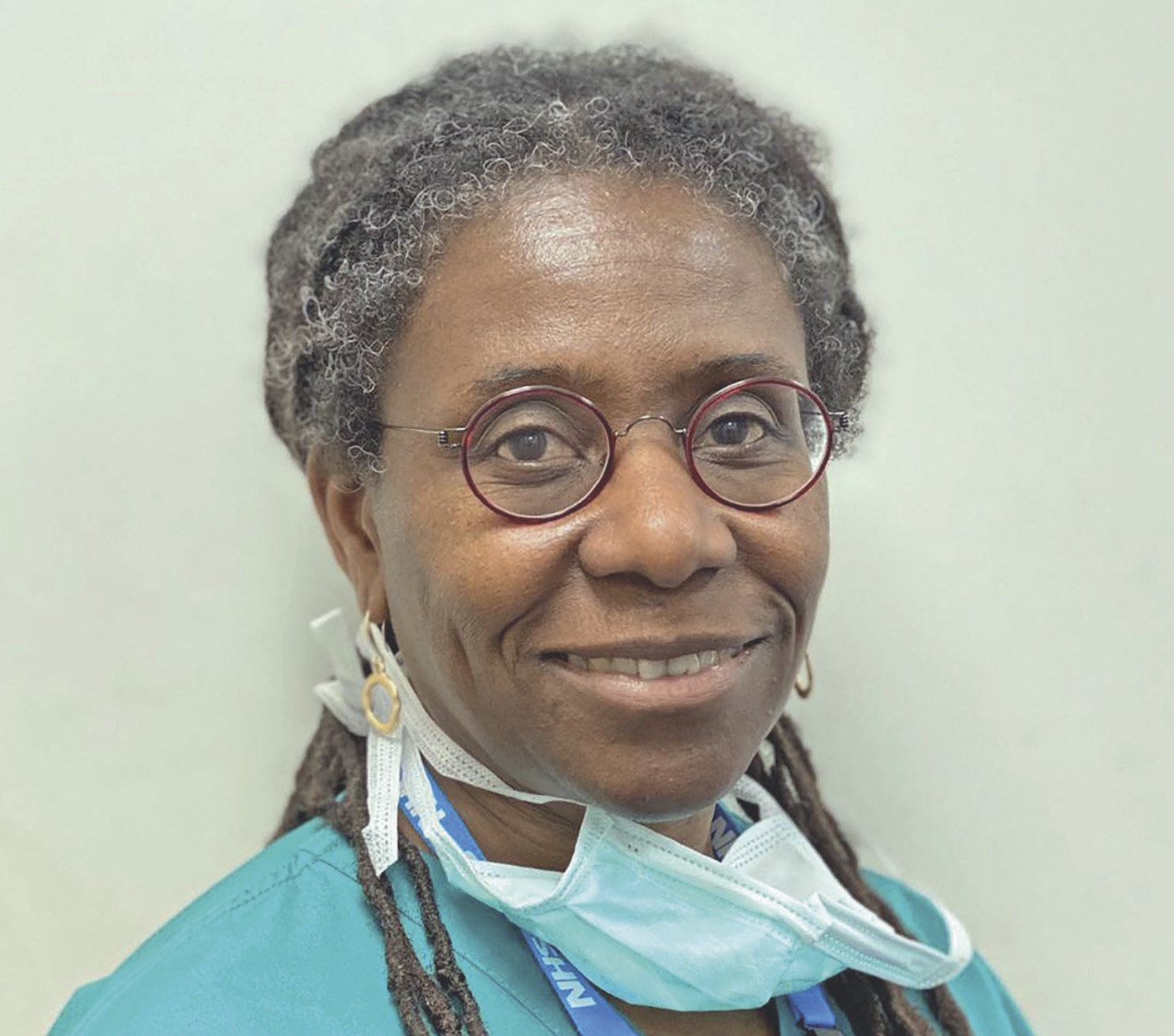
Dr Ngozi Uduku is a respected medical practitioner in United Kingdom, where she has resided for over 50 years.
She is highly regarded for her work at Woodlands Health Centre in London, where she provides various health services.
Dr Uduku was recently in her hometown, Umuahia, the Abia State capital for the burial of her mother.
At an encounter with the reporter, Uduku counselled the Nigeria government on what to do to retain trained doctors. She also informed that if government meets the appeal, most Nigerians medical professional would gladly return to Nigeria.
You have been away for a very long time from Nigeria for between 30 and 40 years…
No. I have been away for 56 years from Nigeria. But I do visit. I was in Nigeria in January 2025.
The last time I was in Umuahia was in January 2025. I am more regular in and out of Umuahia than I am in Lagos. I visit Umuahia more than I do Lagos. I only pass through Lagos.
You just came from Umuahia after your mother’s burial. Were you not afraid of insecurity?
When I was coming home in December, there were lots of rumours about security problems in Nigeria as a whole. But it was very safe once I got there. I was not particularly worried. I mean, there were lots in the media about security, but I did not experience any problems with security. I actually have not had any problems with security at any time ever in the east.
I had security details, but they did not stop me from going anywhere. We went round to see relatives and others.
I went usually with my sisters. We did have a security person who came with us, but we never needed them. So sometimes I just went on my own. It is very peaceful and calm. Again, it was Christmas. Well, it has always been, but there was no insecurity anywhere at all. We flew to Enugu and drove to Umuahia by road. There was a time when I went all around Umuahia, Amakama, all over the place.
What was the experience like? Did you see any changes?
Yes, there are lots of new buildings. But still, it was Christmas time. It was quite festive really. Lots of people went to campgrounds, so it was fun.
Which schools did you attend?
Every school was in England.
What does your profile say?
I am the lead General Practitioner at Woodlands Health Centre in London. That is my specialty and my expertise. So, I have a practice of a medium-size, not a large one, not a small one. I have 12,000 patients under my supervision. They come for their medical care to me and our practice. It is just an organisation organising the healthcare. I have other doctors working under me.
There are many Nigerian medical practitioners in the UK – doctors, laboratory scientists, nurses, pharmacists., radiographers, dentists etc. They find it more comfortable to work in foreign and organised countries. Why is it so?
Well, they get paid for what they do. The important thing is they do what they want in life. They feel they can get it abroad, compared to Nigeria. So, they get paid more, they get paid regularly and there are facilities and equipment to work with. They feel more secure and safer. That is the reason.
How do you think Nigerians can stop medical tourism in the near future?
Well, I think this can be an organised society. And it is. People organise what they have around themselves. It is definitely possible to become even more organised in healthcare and all that. And medical tourism needs to stop because we need doctors in Nigeria. We do not want a lot of doctors leaving in droves.
So what can we do so they don’t run away all the time?
Well, we need to influence government to prioritise medical professionals. Pay them well. Encourage them to stay in the Nigeria home. Give them things that they need. Educate them, be sure of their safety. I mean, ask them the things that are most important to their lives and offer them those. Educate their children. Good payment and security. That is what most people abroad actually want to hear and come home.
But do they really want to come home?
Yes.
Why?
It is safer to come home. Most of them come on holidays because it is more comfortable here. It is more relaxing here than abroad. It is just that they do not want to risk their lives by coming home for the fear of being kidnapped, robbed or armed robbery attack etc. That is what frightens people. And they definitely do not want their family and children to do that either. That is what frightens them. So, if you remove all that, they will come home.
Growing up, did you plan to be a medical doctor or was it by chance?
I have always wanted to be a doctor. Ever since I could talk or walk.
What was the attraction?
My dad was a medical doctor and my mum was a nurse. So that is how I knew them.
Did you admire his white coat and stethoscope on his neck?
Yes. And his friends too were doctors as well.
What has been the high point of your life?
I think getting into medical school and graduating as a doctor is one of the high points of my life. Again, my sports activity. I am a founding member of a black skiing group where we come down and go on mountains, sledges and poles. I do that up till now. So, one of my high points is actually starting a group for black people in the UK. We started with nine members and now we have over 2,000 members.
What does that mean? What do you people do?
It means that about two or three times a year, we all go away on the mountains and we ski down the mountains on our skis. We compete amongst ourselves, like-minded people. We talk about things that we are doing in life, future projects, people and associations. It is like a group of people having fun. We do nothing but just top the mountains ourselves, do sporting things. That is one of my life achievements actually. It is also way of getting to know what is happening in another area without being there.
Over the years of your medical practice, is there a distinct difference between medical practice in the UK and here in Nigeria?
Well, the similarity is that human beings are all the same. Our medical practice has to do with human beings. The Eskimos, Japanese, Nigerian, American, English, have one head, two arms, two legs, a heart, liver. So that is the similarity. The things that might make us different maybe the provision of care that we have, depending on which part of the world you are in. In some parts of the world, if you pay a lot of money, you will get very good care. If you cannot afford anything, you probably get very poor care. So, in America, if you have a lot of money, you get the best in America. Literally the best in the world, but again, it is about hospitals. In somewhere like England, if you do not have any money, at least you get the basics of healthcare to a standard as well that is determined by the health professional. So, they are quite good in terms of getting standards and working towards a certain standard. If you work below that standard, people will disregard you and think about you negatively. You might even be arrested. In the same vein, if you do not practise ethically, you find yourself in jail and may not be allowed to practise again. So, in England, it is quite good because they are strict in policy, and that makes people up their game and practise within ethical limits all the time. These are standards if one must want to continue working. Whereas in countries like Nigeria and many other countries in the world, doctors can get away with a lot of things. They do not always have to aim high; they can aim sub-optimally.
Are there are good doctors and bad doctors?
You can say that bad doctors get away with things because there is nobody to monitor them. And even if they are caught, nothing really happens. Or they can get away from being penalised. So those are the differences that I think would affect the patient. The laws in England are strict, and they are able to enforce the law. That is why people have to behave themselves. It is not because they are necessarily good people. It is just that they have to, because if they do not, they get struck off. Whereas here in Nigeria, you could get away with things. I think that is the difference. Obviously, if you are working in an organised sector where you can easily get all your medications attended to without much cost; then the doctors can offer you all those services when you need it. If you are someone who has to pay for all those things, then you may not be able to afford them. The pain of illnesses is the same. It is just the resources and the law as well.
Have you ever experienced the menace of fake drugs in the UK?
Well, I have not experienced it. But have heard about it a lot in Nigeria when I come around. Well, I often come with a medical mission like a charity group. They come from America and I join them from the UK.
Then, we go to the rural areas and offer free medical services. That enables me to experience medical care in Nigeria. A lot of patients say they have had fake drugs which did not work. Then, we give them the right ones. I have heard a lot about it. I have also seen fake drugs in the UK when people are doing research and all that. They give patients maybe a drug that has no potency and one that does, to see the effects because they are doing research. I have seen it in that sense. Again, we basically have occasions where they are not taking it correctly. But then there was a woman, the late Prof. Dora Akunyili, who tried to minimise fake drugs in Nigeria. But she is dead now.
What is your routine day like at work?
I am a full-time general practitioner. A typical day would be getting up at 7 in the morning, do some exercise by 8am, make my way to my practice. I will have at least 15 patients lined up in the morning to see me every 15-20 minutes, one after the other. And then, I would have a break for lunch and then have some surgery. Within all that I will also do some teachings. I teach other doctors, student doctors, especially those trying to become general practitioners like me. Or even other specialties as well. Other doctors who are trying to pass their exams in order to enable them work in the UK. There is a lot of teaching in my day. Two days a week I do a lot of administration, interviewing, employing, looking at resources, attending meetings etc.
How do you think Nigerian medical practice could be improved?
Nigerian medical practice could be improved in many ways. All over the world, doctors are always revered as if they know a lot, they are knowledgeable, or in positions of power. They are usually middle class or upper class in any society. But then I think some doctors let that get to their head. They actually believe that they are better than other people, when you and I know that is not the truth. There are some good doctors, there are some bad doctors. There are some doctors who are not good people to have around and their practice can be judged accordingly. This is because our main job is to look after people’s health. We are either here to kill people, make them better, or at least improve their suffering. So, if anybody is under your care and you are not making them better, curing them, helping them to live a better life. If they are under your care and you are making them worse, or actually expediting their death, then you are not a good doctor. It is quite straightforward. We are not engineers, technicians, IT people, or fruit sweepers. Our job is purely health. That is what I tell people who want to become doctors. Every single person you see, you try to improve their health in whichever way.
Is there any particular experience that really made you embrace being a medical doctor that you can share with us?
Yes, being among people who have benefited from good medical care, seeing the absolute joy that they have from the experience is enough to motivate anybody. Seeing that you have actually made a difference in their life. Relieving people’s pain, making them feel better cannot be bought. When pain is taken away and all of a sudden, someone writhing in pains starts smiling again, or sleeping beautifully. To actually see that is a wonderful thing. And to experience it over and over again is amazing. To give somebody back their life. You know that if you had not intervened, they would be dead. That is a very satisfying thing indeed. Those are the good things about being in the profession. Whether you are a doctor, a nurse, whatever. You actually make a difference in people’s lives. The satisfaction of actually seeing the difference you make in a person’s life, whether you are paid or not, is golden.
Do you face any form of racism in your practice?
Yes. There is plenty racism in the UK. There is what they call covert racism. Covert racism is racism that goes on that you may not know, but it will be to your face. It comes in form of making sure your children do not get the right class at school. They will be put in lower classes. You do not get an opportunity to work. Maybe you want to study medicine, it will be given to somebody else with a made-up reason which they will still realise the reason is not true. In convert racism, one might be denied full promotion. They will do a lot of unfair things that are purely because of your race. No other reason. And that can be very hidden especially if you are a child, you will not know. You did not get an A’ just because you are a black. You thought that was a natural fact. But no, that is awful. That is covert racism or hidden racism. And obviously and overtly, it is when somebody comes to you and tells you, I do not like you because you are black. Or you cannot go here because you are black; that is very cool. But one does not get much of that and it is still there. So, whichever it is, it is not a good thing. But then, it is just human nature. It is not a new human activity. Human beings have been doing it to each other for years. You just hope and pray that you do not end up being in the group that experiences it. Or better still, that we do not do it to other people because it is not good. I think it is worst for children. I do not like children experiencing racism. If you see two, three and four years, they play happily together. Whether they are Eskimos or Africans, but by the time, they get to five, six, seven, they start noticing that they are actually different. By the time they are 11, 12, something has split into their head. Whereas children themselves are just free.
Did you do a facility tour of Queen Elizabeth Specialist Hospital Umuahia where your mum worked when you were around?
Yes, I did. Whenever I come home from the Bedford Mission, we usually do one or two of our things with the hospital, especially giving lectures because both doctors and nurses are there. This time I was around there because my mum used to work there. So, we did the service for her in the chapel there. Last time I was here, I went round the ward. So, yes, I do pop in and out. It used to be like a single-story building, like a series of long wards. The colonial sort of style. You walk out of one ward to get to the next one. A long, thin corridor. Now they have got one-storey building. They have scanners and various departments. It has become a bit more organised.