Follow Us on Google
The Federal Ministry of Education, in a recent report, says that Nigeria’s out-of-school crisis stands at approximately 15 million.
This alarming figure represents roughly one in every five out-of-school children globally, with the vast majority of these kids concentrated in the Northern region.
In this report, some Nigerians suggested what should be done for Nigeria to come out of this infamy status.
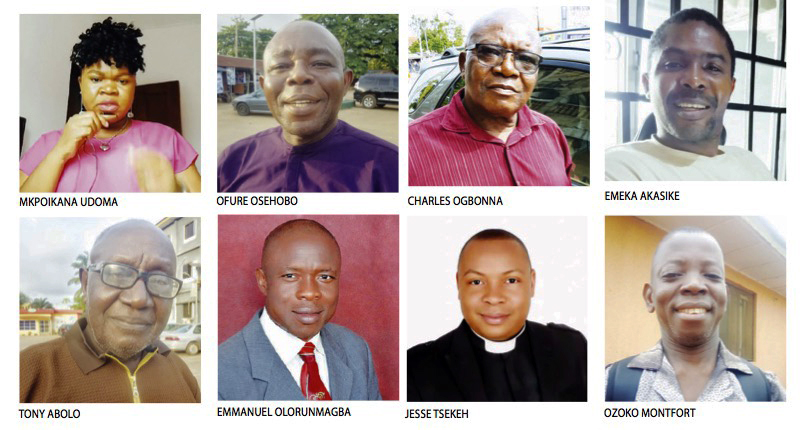
FG should integrate Almajiri system into formal education – Mkpoikana Udoma, public affairs analyst; Port Harcourt
The Federal Ministry of Education’s job is not to publish reports, telling us that 15 million Nigerian children are out of school. Their job is to ensure that the number doesn’t get to this shameful level. To reverse this infamy, the ministry must drive targeted investment in the north, where most of these children are and expand safe community-based schools, scale conditional cash transfers, and integrate the Almajiri system into formal education.
However, due to Nigeria’s peculiarity, this won’t work without legal backing that compels politicians and political appointees to enrol their children in public schools. Anything outside that law means that those in power will never feel the pain of a broken system and we will never get it right.
Beyond funding, there must be accountability and local ownership. State and local governments should be compelled to enforce the Universal Basic Education Act and publish real enrolment data, while partnering with traditional and religious leaders to shift cultural attitudes toward schooling.
If education is treated as a national security and economic priority, and leaders are forced to use the same system they control, Nigeria can cut this number drastically and stop being an outlier among nations that has everything to be developed.
Govt should have a plan to reactivate educational intervention programmes – Ofure Osehobo, veteran journalist; Benin
I don’t think there’s anything to be shameful about. Nigeria is a developing country. I think over the years, some of the policies of the federal government, such as the Almajiri educational programme which was made to reclaim Nigerian children from the streets, suffered a setback.
I’m very sure that looking at these statistics, the government has a plan in place to reactivate intervention programmes like this to make Nigerian children to be better educated and be part of the system going forward.
That’s why I said, there’s nothing to be ashamed about. Nigeria remains a developing country. Developing countries have challenges. And this is one of the challenges that our country has as a developing country.
When political leaders stop looking for slaves – Tony Abolo, political analyst; Benin
When the political leaders are tired of looking for slaves, then the problem will be solved. They want slaves and that’s what is happening. And the only people who will be slaves are those who are out of school. They are not thinking, they don’t have education, and are impoverished. Then they will now serve the political leaders. It is a Nigerian system. Who is going to remove it?
Govt should stop terrorism that has forced schools to shut down across north – Emmanuel Olorunmagba; cleric; Kaduna
Other News
It is a national disgrace that a country blessed with enormous human and natural resources is still battling an out-of-school population of about 15 million children. This ugly reality is the direct result of years of failed leadership, misplaced priorities, corruption, insecurity, and the abandonment of public education by successive APC-led governments. While politicians waste billions on luxury convoys, foreign trips, and endless political campaigns, millions of children in Northern Nigeria and other disadvantaged regions roam the streets without access to classrooms, teachers, books, or even safe learning environments. No serious nation can develop when its future generation is left in darkness, poverty, and illiteracy. The so-called “giant of Africa” slogan has become meaningless when our children remain among the poorest educated in the world.
Nigeria can only come out of this shameful situation through urgent and deliberate reforms driven by responsible leadership.
Firstly, the government must declare a national emergency on education and massively increase funding for public schools, especially in rural and insecurity-prone communities. Security must be strengthened to stop banditry and kidnappings that have forced many schools to shut down across the North. We must also introduce aggressive education support like: free uniforms and learning materials, and conditional support for poor families so that poverty will no longer keep children out of school. Teachers must be better trained, motivated, and properly paid, while state governments that fail to prioritise education should be held accountable by the people. Most importantly, Nigeria needs leaders who genuinely see education as an investment in national survival, not as another avenue for political propaganda and contract sharing.
Govt must criminalise children of school age dropping out of school – Charles Ogbonna – journalist; Aba
Nigeria, from my own assessment has not fared better in any sector; failure has appeared to be her middle name. For a country that is supposed to be ranked among developed countries of the world, to be faced with out-of-school crisis that stands at approximately 15 million is unfortunate. For government to tackle this embarrassing problem, it should apart from making basic education free, enact laws that will make it an offence for children of school age to drop out of school no matter the area of the country they come from. This law when enacted should be strictly implemented.
Govt should create jobs for school leavers – Emeka Akasike, businessman; Aba
The country has been grappling with this out-of-school crisis since independence, but the figure released by the Federal Ministry of Education in its recent report, shows the problem has assumed an alarming dimension. A figure of about 15m children out of school in a country of 200 million is by no means a small figure.
I must tell you that with the way things are in Nigeria, going to school in the first place appears to a disservice to oneself. Someone will go to school, spend huge amount of money and time, at the end he or she will not see work to do; those who did not go to school will be better off in most cases.
For this crisis to be tackled, Government should create jobs so that school leavers will be gainfully employed after their studies and this will encourage the younger ones to go to school.
Security around schools must improve – Rev. Jesse Tsekeh, cleric; Makurdi
Nigeria can start reducing this number by making basic education free, safe, and practical at the community level. That means fixing dilapidated schools, providing free meals and learning materials, and recruiting more qualified teachers, especially female teachers in the north to encourage parents to enrol girls. Security around schools must also improve so children aren’t afraid to attend. Beyond government, religious and traditional leaders should use their influence to change the mind-set that schooling is a waste of time, and link education to local opportunities in farming, trades, and tech.
States should also be held accountable through clear targets and public tracking of school enrolment and completion rates. If we tie federal funding to actual results on the ground, resources will reach classrooms instead of being lost to bureaucracy. I believe if we treat education as a national emergency and act on it, Nigeria can lift millions of children out of this crisis within a decade.
Corruption in education sector should be tackled – Ozoko Montfort, businessman; Otukpo
I believe Nigeria can overcome this challenge if corruption in the education sector is reduced and funds meant for schools are properly utilised. Many public schools lack classrooms, books, and qualified teachers, making learning difficult for children. Government should partner with private organisations and NGOs to improve educational opportunities across the country.
Parents also have an important role to play by encouraging their children to remain in school despite economic difficulties. Education remains the strongest tool for fighting poverty, crime, and unemployment, so every Nigerian child deserves access to quality education.