Follow Us on Google
• Says Lagos-Calabar coastal road will enhance economy
____________________________________________________________________
By Kehinde Aderemi
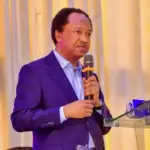
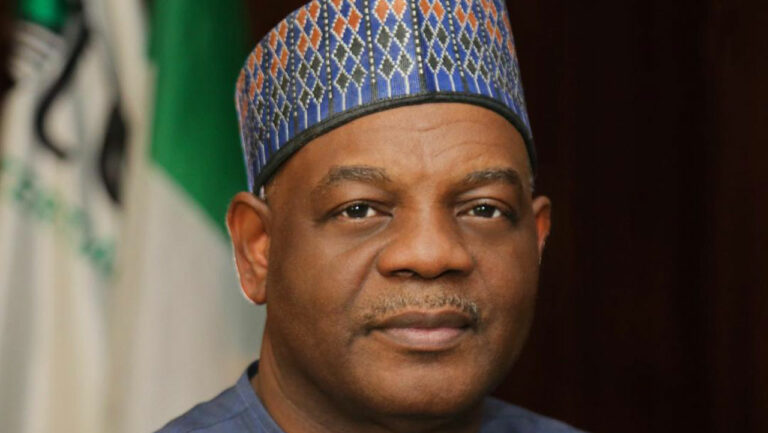
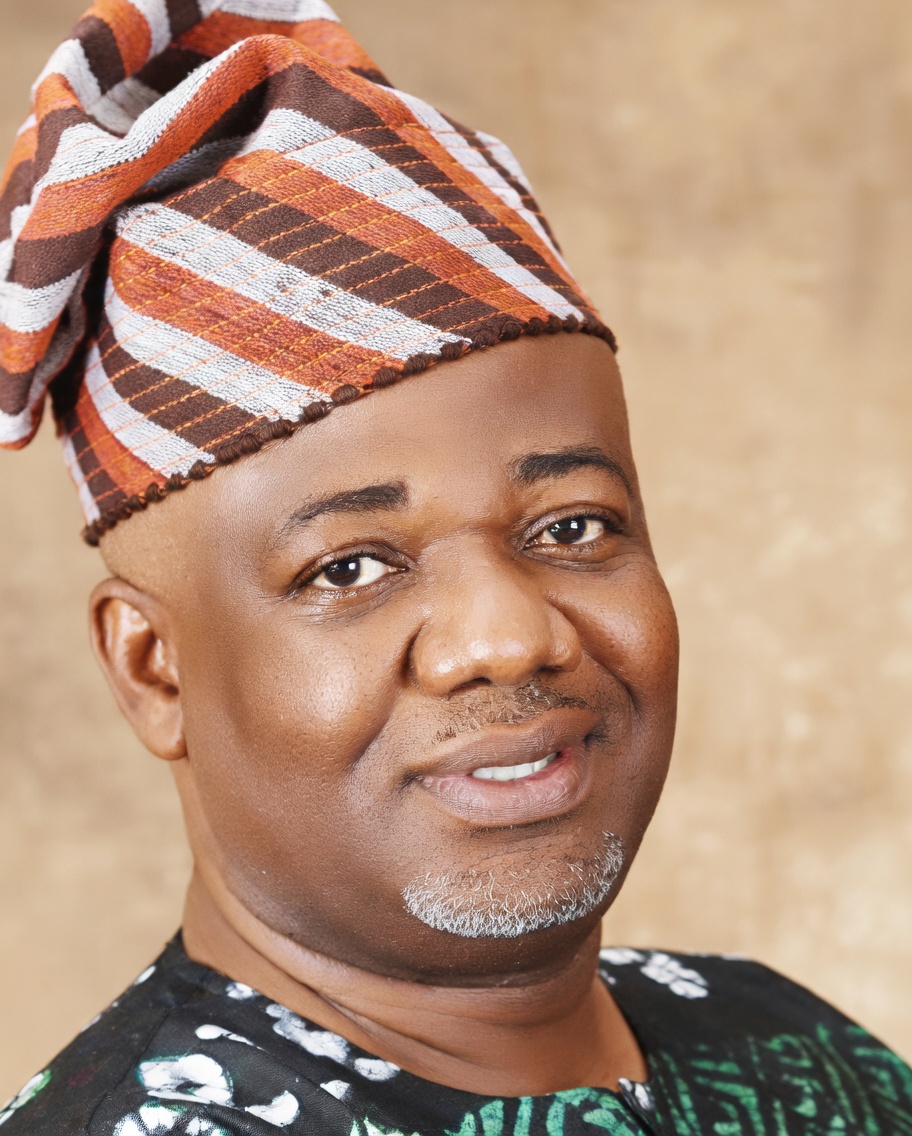
Hon Olumuyiwa Adesua is the deputy chairman of the United Kingdom chapter of the All Progressive Congress (APC). Born in Ekiti State, Adesua has over three decades of experience in the transport sector in the United Kingdom. As a member of the APC delegation from the UK that recently visited the Lagos-Calabar coastal road, he shares his views on transportation and the rail system in Nigeria, giving tips on how they can be improved upon.
You were part of the APC UK delegation that visited the Lagos-Calabar coastal road recently. With your on-the-spot assessment of the work, do you think the federal government has justified the huge cost of the project?
Let me say that the reason for our recent visit to the Lagos-Calabar Coastal road was to have an on-the-spot assessment of the ongoing project and I would like to express my appreciation to President Bola Tinubu, for making this vision a reality. For instance, it took the courage and determination of President Tinubu to embark on this project because history has it that the implementation of the coastal road had been on paper for years. But none of the presidents had the courage to put it into reality until the time of the administration of Tinubu’s Renewed Hope agenda. So, going through the road, I see a road that will connect the economy of Southern Nigeria to the rest of the West African coast. The Lagos-Calabar coastal road is not all about Nigeria because from here you can get to the Republic of Benin or Togo and that is massive.
With this connectivity, I can tell you that the Nigerian economy is opened through this road and I believe many Nigerians will be thinking ahead to see how they can create businesses around this corridor, as well as how they can also engage the Nigerian youth.
The Lagos-Calabar coastal road is not a white elephant project as some critics might say because we use Nigeria’s money to execute this project and Nigerians are engaged to work on it. I have worked in the transport sector in the UK for years, and I know that the biggest employer of labour is the transport sector and this is also happening here.
As someone who works in the transport sector in the UK, what do you see as prospects in this project?
I believe it is money well spent because there is also going to be a railway that is going to be included in the Lagos-Calabar road. With my experiences over the years, I always tell people that rail transport is one of the greatest employers of labour in the world. An efficient rail system has the prospects to create jobs for the people and also engage millions of unemployed people in any part of the world.
For instance, there are many sections in the rail transport system like engineering, marketing. That is buying and selling tickets, the string driver, maintenance engineers, the extract, signallers who deal with the signals of whether the train will cross or not. So, there are about six or seven different departments where you don’t need just one person, you need many people. Even when you introduce technology, you still need a lot of people to man it to make it happen.
And when you are building a rail track, sometimes it could be 100 kilometres, 500 kilometres. You can imagine the numbers of people that will work as well as the numbers of people that will maintain the track. It is also said that every rail track is as good as its maintenance. All over the world, there are qualities and standards to be followed in building a rail track. You cannot build a rail track and say let me just leave it there. It has to be maintained every now and then.
And in the case of the Lagos-Calabar coastal road, I hope by the time the federal government completes the rail track, I believe it will set up a maintenance department. It is very important because the track cannot be left alone without maintenance and renewal. A good example is that of the locomotive rail that needs a track that has been properly maintained. More importantly, there is a need for the National Assembly to create a bill for the maintenance of projects like this as the Lagos-Calabar coastal road is not all about our generation alone, but also about the next generation of Nigerians that are yet unborn.
You were talking about the Lagos railway project. What do you have to say about that?
The Lagos railway project is a good and fantastic one. Anytime I am in Nigeria and I am in Lagos, I see how Lagosians usually experience a lot of traffic along Lagos roads, but in the case of a train, the number of people that the train can take at once is huge.
For instance, if you have 500,000 people in a terminal and with an efficient rail system and train services, we can reduce that to let’s say 100,000 in one hour. That is how effective rail transport is especially in a state like Lagos. And that’s why we need to give kudos to former governors of the state, as well as the present governor, Mr. Babajide Sanwo-Olu, for ensuring that the idea and the vision of an effective rail system is materialised to what it is today. And I hope they will get more locomotives into the service.
We can have more. Let’s say every 10 minutes or every 15 minutes, and then we can spread it around Lagos. If we do that in the next 10 years, there won’t be traffic on the streets of Lagos anymore. Because railways can take what a BRT size bus cannot take. You need to take it at a go and it will reduce traffic on the road of Lagos.
Maintenance is a major issue in the traffic sector and air infrastructural development. What do you think can be done to maintain this facility?
I was listening to Governor Sanwo-Olu recently. He said we should see the issue of maintenance as part of the problem of the country. And I agree. Then we must also find a solution.
And what is the solution?
It’s either the government is making laws to insist on the issue of maintenance, or individuals are beginning to set up maintenance companies. For every sector of life in the country, not just transport, even in the health sector. Go to hospitality facilities and you wonder why they have not been properly maintained. In the transport sector, maintenance is very important because at times like last Christmas in the United Kingdom, most of the rail services were shut down deliberately for maintenance.
They shut it down from December 24 to January 2. Not that they were building anything, they just wanted to maintain the system because they believe what they have been using from January 2 to the end of the year needs to be renewed, needs to be maintained, they need to correct things here and there. So, we need to have that maintenance culture. We need to have a maintenance department to make sure we have a train service that is effective.
Tell us about your experiences in the UK in the rail sector, what do you think the government can bring into the sector for positive results?
I have been in the rail industry for about 20 years and I have worked in different departments from the ticket office, the marketing department, to the critical safety officer, to ensuring the signal is working for the train to go through. Where I am now is the construction part of it. I believe we have a lot of capable Nigerians who work in the rail industry like me in the United Kingdom. Someone told me recently that a Nigerian, the lady in LAMATA now, was one of our top engineers with the London underground. I think it was Governor Fashola that brought her here to do that job. And there are many people like that who are capable of helping this country.
The idea is to help the government to reduce unemployment. You will give our young ones a lot of jobs. Those who graduate from courses like mechanical engineering can be employed. I am happy we have a Railway University somewhere in Katsina at the moment. Those ones will have something to do because experience matters in the rail industry.
There are people who have worked in the rail industry for like 40 to 50 years. The government in the United Kingdom will not allow them to retire because they need that experience to be passed on, unless they want to go. Because it’s one industry, no matter the new technology we introduce, you still need the old hands to help you. So, I hope we can begin to push our young ones in that direction.
Maybe we are going to support a lot of them that are in Technical schools or to learn from our universities. We must begin to train our young engineers to develop interest in that sector, so that we can reduce unemployment.
What are the new things that they can bring into the system?
The new things they can bring into the system are to engage private participation. Government will always tell you our budgets are limited. How do we spend this amount of money? And there’s nothing in the rail industry that is just there in the market that will just pick it up, it involves money. So let’s see how we can have synergy with private companies.
Maybe, the government will identify where they want it. Then we can synergise with private companies or businesses and say if you build this and this, it will be 50 years. It will be 30 years. Even in the UK we have it. Government builds the track and the private sector runs it. Government gives it to private individuals, to companies. They come together, buy a locomotive. They build on the track. They sell the ticket. They make money. Government will tell you when you make this money, we are getting this amount. So it could be a 60-40 arrangement.
So, we have to look into all of that because the government cannot be in every business, especially in the transport sector. We must give those in the private sector the opportunity to build the economy. We can set up a regulatory body to ensure that prices are not being increased anyhow, to regulate safety and all of that. But we need the private sector participation for productivity and efficiency.