Follow Us on Google
• NUPRC leads push to hit 3mbpd goal, as Tantita protects oil assets, new investments
By Michael David-Nwadike
The Nigerian Upstream Petroleum Regulatory Commission (NUPRC) is leading the push to hit the 3 million barrels per day (mbpd) goal. The commission’s officials plan to conduct 2026 oil licensing round that include offer include 40 blocks across land, shallow water and deep-water terrains in push for fresh investment into the upstream sector. The sustenance of Tantita Security Services Nigeria Ltd (TSSNL) operations in the protection of national assets, especially oil pipelines in the Niger Delta region equally come handy in the quest to achieve these targets.
It was over two decades ago that Nigeria’s crude oil production peaked at about 2.5 million barrels per day (bpd).
That was in November 2005, according to historical production data, making the country a major force within OPEC and the international oil market. However, despite post-Petroleum Industry Act (PIA), investment efforts, national output, including condensate, has not gone beyond 1.7 million bpd.
But Nigeria is now working hard to ensure that the over two decades milestone is exceeded through new investments and protection of oil assets. The federal government projects three million barrels per day and 12 billion cubic feet of gas by 2030.
A member of the governing board of Nigerian Upstream Petroleum Regulatory Commission, NUPRC, Sunday Adebayo, said: “We have already started in a good direction. One of them is the bid rounds, which were successfully done. New ones will be done that will be bringing in more players.”
Already the Commission Chief Executive (CCE) of the Nigerian Upstream Petroleum Regulatory Commission (NUPRC) Mrs Oritsemeyiwa Eyesan has announced the commencement of the 2026 Licensing Round and offered 40 oil and gas blocks to investors.
“The rig counts have increased tremendously and I see more rigs coming in.
“The host communities that are integrated into the petroleum Industry Act (PIA) are co-operating favourably with the companies operating in their environment.. We also need to look at new horizons because there are some horizons that have not been taken advantage of. The abandoned hosts now want activities to continue in the area, like the Ogoni area. Fortunately, our own chairman of the governing board of NUPRC, Senator Magnus Abe is from there. A lot of activities are happening. And I see more companies, they have more indirect investments.”
The Commission’s Chief Executive Officer, Oritsemeyiwa Eyesan said the announcement followed the approval of President Bola Tinubu and the Minister of Petroleum Resources, adding that the blocks would be open to investors with the required technical competence, financial capacity and commitment to develop Nigeria’s petroleum resources.
“This round offers 40 blocks across land, shallow water and deepwater terrains. I can see my IOC is already making permutations. They are open to investors with the technical competence, financial capability and, above all, the commitment to develop Nigeria’s petroleum resources.”
“We will not rest on our oars. Competition for upstream capital is fierce, and it grows fiercer by the day. Investors have choices. They go where the rules are clear, where the process is predictable and where data can be trusted,” she said.
It is equally important to develop a comprehensive framework for increasing production, expanding reserves and enhancing the sector’s contribution to national economic development.
Achieving these feats requires sustaining on-going oil assets protection and security, infrastructure repairs as well as consistent industry reforms. The operations of Tantita Security Services Nigeria Ltd (TSSNL) in the Niger Delta region is also key, many have argued.
For many stakeholders, the Federal Government of Nigeria’s appointment of Tantita Security Services Nigeria Ltd (TSSNL) to protect oil assets and ensure peace and stability in the Niger Delta comes to play.
President Bola Ahmed Tinubu had appointed Tantita Security Services Nigeria Limited (TSSNL) led by High Chief Government Oweizide Ekpemupolo, alias Tompolo, to protect Nigeria’s oil assets in the Niger Delta region. The appointment was to enable TSSNL, through its security operations, support the national economy in getting the full benefits of oil resources.
The TSSNL works in collaboration with other security outfits to achieve its goals of securing oil assets and ensuring peace and stability in the Niger Delta region.
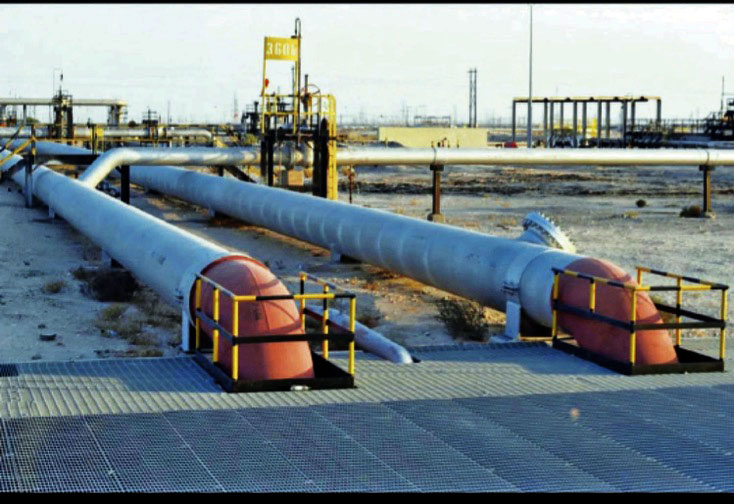
Tantita’s operations had ensured the security of oil pipelines, ensuring the uninterrupted flow of petroleum resources, and ensuring that Nigeria migrated from a position of constant loss management to stability, planning, growth and development.
The TSSNL operations have transformed the oil and gas landscape and allowed Nigeria to expand oil production quota and significantly cut rampant oil theft.
Its track record in mitigating risks associated with oil pipelines has positioned it as a reliable partner in preserving Nigeria’s economic backbone.
As stakeholders advocate for the continued collaboration with TSSNL, the imperative of securing oil infrastructure remains at the forefront of efforts to ensure the nation’s sustainable development.
In the development process of any society, certain assets contribute to the advancement of society and its people. These assets ensure economic or monetary benefits for the people. These assets could be regarded as operating assets, non-operating assets or leased assets, among others.
The impact of TSSNL’s operations was captured in a recent survey, with majority of the respondents attributing the de-escalation of security incidents in the Niger-Delta region to the pipeline surveillance operations executed by TSSNL.
Advisor in the IMF African Department of the International Monetary Fund (IMF), Montfort Mlachila, said Nigeria is already benefiting from the improved oil prices, which has raised the amount of foreign exchange receipts, and therefore reserves have also improved.
Speaking at the 2026 Annual Meetings of the World Bank and International Monetary Fund (IMF) in Bangkok, Thailand, he said the improved liquidity in the economy also supported upgrade of the economy growth from 4 per cent last year to 4.2 per cent this year and 4.3 per cent in 2027.
Also speaking, Director of the African Department at IMF, Zeine Zeidane, said Nigeria is full of investment opportunities. “This is a country that has a lot of dynamism, a lot of young entrepreneurs, young tech-savvy population. So there is, and it’s a large market, very attractive for private investment in general.”
Overview of Tantita’s operations
Other News
President General, Niger Delta Progressive Alliance, Nse Victor Udoh, said pipeline protection enabled national institutions to progress from reactive crisis management to strategic foresight, from temporary containment to durable systems-building, and from uncertainty-driven decisions to calculated national ambition.
“It is important to clarify the role of pipeline surveillance within the wider energy landscape. Energy security encompasses the full value chain, from exploration and production to refining, distribution, pricing policy, and subsidy frameworks. Pipeline surveillance does not manage these domains,” he said.
He added: “Its mandate is precise: safeguarding critical infrastructure that transports petroleum resources. Yet this single function has proven foundational. Without secure transportation channels, production targets falter, refining plans collapse, exports decline, and fiscal projections become unreliable.”
He wrote further: “Asset protection, in this context, is not a supporting activity. It is a precondition for economic order. In effect, the pipeline is the hinge on which the entire petroleum value chain turns. When that hinge is weak, every other link in the chain carries strain. When it is secure, the entire system gains coherence.”
The immediate impact has been operational. Sustained monitoring and rapid response systems have sharply reduced pipeline breaches and illegal tapping. Receipt rates have climbed toward full recovery, with national output rising to levels not seen in recent memory.
This redirection has restored Nigeria’s credibility in international oil markets, allowing Nigeria to reclaim market share lost to Angola and Libya.
“Economic stability follows predictability. When crude flows are secure, refineries can plan feedstock intake with assurance. Export commitments can be met without fear of sudden shortfalls. Gas-to-power projects can operate without recurrent shutdown risks”.
“Investors can assess Nigeria’s petroleum sector with clearer risk profiles. Surveillance therefore does more than stop theft. It reintroduces reliability into national energy planning. And reliability is the bedrock upon which sustainable economic growth is built. With predictable flows, national budgeting becomes more credible, infrastructure planning becomes more precise, and long-term contracts become easier to negotiate. Predictability is the silent currency of modern economies, and pipeline surveillance has begun restoring it,” he stated.
It was stated that further benefits extend into public finance. Higher accounted-for production translates directly into increased export revenues, improved foreign exchange inflows, and strengthened fiscal capacity. Stakeholders noted that national oil company performance in recent years illustrates this shift toward profitability and efficiency, driven in part by reduced losses and enhanced operational continuity.
Investment opportunities in oil/gas sector
Chairman/Chief Executive Officer of Brittania-U, Catherine Uju Ifejika, has been quoted as emphasising the importance of additional investment in mature assets, citing the company’s Ajapa field.
She said more than $400 million was invested after Brittania-U acquired the asset from Chevron, including the drilling of additional wells and deployment of a Floating Production, Storage and Offloading, FPSO, facility.
According to her, the investment enabled Ajapa to commence production at about 2,300 bpd in 2010, followed by increased and more stable output.
The new Nigerian incentives for offshore oil and gas projects have the potential to attract $50 billion in new investment in Nigeria’s offshore energy sector, the NUPRC said.
Nigeria, however, needs upskilled and additional numbers of skilled workers and employees, including in the digital industries, to take advantage of the new offshore opportunities.
Commission Chief Executive of the Nigerian Upstream Regulatory Council (NUPRC), Oritsemeyiwa Eyesan, said at a human resources conference that annual investments in Nigeria’s oil and gas industry have slumped to just $2 billion from $26 billion back in 2014.
Nigeria has shown sustained growth in its crude and condensate output so far this year. Total oil output rose from 1.48 million bpd in February to 1.735 million bpd in June, according to the NUPRC.
Nigeria is actively increasing its crude oil production in response to major global supply disruptions caused by the war in Iran.
“Today we are attracting new investments and so we want to see an upward trajectory. It stands to reason that you must go back to the basics. First of all, we need the right competencies in sub-surface,” she said.
As part of the new investment drive, NUPRC has warned 31 companies that emerged winners of 37 oil and gas blocks in the 2025 Licensing Round to pay their signature bonuses within the stipulated period or risk losing their provisional awards.
The commission issued the warning one month after it hosted the commercial bid conference in Abuja, where the successful companies emerged as winners of the available blocks.
The NUPRC said the process of compliance with the payment of signature bonuses had commenced following the issuance of provisional awards to the successful bidders.
“Exactly a month ago, the NUPRC hosted the 2025 commercial bid conference in Abuja where 31 companies emerged winners of 37 oil and gas blocks. Having issued the winners with the provisional awards, compliance with the payment of signature bonuses has already begun.
“Winners who fail to pay signature bonuses within the stipulated time frame in line with the Petroleum Industry Act will forfeit their bid guarantee and lose their provisional awards to the reserve bidders,” the NUPRC stated.
Under the Petroleum Industry Act and the applicable licensing guidelines, successful bidders are required to pay signature bonuses ranging from $3m to $7m per block.
They are also expected to provide the required guarantees, pay first-year rents and satisfy other post-award conditions within the prescribed period. Failure to meet the requirements will result in the automatic transfer of the affected award to the next-ranked reserve bidder, according to the NUPRC.