Follow Us on Google
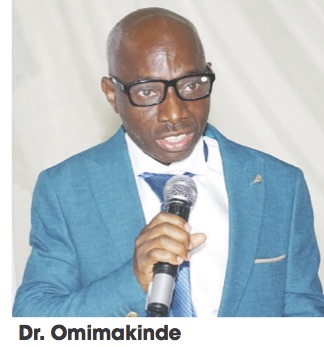
From Isaac Anumihe, Abuja
Nigerian politicians and civil servants have been accused of spending over $100 million yearly on foreign trainings despite Federal Government’s billion of naira investment in establishing institutes that offer similar services.
One of such institutes is the National Centre for Technology Management (NACETEM) in Osun State.
NACETEM was established to serve as a training centre for the development of middle to high manpower on science technology innovation management to all levels of governments and the private sector.
In this interview with the Director General and Chief Executive Officer (CEO) of the institute, Dr John Omimakinde, revealed that the institute which was originally conceived to serve as a training centre for the development of middle to high level manpower on science technology innovation management to all levels of government in the state governments, federal government and the private sector, has become a shadow of itself.
Omimakinde made more revelations in this chat.
Excerpts:
Why was NACETEM established?
It was established, primarily to serve as a training centre for the development of middle to high level manpower on science technology innovation management to all levels of government including state, federal government and the private sector. We are also to conduct policy research, evaluating those policies and reviewing them policies from time to time. The purpose of that is to be able to give sound advice to policymakers on the direction to go.
The other advantage is that we are to produce a data bank. We are responsible for the production of data bank for research and development (R&D) indicators.
We want to have a kind of dashboard where various outcomes of previous researches, not only in the Ministry of Science Technology and Innovation but in the whole country. The research can be put together so that anybody from anywhere can have access to it for the purpose of commercialisation and further development. Not only that, we carry out consultancy services in the area of science technology and innovation management. We are to help all the 36 state governments in the development of science and technology personnel.
It’s our duty to help them establish science and technology ministry. The few states that have science and technology ministry had it through the effort of NACETEM. Even in our own Ministry of Science Technology and Innovation, the innovation aspect of it is actually the work of NACETEM. We were established to provide critical knowledge support. We are to serve as a brain box, think-tank for the ministry to make its work easier and measurable. It’s always said that if you cannot measure, there’s no way you can manage. So, as an agency we gather indicators in the formal sector and even in the research and development sector.
We generate the data the World Bank is using in the rating particularly in the science and technology world. But unfortunately we have not been able to do it for a long time because of problem of funding. When we couldn’t do it they put zero to Nigeria.
What is Nigeria’s current rating?
The rating is not one way. We have research and development indicator rating. We have rating in the area of science and technology. The last rating was 0.2 per cent. This rating is more than 10 years ago because it’s not being updated. It’s not being updated because we don’t have physical products that we produce and therefore the funding of the institution is very very low. It is essential for the image of the country for them to know how Nigeria is moving in the area of science and technology. Recently, Nigeria Chamber of Commerce and Industry and Agriculture was talking about digital economy. When you are talking about the digitisation of the economy, NACETEM has a role to play because and one of our roles is advocacy, to inform the people at the grassroots. Look at the problem of naira redesign. You have many people in the rural areas. We have to let the people in the rural areas know what the government is doing and why they should key into it. If you tell somebody to sit down there you also tell him why he should sit down there.
Do you have the mandate?
It’s part of our roles because our mandate cuts across sectors. We are only in the Ministry of Science and Technology. You talk of the agriculture sector.
Rail track attacks
The issue of train attacks is because people are not informed. It’s lack of advocacy. The Central Bank of Nigeria (CBN) can collaborate with us in the naira redesign so that we help them to disseminate the information. Now that it’s a problem some people are asking what is NACETEM doing? But we are not in the know. Nobody is discussing with us. We are a government agency and we have to promote the work. We have more than 47 per cent of our population living in the rural areas. If we have 47 per cent of 200 million we have more than 90 million people living in the rural areas. They do not have access to banking services we are talking about.
Is the crisis on the naira redesign because of lack of information?
People are not well informed. The time is short. We are talking about policy. Part of our work is policy. The major work we do is policy. The policy that directly affects people is the economic aspect of it. Anything that affects economy affects people’s lives. You see people killing themselves and destroying property. See how much Nigeria has lost. People that are supposed to be productive, will wake up in the morning and go and queue at the ATM centre. They will be there from morning till 5pm doing nothing just because they want to access N20,000.
How much do you think Nigeria has lost to naira redesign crisis?
Well, I cannot really estimate but if I use my own human estimate, Nigeria must have lost not less than N5 billion in terms of productive capacity because people are wasting time and resources queueing for money. What about lives that have been destroyed? And all these could have been averted with the right information. It’s a good policy but not properly implemented and proper implementation of policy is part of the work of NACETEM. That’s why I said that in things like this everybody should be carried along.
How do you relate with states that don’t have technology ministry?
We are trying to reach out to them. Recently, we reached out to Taraba State and we are reaching out to some other states on why they should have ministry of technology in their states so that they will enjoy the benefit.
It’s essential for us to have science and technology ministry in all the states with the federal government. When the states are working with the federal then we will be able to achieve our aim within the shortest possible time.
How much do you think Nigeria has lost in training outside the country?
Reasonably, we are losing a lot every year going outside the country. There was a time the Federal Government said that it can sponsor only the trainings that are not available in Nigeria. But people are still going outside the country for trainings that are available in Nigeria.
NACETEM, as a foremost training center particularly in the area science and technology management, is well-equipped and we are ready to take up the challenge. So, we are inviting Nigerians. We are inviting all these agencies irrespective of their ministry to have a place in NACETEM. Whether you are from agriculture sector, transport sector, science and technology sector or environmental sector. Whatever be the sector, you have it in NACETEM because our work is science technology and innovation management. We are not limited to any particular ministry.
Just like I said before, Nigeria is losing not less than $100 million every year to train abroad. If they come to NACETEM it will increase the Gross Domestic Products (GDP) of Nigeria and it will reduce the pressure on foreign exchange. It will boost our GDP and enhance made-in-Nigeria goods. We have tailor-made to our own situation. Nobody will begin to give us examples of what is happening in China. We will be able to give the right example of what is happening in our environment.
Why are you not in Abuja?
The reason why our agency is located in Osun State is that at the point when it was located there, there was no institution in the whole of Africa that knew anything about technology management. The only institution in the whole of Africa was Obafemi Awolowo University, then called University of Ife.
Obafemi Awolowo University, had something relating to that (technology management). They were offering technology planning. It was established in that area to harness manpower. It is even better for us to be in that place because the university environment is helping us to access university facilities. It is easy for our people to develop themselves and as we are developing people we are also spreading. We have collaborated with Federal University, Minna. So, while OAU serves the people in the south, Federal University, Minna will serve the people in the north so that technology management issue will not be concentrated only in the south. That’s also why we have offices in the six geo-political zones. And the purpose of our work is to spread the gospel of technology management to every part of the country because technology management is not only about knowledge, it’s about intellectual building. It’s about building entrepreneurial capacity in people. Making people to know that we can achieve what we want to achieve by creative thinking. An ignorant man is worse than a mad man because when somebody is ignorant he will suffer. Many people, even people in high places are suffering because of lack of knowledge. So, that knowledge gap is what NACETEM is trying to fill.
What’s the acceptability rate?
They (people and institutions) are receiving us. We just collaborated with Centre for Science Technology Indicator and Innovation (CESTI) in South Africa. The United Nations University in Netherlands also contacted us. There’s another agency in Belgium. They contacted us. One of the embassies in Nigeria said they wanted to work with us. We have some other ministries that want to work with us.
We have not been doing much of advocacy. People don’t know us but we are trying to create awareness so that we can be known and occupy the space we are supposed to occupy not only in the science and technology ministry but as a capacity building agency that trains people particularly in the area of science and technology management. People are receiving us worldwide.
Can’t FG mandate MDAs to patronise you?
We are trying to do that through our ministry. Once they do that and the Head of Service approves of it then it will be easier.
Is your role not conflicting with NITDA?
No. While NITDA is into telecommunication or communication, we are into science and technology management.
Merger with other agencies?
Our agency cannot be merged because there’s no agency that is doing what we are doing in Nigeria. The agencies like National Agency for Policy and Strategic Studies (NIPSS)——they focus on political policy. Their own is on political policy. We also have organisations that are training people like the Centre for Management Development (CMD). They focus on management development. ASCON focuses on administration development. We focus on science technology and innovation. We don’t have conflicting rolls with anybody.
What is your budget?
Our agency is the least funded agency under the Ministry of Science Technology and Innovation. When you are talking about our agency, people will say what have you produced? Our work is human capital development. Because it’s not visible but they can see the effects in the life of people. You can see improvement in their performance. We can make people more productive. They do their work more effectively and more efficiently.
How many people have you trained this year?
You know this year is still very young but so far we have trained not less than 5,000 people. Everything is not about money. We train journalists. As an agency of government our interest is to impart knowledge on people for development. Knowledge for productivity to better our economy. So, it’s not always about money. When we train we do not collect money from them. We just discovered that some of them (trainees) do not know anything about science and technology.
What is your fee like?
It depends on the type of training. We have short term training. We have a whole year training like the post-graduate training and we have the post-graduate training like masters in science and technology management. Our fees are moderate. It’s not what I can say here.