Follow Us on Google
• What minister discussed with lawmakers at allocation defence
From Fred Ezeh, Abuja
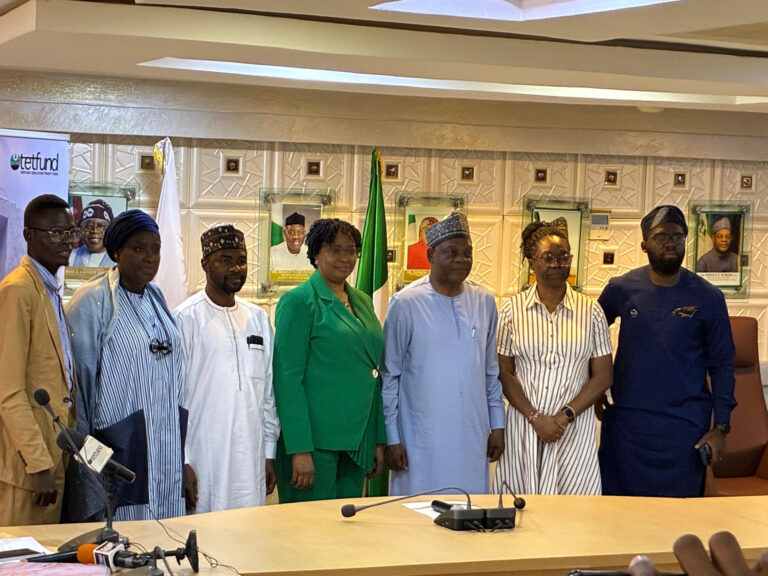
Minister for Education, Dr. Tunji Alausa, was recently at the National Assembly for the annual “ritual” of budget defence before the joint sitting of the National Assembly. He was accompanied by the Minister of State for Education, Prof. Suwaiba Ahmad; Permanent Secretary, Mr. Abel Eniitan; and Directors to defend the N2.4trillion 2026 budget.
The Minister presented his performance details of the 2024 and 2025 budgets to the lawmakers. He lamented the effects of poor funding: “As we transit from one budget cycle to another, rollover represents our collective determination that projects critical to national education development must be completed. Appropriation must translate into execution, and execution must result in visible impact.”
2024, 2025 budget performance
Dr. Alausa and the lawmakers admitted that funding was inadequate for the effective implementation of the 2025 budget particularly its capital component.
In 2024, N1.5trillion was allocated to the education sector. While personnel cost gulped little above N1trillion, overhead and capital components got N72bn and N480bn, respectively. Out of the capital allocation, N53billion, 32 per cent was released for the 2024 fiscal year. A sum of N10billion was released for personnel cost, while N2.7billion was released for the overhead cost.
In 2025, education was allocated N2.5trillion. Personnel component got N1.5trillion, overhead and capital got N123billion and N938billion, respectively. The minister informed the lawmakers that N19.5billion was equally released for capital component of the 2025 budget, N12.3billion for personnel and N2billion for overhead component.
He registered his discontent that average allocation to education between 2015 and 2025 is 6.54 per cent, “far below global budgetary recommendations of 20 per cent or above.”
2026 budget thrust
Alausa said the budget thrust for 2026 was anchored on ensuring that more opportunities are provided for out-of-school children to return to school; make teaching and learning environment safer; improve the capacity of teachers to deliver curricular that are globally competitive; and improve the capacity of the educational tertiary institutions to produce skilled and relevant human resource base for national development.
He said the sectoral roadmap was directly linked with visible deliverables in the development of the required infrastructural facilities necessary for learning; development of Public-Private Partnerships (PPP) to improve education; provision of loans/bursary scholarships to students to encourage and support learning; training of workforce; increasing enrollment, retention and completion of basic education.
Others are acquisition of entrepreneurship education at all levels; implementation of the National Teachers Policy, the National Policy on Safety, Security and Violence-Free Schools (Safe Schools Declaration); and the implementation of partnership strategies between vocational schools and employers to facilitate access to work-based learning opportunities and instill good governance in the education sector through efficient and effective digitalization system.
He said: “The expected outcomes for the deliverables include increased retention and completion rates in basic education; improved literacy and numeracy; enhanced experience and exposure of Nigerian scholars through foreign education, exchange programme and skill sharing; strong assurances that children from indigent homes are provided opportunities for tertiary level education; and Improved equipment and facilities in Nigerian schools comparable to global standards that guarantee conducive learning and teaching environments as well as development of skilled Nigerians.
Other News
“The 2026 budget allocates N966.9billion to universities, N382billion to polytechnics and colleges of education, N633.3billion to education parastatals and N257.9billion to the ministry’s headquarters. Federal Unity Colleges were allocated N155billion and N10.3billion was for international commitments including UNESCO obligations.
Minister’s frustrations
The Minister said the budgetary allocation to the education sector in the past years has been within the range of four to 10 per cent of annual appropriations. This is grossly inadequate for meaningful investment in education: “Most of our institutions are faced with security challenges and inadequate infrastructure such as classrooms, hostel accommodation, laboratories and library facilities. There is a compelling need to enhance security and ensure safety of learners and teachers in our schools in the face of heightened challenges and attacks.
“Most of our schools are not connected to the national grid, and the ones that are connected could not benefit from the availability of electricity which adversely affected the use of modern security gadgets. Similarly, most schools are not totally fenced, hence they expose the students to security challenges such kidnapping, banditry, armed robbery and abduction.
“The prevailing security issues requires adequate funding to secure our schools some of which are located in insecure areas. With this development, the support of our lawmakers is required to increase allocation to the ministry.
“There’s acute shortage of classrooms, hostel accommodations, laboratories and library facility. The provision of hostels and classrooms are in short supply as against enrolment in most of our schools. Only few schools can boast of good laboratories while consumables are in short supply for practical experience. To this end, the much-desired reading culture may not be achieved because of the inadequate modern library facilities.
“In a few schools where library facilities are available, the collection of books therein are obsolete. The completion of the National library project is still a challenge due to shortage of funds. The long period of delay in the completion of the project with attendance contract reviews has increased the challenges. The ministry is looking fo innovative ways to fund its completion.”
Lawmakers respond
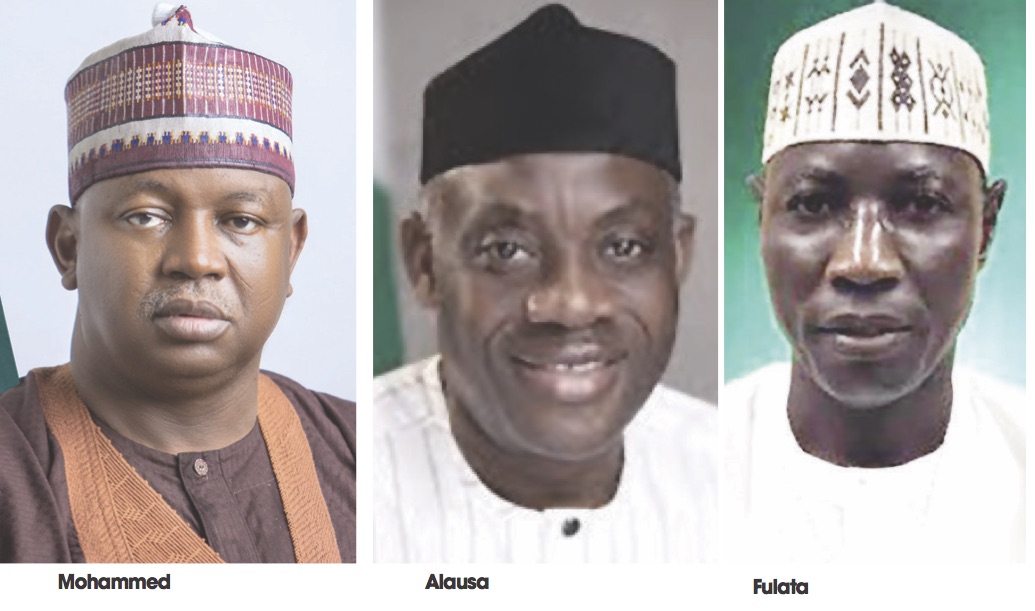
The co-chairman of the Joint Committee and Chairman, Senate Committee on Education, Muntari Dandutse, called for detailed clarification on rollover projects to ensure that appropriated funds correspond with measurable physical progress: “We must ensure that projects do not appear repeatedly in budget documents without visible execution. Our responsibility is to guarantee that public funds are tied to measurable delivery.”
Chairman, House Committee on Education, Abubakar Fulata and Deputy Chairman, Senate Committee on Education, Babagida Hussain, requested detailed nominal rolls and Internally Generated Revenue (IGR) submissions from the ministry and its agencies, stressing strict adherence to constitutional provisions.
Alausa assured the lawmakers that comprehensive documentation, including nominal rolls and detailed IGR expenditure plans, would be submitted promptly to facilitate thorough legislative scrutiny. He said the ministry viewed the engagement as a collaborative partnership anchored on accountability, efficiency, and timely project completion.
The joint committees formally received and adopted the ministry’s submission for further legislative consideration, with additional documentation to be transmitted through the permanent secretary as requested. The minister expressed readiness to provide further clarifications and reaffirmed ministry’s commitment to collaborative engagement with lawmakers to ensure the successful implementation of the 2026 education sector budget.