Follow Us on Google
From Scholastica Hir, Makurdi
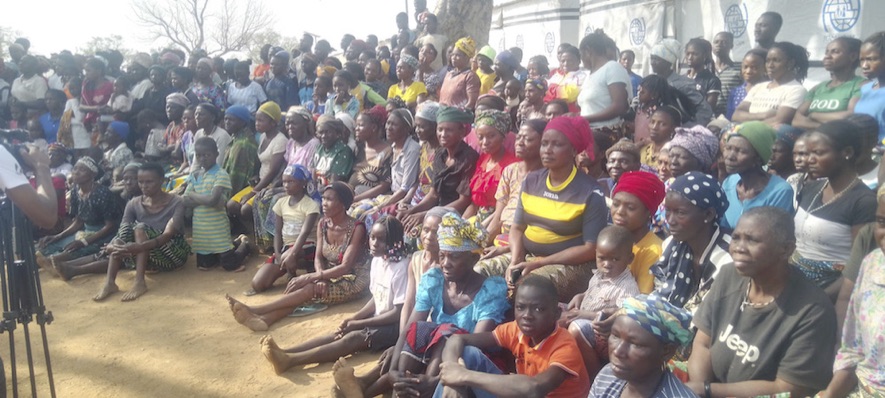
When the first gunshots went off across their village in Mbagwen Udei, Guma Local Government Area (LGA) of Benue State, Martina Atom, a mother of five, thought it was thunder. Though the skies were clear and there were no signs of rain, the thunderous sound continued. Gripped with fear, her senses were distorted for a moment as she stood still looking in all directions.
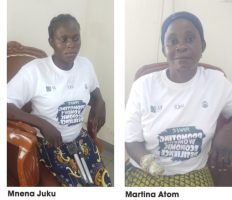
By the time reality dawned on her, from a distance, she could see huts already burning, people were running helter-skelter for dear life, children were screaming for help, husbands, wives, aged people dropped dead, others declared missing.
That day changed everything, not only for Martina but for thousands of families scattered across her community who were forced from ancestral lands by violent attacks allegedly carried out by armed herdsmen militia.
She narrated her displacement ordeal to this reporter, saying: “On that day in 2018, we went to the farm and as we were working, somebody ran and told us that herdsmen were coming. People started running, but out of fear I couldn’t run. My legs were just fixed in one place. When they got to me, they wanted to kill me but one of them had compassion on me and said they should set me free.
“But the other one said they cannot just allow me to go like that. That they would give me a mark as a message to my people. That was when they cut off my hand from the wrist.”
A former businesswoman, that attack and displacement stripped her off her livelihood and dignity. Martina healed from the wounds, no infections, to the glory of God, but the scares remained. With one hand, no income, no home, life became tough.
For Martina Atom and Mnena Juku, another IDP living with disability, the road to survival began with loss. Neither of the women had gone to school. Life before displacement revolved around farming, which came with the seasons, family and business. Education had been a luxury their families could not afford.
But even without formal schooling, they had built lives rich in dignity, tending to their farms, nursing their crops, nurturing their children and managing their homes. Displacement stripped that dignity away in one day.
In the IDP Camp 2, Daudu, where they eventually found refuge, survival became an exhausting daily experience. Meals were scarce and uncertain. Privacy was nonexistent. Their hope felt dim. Martina recalled their journey those early days with a heavy sigh: “We lived from donation to donation. When food came, we ate. When it didn’t, we waited.”
Like many women in the camp, Martina and Mnena sometimes left the safety of the IDP settlement to search for menial work in nearby host communities where they washed clothes, cleared compounds, fetched water, weeded farms, hewed firewood and anything that might bring a few naira notes or leftover food for their children.
Martina said: “Because I must feed my five children, I started sweeping market stores for traders at the Daudu market, which falls once every week. Whatever the person gives me, I put together to feed the children.”
This also could not sustain them. The suffering became unbearable; three of her children left her at the camp to be with relatives. But the sweeping continued so she could survive with the other two.
Outside the camp gates, new dangers lurked. They were desperate and some employers knew this. What began as opportunities often dissolved into humiliation. Verbal abuse became routine. Some employers would insult them about their displacement, their poverty, their lack of education. Employers shouted over small mistakes, some withheld payments or assigned tasks far beyond initial agreements.
Worse still was the silent menace of sextortion. According to her, some men, exploiting the women’s vulnerability, demanded “favours” in exchange for payment or continued work, a request framed as a joke but laced with implied threat to comply or lose the job. The women said, “It’s very dehumanizing. We are most times torn between our wants; the money and the need to keep our dignity.”
While the United Nations Children’s Fund (UNICEF) notes that, for many displaced women and girls, the line between economic hardship and sexual and gender-based violence (SGBV) is painfully thin, they also argue that poverty magnifies vulnerability and dependence breeds exploitation. They further argued that, when survival hinges on the goodwill of others, power imbalances deepen.
In Martina and Mnena’s case, their children were drawn into the struggle as well. Unable to leave young ones alone in the camp, they sometimes brought them along to work. Children helped sweep compounds, clear bushes or assisted on small farms.
“We didn’t want that life for them, but hunger doesn’t listen to wishes,” Mnena explains, speaking of nights filled with anxiety, saying: “You lie awake most times worrying. How will we eat tomorrow? Will there be work? Will we be safe?”
Then amid despair something good happened. In August 2025, Martina and Mnena were among the 50 women survivors of GBV in IDP and host communities trained in business, vocational skills by Small and Medium Enterprises Development Agency of Nigeria (SMEDAN) and partners, the Centre for Redefining Alternative Civic Engagement for Africa (RACE) and the Gender and Environmental Risk Reduction Initiative (GERI).
The programme, code-named Taha`v (Power) project, was meant to promote women’s economic resilience in conflict-affected communities, and later became a pathway to healing, hope and transformation for the vulnerable women.
Executive director of the Centre for Redefining Alternative Civic Engagement for Africa, Evelyn Ugbe, confirmed that a few months after the women were trained in skills like soap making, baking, hair dressing and small-scale entrepreneurship, among others, and given startup funds, the beneficiaries started generating more than N250,000 in sales from their new enterprises.
For women with limited formal education, the emphasis on hands-on learning proved transformative.
Martina, who now lives with one hand took to baking while Mwuese, who had prior knowledge of hair braiding took the training, perfecting her skills in hair dressing. What began as training soon evolved into possibility.
“The first time we were guided to make small chops and soap, I felt proud,” said Martina, beaming with smiles. That sense of creation marked a profound shift.
In displacement, much is taken; homes, livelihoods, security. Skills training offered something rare; the ability to build rather than merely endure, to generate value instead of waiting for aid, to imagine a future not defined solely by survival.
After completing the program, both women received modest starter kits, basic materials to begin practicing their new trades. It was not wealth, but it was a beginning.
Martina and her mates started small, producing soap and doughnuts in batches within the camp and selling to fellow residents. Demand grew steadily while income, even though not much, became a bit steady.
On her part, Mnena, armed with simple hairdressing tools, began braiding and styling hair for women and children. Braiding sessions became more than business transactions; they evolved into moments of connection, conversation, and mutual support.
She noted that slowly, income trickled in. “It wasn’t much at first But it was mine. From my pocket I can buy the little things I need. I no longer want h my children cry over hunger,” Mnena said.
From the trainings acquired, economic empowerment and ownership changed everything. Their lives are being transformed and dignity is being restored. They are no longer entirely dependent on unpredictable donations or exploitative employers, thereby reclaiming control over their lives.
Food could be planned rather than awaited. Small personal needs addressed without humiliation. Children kept closer to the camp instead of accompanying risky labor in unfamiliar homes.
Without the constant pressure to seek menial jobs in host communities, exposure to verbal abuse, exploitation, and sextortion decreased significantly. Economic stability, even at a basic level, created a protective buffer against SGBV risks.
Experts often say economic empowerment or livelihood security reduces vulnerability to gender-based violence. Corroborating the ascertion, a psychologist with the Moses Orshio Adasu University, Makurdi, (MOAUM) former Benue State University (BSU), Dr Nguemo Hemba, said economic empowerment for women and girls would curtail their susceptibility to GBV.
Hemba, who addressed members of Concerned Neighbours Association, a neighbourhood women group in Makurdi, on mental health, urged every woman to find something to do, no matter their location and status saying “When you have something of your own to do, people treat you differently and you treat yourself differently too.”
She urged husband’s, families, communities, organizations and the government to empower women especially the vulnerable population, noting that when a woman is empowered, her chances of facing GBV reduces and her life witnesses a different narrative.
For Martina and Mnena, their children and families have also seeing a shift in narrative. Instead of seeing their mothers endure humiliation for survival, they observe resilience, skill, and determination. As if empowerment is contagious, the women said the children also help out with their new found trade.
As at the time the women spoke to this reporter, life in IDP camps is still difficult. Resources are still limited. Food donations still fluctuate. Trauma from displacement have not vanished. But the difference is in the fact that the two women and many others who have received one form of training and support or another, are no longer standing still in despair or hopelessness; they are moving forward, gradually.
Their story underscores a broader truth often overlooked in humanitarian responses, that protection and prevention of SGBV cannot rely solely on legal frameworks or awareness campaigns. Economic realities matter.
Hemba said when women lack income, skills, or financial independence, vulnerability to exploitation intensifies but when they gain livelihoods, bargaining power shifts, choices expand, harmful dependencies weaken. According to her, economic empowerment, therefore, is not merely a development strategy, by but a protection tool.
For displaced women especially, skills acquisition programs offer pathways out of survival-based vulnerability. They rebuild confidence fractured by violence and loss.
They restore identity beyond victimhood. They create resilience where fragility once dominated. As Martina puts it “Learning this skill gave me hope.”
Her journey from displacement to self-reliance is neither easy nor complete. But it is powerful testimony to what becomes possible when humanitarian support moves beyond relief and toward empowerment.