Follow Us on Google
• Tinubu should re-evaluate performance of key officials
By Henry Umahi
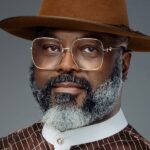
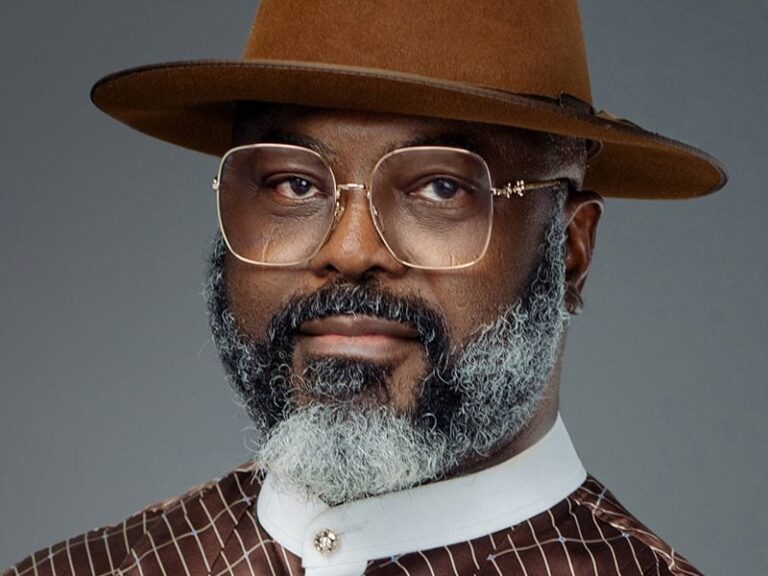
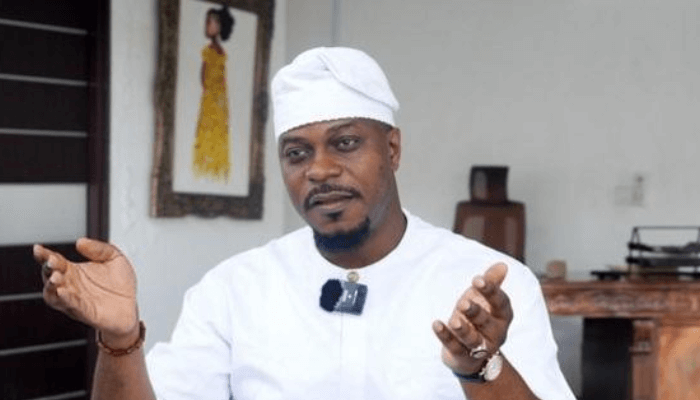
A political strategist and convener, Game Changer Group, Bolaji Rilwan Raji, has x-rayed the content and character of Nigerian politics, saying: ‘Politics is unfortunately perceived as a business rather than a service, prioritising profit over purpose through marketing strategies.’
In this chat, Raji, who is also the founder, New Dawn for Women and Community Intervention Initiative,offered insights into how the transition from military rule to democracy was marred by weaponisation and monetisation of democratic institutions.
According to him, many genuine democrats and progressives were exhausted, impoverished, or had even perished.
As an insider in the corridors of power, how will you describe political leadership, governance and job delivery in Nigeria?
Nigeria’s political leadership evolved from pre- and post-colonial eras. After independence, Chief Obafemi Awolowo (AG, South West), Sir Ahmadu Bello (NPC, North), and Dr Nnamdi Azikiwe (NCNC, East) emerged as key figures. These leaders ushered in the First Republic, with Azikiwe as ceremonial President, Balewa as Prime Minister, and Awolowo as opposition leader. Each region prioritised different policies: the South West focused on education, agriculture, and infrastructure; the South East on agriculture, commerce, and infrastructure; and the North on agriculture and infrastructure. Healthy developmental rivalries led to job creation. However, political tensions escalated, contributing to the collapse of the First Republic in the 1966 military coup. Subsequent military rule stagnated political development, hindering leadership and governance. Currently, President Bola Tinubu’s leadership has revitalised political leadership, governance, and job creation.
Nigerians are sweet-talked during campaigns, but the story is always different when politicians are given mandates to work. What is your perspective on this?
Politics is unfortunately perceived as a business rather than a service, prioritising profit over purpose through marketing strategies. While blame is unproductive, local communities should learn from prioritising the president’s leadership and governance to guide the selection of future political leaders, achieving the renewed hope agenda.
As an insider from 1993, what would you say shaped the annulment of the 1993 election of Abiola, and who are the unknown characters in the plot?
June 12 remains a significant and troubling event in Nigerian history. I have long sought answers regarding its annulment, drawing on my involvement in Hope 93, accounts from key figures, and extensive research. No explanation seemed satisfactory until the President’s Renewed Hope Agenda, which I now see as a divine answer. I recall a meeting at former President Olusegun Obasanjo’s Ota Farm, where he invited top retired military officers, political leaders, and religious figures. At the meeting, Obasanjo conveyed the military’s rejection of Chief Moshood Abiola, creating a stunned silence. Gen. Muhammadu Buhari (rtd) challenged Obasanjo, asking who these dissenting Generals were and affirming Abiola’s victory and acceptability to him. He then left the meeting in protest, followed by Col. Umar Kangiwa, Admirals Ebitu Ukiwe and Ndubuisi Kanu. Yoruba Generals Adeyinka Adebayo and Alani Akinrinade were also present. Generals Akinrinade and Kangiwa can still verify this account. At 28, I accompanied my uncle, Alhaji Tajudeen Cole, to this meeting. I questioned why Buhari and Kangiwa, both Fulani, advocated June 12’s validation, while Generals Babangida and Abacha, who annulled the election, were not Fulani. Yet, many Nigerians, particularly Yoruba, still hold the Fulani responsible for the annulment.
The election was described as the freest in the country. What roles did the Yoruba and others involved play to validate the election?
The annulment of June 12 was a deeply painful period for Yorubaland, surpassing even Chief Obafemi Awolowo’s imprisonment in the First Republic. Many Yoruba people, both politicians and non-politicians, viewed it as an existential threat, igniting a fierce determination reminiscent of the old Oyo Empire. Prominent elders, including Chief Adekunle Ajasin, Chief Abraham Adesanya, Chief Bola Ige, Prof Wole Soyinka, Dr Beko Ransome-Kuti, Prof Bolaji Akinyemi, Chief Wahab Dosunmu, Chief Cornelius Adebayo, Chief Reuben Fasoranti, Chief Olu Falae, Chief Ayo Opadokun, Bishop Bolanle Onigbogi, Generals Adeyinka Adebayo and Alani Akinrinade, Chief Gani Fawehinmi, Dr Fredrick Faseun, Asiwaju Bola Ahmed Tinubu (President), Femi Falana, Bayo Onanuga, Wale Osun, Femi Ojodu, Yinka Odumakin, and Dele Momodu, among others, led the charge, alongside youth vanguards like Aare Gani Adams.
Alliances were forged with progressives from other parts of the country, including Gen. Theophilus Danjuma, Col Umar Kangiwa, Admirals Ndubuisi Kanu and Ebitu Ukiwe, Chief Sam Mbakwe, Chief Anthony Enahoro, Chief Alfred Rewane, Rev. Fr. Moses Adasu, Chief John Odigie Oyegun, Senator Shehu Sani, and Uba Sani (Governor of Kaduna), Chief Olusegun Osoba and Chief Bisi Akande, to name a few. The women’s wing was spearheaded by Alhaja Habibat Mogaji, the President-General of market women, and mother of the current president. I recall those days and the trips to Igbosere court, Mama Mogaji’s energy and inspiring leadership. This movement led to the formation of NADECO, a platform dedicated to revalidating the annulled election. While many leaders were forced into exile, Bola Ahmed Tinubu became a central figure and rallying point for the struggle. The fight to revalidate June 12 also extended to the Niger Delta, contributing to the region’s struggle for emancipation, though internal conflicts ultimately hampered its goals.
Fast forward to the present time, how would you describe the civilian era from 1999 to this time?
The transition from military dictatorship to democracy in 1999 presented numerous challenges, particularly as Chief Olusegun Obasanjo, a retired military general, assumed the presidency. This context initially fostered the potential weaponisation of democratic institutions. However, the current government is taking commendable steps to reshape democratic values. Recognising the independence of local governments, a sensitive issue requiring decisive leadership, and establishing regional development zones to foster regional growth are crucial initiatives, akin to removing oil subsidies.
Reforming political institutions, including electoral bodies, the judiciary, and law enforcement, requires dedicated effort. The president’s focus on local governments is a positive step, and capable individuals must support and continue this progress. The transition from military rule to democracy was marred by weaponisation and monetisation of democratic institutions. Many genuine democrats and progressives were exhausted, impoverished, or had even perished. The few remaining were revitalised by President Bola Ahmed Tinubu, offering renewed hope amidst a depleted movement.
This vacuum allowed individuals with questionable backgrounds – the wealthy, former officials, and those involved in illicit activities – to infiltrate politics, treating it as an investment. Given widespread deprivation, if true democrats, progressives, conscientious citizens, progressive youths, and people of faith give this government a chance with open minds, Nigeria may, by God’s grace, experience positive change.
We have been inundated with the word ‘cabal’. Do they genuinely exist within the Nigerian government, and how have they contributed to development and good governance?
A cabal, defined as a small, secretive group plotting for political power or private interests, inherently undermines democracy, which is government by and for the people. While I’ve heard talk of a cabal in this administration, I commend the president’s ability to identify and dismantle such groups. Ideally, we should have disciples who emulate the president’s positive actions rather than pursue selfish interests. However, the failure of some in power to replicate the President’s good deeds fuels the perception of a cabal. I urge the President to re-evaluate the performance of certain key assistants.
Can you tell us about some of them, and how their actions and inactions have affected the country?
The formation of a cabal hinges on a leader’s understanding of power dynamics, specifically the distinction between sharing and controlled delegation. Olusegun Obasanjo, for example, favoured controlled delegation, preventing any potential cabal leaders from gaining significant influence. Yar’adua’s tenure was cut short by ill health and death, but figures like Bukola Saraki and James Ibori were prominent. In contrast, Goodluck Jonathan, despite his patriotism, entrusted significant power to aides who sometimes abused it, leading to the rise of competing power blocs and a formidable cabal. Under President Buhari, this phenomenon reached unprecedented levels, with a cabal becoming the de facto ruler. As someone married into the Buhari family, I have witnessed this firsthand. Initially, the cabal consisted of two individuals, but President Buhari’s ill health and the death of Chief of Staff Abba Kyari led to the emergence of multiple cabals, the primary one being ‘G5+1’ with various subsets. Similar cabals also formed within the National Assembly, including a ‘Yoruba cabal.’
We were told of several intrigues in the run-up to the 2023 election. Can you let us in on it?
Internal power struggles and conflicting agendas plagued the lead-up to the election. The G5 + 1 faction initially favoured Atiku Abubakar or former President Goodluck Jonathan, while a cabal within the National Assembly and party leadership pushed for Ahmed Lawan. The Yoruba cabal supported Yemi Osinbajo. A member of the G5 + 1, secretly vying for the vice presidency, attempted to bring Jonathan into the race. When this failed, he rejoined the G5+1 in supporting the PDP candidate. The other +1 to make G5+1 +1, which was meant to include a top security official (+1), ultimately faltered, perhaps due to the official’s awareness of President Buhari’s preferences. The Yoruba cabal, misled by the G5, encouraged Osinbajo to contest against the eventual winner, believing Buhari would not support Asiwaju – a ploy to weaken Yoruba chances. Despite the cabals’ machinations, President Buhari remained steadfast in his integrity and commitment. Sensing the situation, I contacted the President’s son, Seyi Tinubu and took him to a close confidante of President Buhari, his sister, Hajia Rakiya, to appeal to the President. Evidence supports this account.
To garner support for President Bola Ahmed Tinubu, I reached out to various people, including former President Goodluck Jonathan, whom I visited through his nephew, Abila. I must acknowledge President Jonathan’s remarkable humility and dedication to Nigeria’s betterment. He provided the venue and time, but Seyi, the president’s son, with whom I was to go, was delayed and could not relay the information for over two hours due to unforeseen circumstances. To my surprise, President Jonathan was still waiting patiently. Upon my arrival, instead of anger, he simply smiled and advised, ‘Bolaji, learn to manage your time well,’ and even offered me a drink through Abila.
Without that kindness, I doubt if I would have found the courage to discuss my mission, given the impression that President Tinubu opposed his second term. I prostrated before him, but he insisted I stand. I passionately pleaded with him not to be offended by my request to support my uncle. He asked who my uncle was, and I nervously replied, ‘Chief Bola Ahmed Tinubu.’ His expression shifted, and after a moment of reflection, before he could speak, I acknowledged his position as a PDP leader. Surprisingly, he responded that he was now ‘a statesman, and if supporting Asiwaju would bring growth, development and security to Nigeria’, he would support it. His wisdom gave me hope, and I left with joy. I thank him for his support.
Is it true that Asiwaju Bola Tinubu was not the preferred candidate of the powers that be in the run-up to the 2023 election? Who are the favoured and how do they fall by the wayside?
Despite not being favoured by key power brokers who respectively preferred Atiku or Goodluck Jonathan, Ahmed Lawan, and Yemi Osinbajo, Asiwaju’s success was due to divine intervention, President Buhari’s support, the influence of Hajia Rakia (Buhari’s sister), and his own political acumen. Hajia Rakia’s role should be acknowledged with a kind gesture. Appreciation is also due to the Emir of Katsina. Asiwaju’s ability to positively engage even those who betrayed him is remarkable,