Follow Us on Google

By Rita Okoye
Amid the quiet transformation of Nigeria’s agricultural landscape, an expert in data-driven systems, Ayoade David Adeyemo, has disclosed that technology is steadily reshaping how the nation feeds itself.
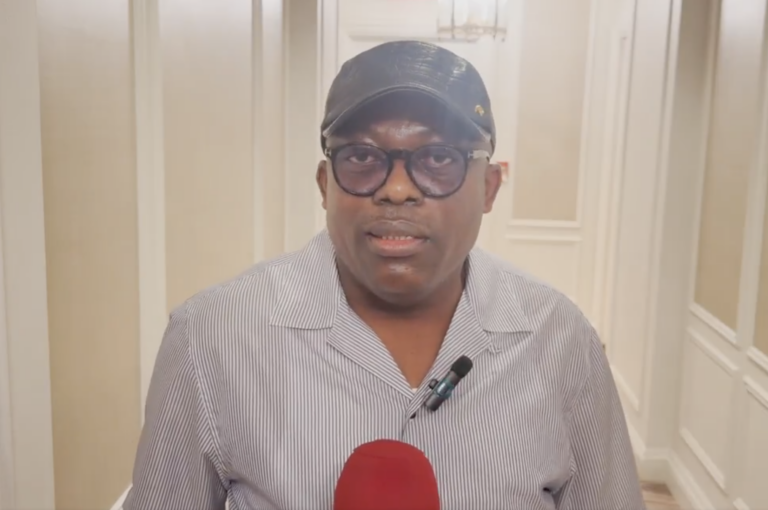
In an interactive session with journalists in Abuja, Adeyemo, who serves as the Lead Software and Infrastructure Engineer at Thrive Agric, explained how data analytics and digital connectivity are redefining the fundamentals of farming, turning what was once a soil-based practice into an information-driven enterprise.
In a detailed presentation, he noted that the silent revolution happening across Nigeria’s farms is powered by algorithms, sensors, and human coordination working in harmony behind the scenes.
“For years, we measured success in acres and yields,” Adeyemo said. “Now we’re measuring visibility, how much real-time understanding we have of the value chain. You can’t finance what you can’t see, and you can’t insure what you can’t measure.”
Thrive Agric’s platform currently connects more than half a million smallholder farmers to aggregators, financial institutions, and major off-takers. The company’s data backbone monitors everything from field registration and GPS mapping to input distribution and repayment cycles, creating what Adeyemo describes as a live model of productivity and creditworthiness.
“Every farmer we onboard contributes to a larger narrative about risk and resilience,” he said. “That data helps banks design products for rural clients, insurers price risk better, and even assists governments in planning storage and logistics.”
Adeyemo revealed that building this system required innovative solutions to challenges rarely covered in textbooks, from poor connectivity to unpredictable rainfall patterns. To overcome these, Thrive Agric adopted an offline-first architecture that synchronizes data once network access is restored, ensuring reliability for farmers in areas without consistent internet coverage.
“Sometimes, smart just means dependable,” Adeyemo quipped. “If an extension officer can collect field data on a low-cost phone and sync it later without losing information, that’s intelligence too.”
The platform is also evolving into a financial ecosystem. Through partnerships with payment gateways and micro-insurance firms, farmers can now receive funds, repay loans, and access insurance coverage directly through the app.
“We’ve learned that trust grows when transactions are transparent,” Adeyemo explained. “Our systems generate immutable records for every disbursement and repayment. It’s not blockchain hype, it’s accountability.”
According to the Central Bank of Nigeria, while agriculture employs over 35 percent of the workforce, it receives less than 5 percent of formal credit. Experts believe that data-backed systems like Thrive Agric’s could help bridge that gap by giving lenders cleaner, verifiable insights into farmer performance.
Still, Adeyemo warns against over-optimism. “Technology can amplify both good and bad practices,” he cautioned. “If we digitize inefficiency, we’ll just scale failure. What matters is building feedback loops that improve farmer outcomes, not just dashboards that impress investors.”
Despite his tech-heavy focus, Adeyemo insists that agriculture’s digital transformation must remain people-centered. He recalls instances where his team delayed system updates to allow field officers to upload crucial data from remote areas, emphasizing that every data point represents a real person.
“A missed upload could mean a farmer who didn’t get inputs or a field that wasn’t sprayed,” he explained. “Data quality isn’t just a technical issue, it’s a livelihood issue.”
Thrive Agric now incentivizes field agents for data accuracy and encourages its product managers to visit farms regularly. The engineering team also organizes “shadow days,” pairing coders with farmers to observe firsthand how technology is used under field conditions.
“You write differently after watching a farmer use your app under the sun,” Adeyemo said with a smile.
Experts say Nigeria’s agriculture remains a paradox, rich in potential but fragmented in execution. Adeyemo believes digital infrastructure can bridge this divide if deployed responsibly and interoperably.
“We need open-data frameworks where anonymized farm metrics can inform national policies without compromising privacy,” he said. “The day banks, insurers, extension services, and private platforms can share data securely, we’ll unlock real efficiency.”
He also underscored the need to prioritize agricultural cybersecurity, warning that as agri-data grows in value, it will increasingly become a target for cyber threats.
“We must protect it with the same rigour we apply to financial systems,” he noted.
For now, Adeyemo defines success in simple terms: fewer failed uploads, faster reconciliations, and happier farmers. “Our work isn’t about disruption,” he concluded. “It’s about stability. Farmers already take enough risks on the land; technology should help them sleep better at night, not worry more.”