Follow Us on Google

Isaac Anumihe, Abuja
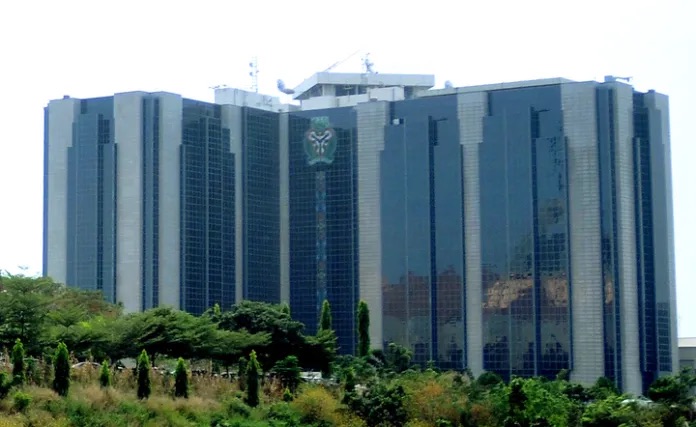
A foremost economist and chairman of ANAP Business Jets Limited has blamed the Central Bank of Nigeria (CBN) for causing the economic recession of 2016.
Peterside who gave the anniversary lecture of the Nigerian Economic Summit (NES) in Abuja, said that although the Gross Domestic Products (GDP) growth rate fizzled out in 2015, the CBN compounded the matter by embarking on capital control policy in the attempt to regulate forex utilisation which caused investors to flee. But when it allowed all business units in the forex market to buy and sell freely at a market-determined exchange rate of N360 to one dollar the economy rebounded.
“So, GDP growth rate fizzled out in 2015 or 2016. The CBN compounded the situation by embarking on forex policy which caused the investors to flee. The veritable outcome was the economic recession. It was only after CBN succumbed to pressure in early 2017 to allow all business units in the forex market to buy and sell freely at a market-determined exchange rate of N360 to one dollar approximately that the bottlenecks slowly disappeared and the economy emerged out of recession” he said.
However, he warned that the economy is not out of the woods yet as the economy is still stagnant.
“The Nigerian economy is still stagnant. So, a GDP growth which falls below 3 per cent population growth rate cannot call for celebration. With high inflation rate in the 11 per cent range which CBN appears to have accepted as being the norm, investors now fear stagflation (stagnation+inflation). Compare and contrast this in Ivory Coast which held inflation below 2 per cent and GDP of 7 per cent in 2018.
“Before going into prescriptions, it is important to update Nigerians about the current structure of Nigerian economy which is significantly different from what prevailed in 1993.
“Over 50 per cent of our GDP comes from the service sector but not so in 1993. CBN appears to have forgotten this when it directed banks to allocate 60 per cent of forex to the manufacturing sector to have accounted for less than 10 per cent GDP. So, you starved half of the economy and told banks to send all the foreign exchange thereby curtailing growth of over half the economy on the other side.