Follow Us on Google


Stories by Steve Agbota
[email protected]
08033302331
Agriculture, which remains the base of the Nigerian economy, providing the main source of livelihood for most Nigerians, provides direct employment to about 30 per cent of the population, faced traumatic challenges in 2016.
Despite that Nigeria occupies 92.3 million hectares of land, of which 91 per cent (84 million hectares) are arable, industry watchers say 2016 is the worst year the sector has ever witnessed compared to 2014/2015 and that Nigeria still spends about $20 billion on food import.
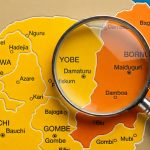
Among challenges that bedevilled the sector in the year under review are budget delay, poor access to credit, farms either shutdown or abandoned due to threats of Boko Haram and Fulani herdsmen killing farmers and destroying farms, mostly in the northern part of the country including Bauchi, Adamawa, Borno, Benue, and also Ekiti and Enugu states, and other parts of the country, which made Nigeria lose about N2.5 trillion, according to industry observers.
Most processing and food companies also shutdown and thousands of workers were sacked due to unfriendly government policies and inability to access forex to import infrastructure and raw materials. Notable among them are Erisco Foods Limited and Dangote Industries Limited.
Erisco shutdown its tomato paste manufacturing business in Nigeria citing unfavourable operating climate, which has escalated operational costs in recent months and relocated the manufacturing aspect of the business to China from where finished products would be imported into the country and other parts of the world, and sacked over 1,500 workers. Dangote also stopped its tomato paste factory because of the harsh operating environment that gives advantage to imported products.
In the same year, farmers who specialised in some crops like tomato, plantain and maize that could have smiled to the bank witnessed the worst farming season, as disease ravaged these crops across the country.
‘Tomato Ebola’ known as ‘Tuta Absoluta’ destroyed so many tomato farms, especially in the northern part regarded as the largest producer of fresh tomatoes, and suffered a 40 per cent loss valued at N72 billion annually, between farm and market. Recently, Nigeria witnessed a disease outbreak known as ‘Army Worm’, which destroyed maize farms mostly in Southwest region. Industry watchers have, therefore, stated categorically that Nigeria will face scarcity of maize starting from February and April next year.
There would also be scarcity of soybean because Boko Haram has chased the farmers who produce the commodity in the northern part of the country away from their farms.
The farmers highlighted that the price of 30 tonnes bag of maize is now sold for N110,000/ N120, 000 from N65,000/N70,000. Similarly, one crate of egg now goes for N900/N1,000 from N500/N600. This was as a result of the infectious disease in maize that brought severe economic effects to the country’s farmers running into millions of naira. Poultry farm owners are lamenting the high price of maize to feed their animals.
The price of wheat rose 150 per cent between 2015 and 2016, while rice increased by nearly 90 per cent. Prices for other foodstuffs, including vegetable oil, which went up by 95 per cent, and dairy products, which went up by 60 per cent, have kept pace.
Despite the gloomy picture painted about the agriculture sector, a source of hope for Nigerians was the bumper harvest recorded in rice production in 2016, as some state governments like Lagos, Kebbi, Ebonyi, among others, including group farmers and individuals, ventured into rice production but Nigeria is yet to be self-sufficient as billions of naira still goes into importation of rice.
Beside all these odds, the sector faced other challenges, notably an outdated land tenure system that constrains access to land, majorly 1.8 hectare per farming household; a very low level of irrigation development, which is less than 1 per cent of cropped land under irrigation; limited adoption of research findings and technologies; high cost of farm inputs; poor access to credit; inefficient fertilizer procurement and distribution; inadequate storage facilities and poor access to markets, have all combined to keep agricultural productivity low with high post-harvest losses and waste.
Despite these challenges, farmers assured Nigerians that there would be no famine in 2017 though the Federal Government raised the alarm that an average of 500 trucks loaded with grains are taken out of the country per day through the nation’s land borders.
Speaking to Daily Sun, the Coordinator, Community of Agricultural Stakeholders of Nigeria (CASON), Sotonye Anga, said the agriculture sector in 2016 did not get its total budget allocation, and that the amount released came very late, a situation which he said affected implementation of projects in the sector.
According to him, the biggest hindrance to agricultural development in 2016 was access to credit because farmers don’t have credit facility. He said that farmers need credit to acquire inputs, fertilizers, seedlings, agrochemical, tractors and other farm tools.
He added: “Going forward, 2016 in reality is gone. Moving into 2017, if you look now, we don’t have jute bags, the new season is coming, how do you package your agricultural produce? It means we have to manage with the used jute bags that are available. This is not too good for the whole country; for the image of our nation, made-in-Nigeria agricultural commodities packed in used jute bags is not the best.
“Moving forward, concerted efforts have to be made. We need right packing materials to package our agricultural produce and this jute bag has to be brought in at a reasonable price because jute bag is not produced in Nigeria today. Every jute bag we use is imported. Look at the dollar issue, which is increasing everyday, the cost of bringing in jute bags into Nigeria is almost prohibitive. For us to package our materials very well, we need to start the production of jute bags in Nigeria. We have to get that implemented. Meanwhile, we could also bring in sealing jute bag because we have to package our produce so that when you harvest your produce, it would not wait for packaging materials. But if you don’t package it, it would begin to rot away.”
He noted the need for more effective planning, adding that the Minister of Agriculture needs to dialogue with stakeholders on what they need to enable their sector grow in 2017.
Anga further stated that President Muhammadu Buhari’s government has to involve private sector in the development of agriculture sector because government alone cannot grow the economy, saying private sector will grow the economy and develop the sector.
He explained that government needs to assist in providing incentives to farmers on land clearing by bringing the cost from N300,000 per hectare to about N60,000, saying, “these are the things government needs to look at because nobody can farm on the land that is not cleared; nobody wants to go and carry cutlass, hoes and enter bush and begin to clear.”
Meanwhile, the Managing Director of Highhill Farms, Adeniyi Sola, said that Nigeria has not been able to put in place sustainable structures in terms of standard foundation for the agriculture sector. He said Nigeria is still doing the same thing it was doing before, in the area of forming poor policies that are not sustainable, not putting the right people in the right places and not doing the right thing at the right time.
He stated: “Presently, we are in crisis now, we have less than 10 per cent of the total farmers in Nigeria that are presently working now in terms of irrigated farming. So we need to start looking at that; we need to start training especially the younger generation before the next phase of agriculture mostly in the area of irrigation development and taking agric to the next level. We need to be practical, we need to start producing what we can eat with the basic inputs from the government in the area of creating an enabling environment. Enough of sitting down and doing conferences around Abuja; we need to go on the field and make things happen.”
Speaking on the expectations for 2017, he said Nigeria must move from unproductive practices to practical issues, sustainable issues around agriculture so that it can be self-reliant.
He added: “We thank God for what is happening now in the area of rice production. We need to keep the momentum going and start doing same thing on other staple foods so that we can start producing more. Like Lagos-Kebbi package is out now at a very good price. Let’s start having different packaging and at the end of the day, we should not forget that government does not have business doing business, they just have to create basic infrastructure and enabling environment and sustainable policy.”
An agriculture economist, Dr. Amos Ayanwale, said that Nigeria could be the food basket nation in 2017 if government moves away from paper policy to field policy.
According to him, there is hope for farmers next year considering the number of corporate bodies, young men and businessmen that ventured into agriculture in 2016. He said government just needs to provide right supports by releasing budget on time and funding Bank of Agriculture (BoA) to lend to farmers and whoever wants to go into agribusiness.
To be able to achieve success in the sector next year, he said government should be more proactive in the area of mechanised farming, saying mechanisation is the biggest challenge facing the sector today.
He explained: “In some parts of Nigeria, especially in the rural areas, agriculture is still highly labour intensive, as many farmers are familiar with primitive farming methods, which yield little result in production. Statistics show that 75 per cent of farm produce across the country are produced in rural areas and Nigerian women contribute close to 70 per cent of agricultural workforce yet get less of accruing returns. It is shameful that Nigeria has less than 30,000 tractors presently, where it should at least have a million to service numerous farmers across the country.”
Ayanwale said things could change if the Federal Government can invest in rural farming through mechanisation by partnering state and local governments, saying it would grow the economy, boost food security and reduce over population of urban areas.
However, he hinted that mechanised farming has had a major impact on the demand and supply for farm labour, the profitability of farming and the change in the rural landscape, including rural communities.
In order to develop the economy of rural communities, attract youth into agriculture, there is need to increase agricultural output of food and non-food products while at the same time improving labour productivity on-farm and in the value chains requires that agricultural manpower has access to tools, equipment and machinery to carry out farm operations efficiently from the view point of financial and capital costs as well as social and environmental costs.