Follow Us on Google
By Maduka Nweke
The Federal Government has stepped up efforts to rebuild the backbone of public administration, moving to tighten institutional efficiency and recalibrate workforce capacity through a strategic personnel audit and skills mapping exercise across the civil service.
Driving the reform is the Personnel Audit and Skills Gap Analysis (PASGA), a flagship initiative of the Office of the Head of Civil Service of the Federation designed to modernise how Ministries, Departments and Agencies (MDAs) manage people, data and performance.
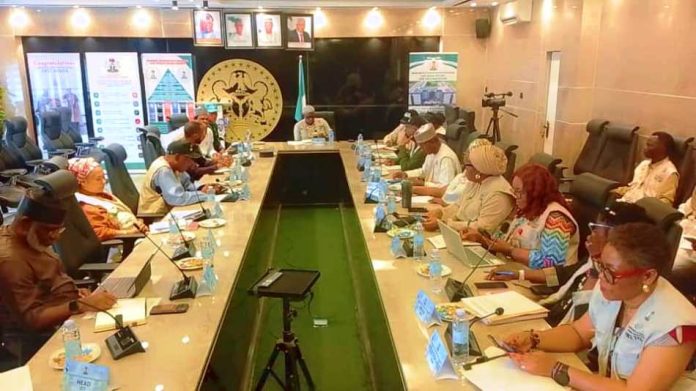
At the Federal Ministry of Housing and Urban Development, the reform push is already gathering pace. The ministry convened a high-level close-out session with PASGA consultants and government officials to review preliminary findings, validate workforce data and map out implementation priorities that could reshape staffing, training and deployment decisions.
Leading the process, Permanent Secretary, Shuaib Belgore, framed PASGA as more than a routine audit, describing it as a structural reset for a system long burdened by inefficiencies, weak data integrity and misaligned human capital.
“The PASGA process marks the beginning of a new phase not only for the Ministry but for the civil service as a whole,” Belgore said. “It provides us with a credible foundation to critically assess our workforce, deploy talent more effectively, and ensure that we are adequately equipped to deliver on our national housing and urban development agenda.”
PASGA’s core mandate is straightforward but far-reaching: verify employee records, build a credible and unified personnel database, map competencies across roles, and identify skill gaps that require targeted training or recruitment. The ultimate goal is to enable evidence-based decision-making—an area where Nigeria’s public sector has historically struggled due to fragmented and unreliable data systems.
For policymakers, the stakes are high. A modern civil service, lean, skilled and data-driven, is widely seen as critical to unlocking performance across sectors, from housing delivery to infrastructure development and urban planning.
Belgore highlighted this linkage, noting that the exercise would help align workforce capabilities with the ministry’s strategic priorities. He described PASGA as “a transformative tool that provides a comprehensive framework for evaluating workforce composition, identifying capacity gaps, and aligning human resources with operational mandates.”
However, early findings also exposed familiar challenges. The Permanent Secretary flagged discrepancies in the preliminary report, particularly around unverified personnel records and omissions of certain departments from the data analysis, issues that could undermine the credibility of the entire exercise if left unresolved.
“A robust and credible database is essential for effective workforce planning and policy implementation,” he stressed, urging consultants to incorporate the ministry’s clarifications and ensure inclusiveness before final submission.
The emphasis on data accuracy was amplified by Director of Human Resource Management, Ademola Ayodele, who warned that flawed data would inevitably produce flawed outcomes.
“Data accuracy is fundamental. Once the data is flawed, the outcomes will inevitably be compromised,” Ayodele said. “We are committed to ensuring that every discrepancy is corrected so that the final report reflects the true position of the Ministry.”
For the consulting team, the exercise represents both a diagnostic and a roadmap. Lead consultant, Idotenyin Isaac of Georgid Consulting, acknowledged technical gaps encountered during the process but maintained that the responsibility lay with the consultants, not the ministry.
“The essence of this exercise is improvement. It is designed to provide the Ministry with a reliable mechanism for tracking workforce data, identifying gaps, and supporting evidence-based decision-making,” Isaac said.
He added that specialised tools deployed during the audit were designed to enhance transparency, accuracy and long-term sustainability of workforce management systems.
Beyond the technicalities, PASGA signals a broader shift in governance philosophy, one that prioritises measurable performance, accountability and strategic human capital development. For decades, Nigeria’s civil service has been criticised for bloated structures, skills mismatches and limited productivity. Reform efforts have often faltered at the implementation stage, weakened by poor data and institutional resistance.
This time, officials say, the approach is different. By grounding reforms in verified data and structured analysis, PASGA aims to eliminate guesswork and replace it with actionable insights.
Belgore emphasised this vision, describing the public service as “the engine room of governance and national development,” and stressing that bridging skills gaps is essential to improving service delivery outcomes.
The close-out session also doubled as a feedback forum, allowing stakeholders to interrogate findings, raise concerns and contribute to shaping the next phase of implementation. The collaborative tone, officials say, is key to ensuring buy-in across departments, a critical factor for success in large-scale public sector reforms.
As the final report is refined and implementation begins, attention will shift to how quickly and effectively recommendations are translated into action, whether through targeted recruitment, redeployment of staff, or large-scale training programmes.
If executed successfully, PASGA could mark a turning point in Nigeria’s quest to build a more agile, competent and performance-driven civil service, one capable of delivering on ambitious national development goals in housing and beyond.