Follow Us on Google
•Marketers blame regulatory failure, NLNG as 20-tonne tanker costs N25m
•Expert faults export-parity pricing
By Adewale Sanyaolu
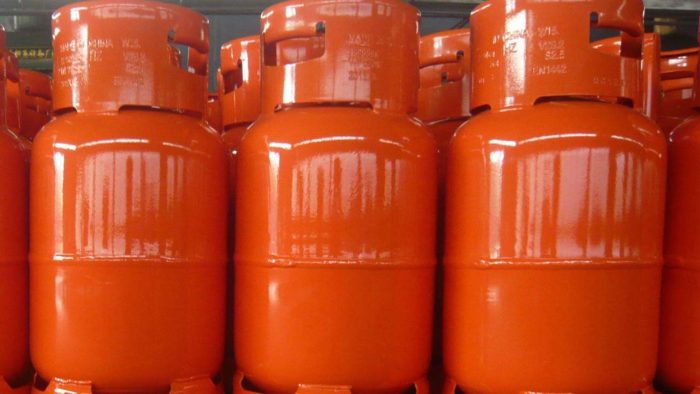
Despite repeated assurances of cheaper and sufficient cooking gas in the country, many households in Nigeria are worried that the price has remained sky-high, hitting N2,500/kg in some jurisdictions.
Many Nigerians have flooded various social media platforms to express their frustration over the matter, describing it as a death knell.
According to them, feeding has become a nightmare with costly gas adding to their list of challenges.
“Food is expensive. There’s epileptic power supply, petrol is too high. Kerosene is scarce. How does the government want poor people to survive?”Sola Akinwande, a vulcaniser in Ajao estate, Lagos, lamented.
Esther Adam, a housewife groaned: “They said we should dump kerosene and embrace gas. Now, gas prices are out of the reach of the common man. How do we survive?”
Experts have said that the problem has a wider implication.
According to them, Nigeria’s ambitious plan to become a gas-powered economy by 2030, under the Decade of Gas Initiative, is now threatened with the stratospheric price of cooking gas.
They said millions of households have been forced back to firewood, charcoal and other dirty fuels.
The development is now undermining the Federal Government’s clean cooking agenda and threatening key targets under the Decade of Gas Initiative.
Despite possessing Africa’s largest proven gas reserves of over 200 trillion cubic feet and ranking among the continent’s leading LPG producers, Nigeria is witnessing an alarming reversal in household energy transition, with the cost of Liquefied Petroleum Gas (LPG) rising by as much as 50 per cent in recent months amid supply shortages, distribution bottlenecks and pricing distortions.
This has raised concerns among industry stakeholders and energy experts who warn that unless urgent interventions are implemented to address supply constraints and affordability challenges, years of progress in promoting clean cooking, reducing deforestation and improving public health could be wiped out before the government’s 2030 target is reached.
A market survey conducted by Daily Sun on Sunday across major LPG retail outlets revealed that the price of cooking gas has climbed to over N1,800per kilogramme from around N1,200 recorded months ago, representing an increase of about 50 per cent.
In neighbourhood outlets where gas is sold in smaller quantities, prices now range between N2,400 and N2,500 per kilogramme depending on location.
The impact on households has been severe. A standard 12.5kg cylinder that previously cost about N15,000 to refill now requires between N22,500 and N27,500, depending on location and retailer.
Industry operators also disclosed that the cost of a 20-tonne LPG truckload has surged to about N25 million, further worsening retail prices.
In separate interviews, operators told Daily Sun that acute product shortages have persisted at depot level over the past two months.
They complained that some retail outlets have remained out of stock for as long as two weeks, while marketers are forced to keep trucks in long queues at depots before securing supplies.
Speaking with Daily Sun, stakeholders attributed the worsening cooking gas crisis to regulatory failures, exchange-rate volatility, the delisting of some offtakers by the Nigeria LNG Limited (NLNG) and supply disruptions across the LPG value chain.
President of the National Association of Liquefied Petroleum Gas Marketers Association of Nigeria (NALPGAM), Mr. Edu Inyang, attributed the recent rise in prices and supply shortages to disruptions in product availability and market practices requiring urgent regulatory scrutiny.
Inyang said marketers have been grappling with inadequate product availability despite growing consumer demand for LPG, driven by increasing adoption of cooking gas and rising petrol prices that have encouraged some users to switch to gas-powered alternatives.
According to him, the association has maintained regular engagements with key industry stakeholders and the Nigerian Midstream and Downstream Petroleum Regulatory Authority (NMDPRA) in a bid to resolve the situation.
“We have a supply issue. Demand for LPG continues to grow as more Nigerians embrace cooking gas and switch to gas generators due to the sharp rise in the price of petrol, but the product is not available in sufficient quantities to meet market needs,” he said.
Inyang disclosed that NALPGAM has repeatedly drawn the attention of the regulator to the challenges facing the market, stressing that the association has engaged the NMDPRA several times within the last month.
He expressed concern that some operators may be withholding products from the market, thereby worsening scarcity and driving up prices.
The NALPGAM President urged NMDPRA to closely monitor the movement and distribution of LPG volumes leaving depots.
“The regulator needs to examine the records and determine where every volume of gas goes after it leaves the depots. There should be accountability and transparency throughout the supply chain,” he stated.
He noted that marketers are often blamed whenever prices rise, even when the underlying causes are beyond their control.
“Most times, the blame comes to marketers, but the reality is that we are also affected by the supply situation. We are the closest to consumers, so naturally the public directs its frustrations at us,” he said.
He called on the NMDPRA and other relevant authorities to intensify oversight of the LPG distribution network to ensure products reach the market as intended and to discourage any practices capable of creating artificial scarcity.
Inyang expressed optimism that stronger regulatory intervention and improved supply management could stabilise the market and improve product availability.
He further disclosed that the crisis has been compounded by the recent delisting of some marketers from the NLNG domestic LPG offtake programme.
According to him, the removal of no fewer than eight NALPGAM members from the arrangement has reduced the number of active suppliers and tightened product availability across the country.
“In the past, these marketers were receiving products directly and supplying various parts of the country. Their delisting has reduced the number of active participants in the supply chain and further tightened product availability in the market,” he said.
According to the NMDPRA April 2026 Factsheet, Nigeria’s domestic supply of LPG stood at 4,500 metric tonnes per day(4.5 KT/D), with zero imports recorded during the period under review.
Other News
However, consumption for the same period rose to 4,800 metric tonnes per day(4.8 KTD), resulting in a daily supply deficit of 300 metric tonnes.
This shorfall is significant, as it highlights a clear imbalance in the market where demand continues to outstripe supply.
The gap, though seemingly modest in volume terms may be contributing to ongoing market pressure, trigger availability, and the current volatility in cooking gas prices across the country.
The shortfall of 300 metric tonnes may be partly responsible for the current gas crisis, a clear indication that consumption outweighs supply.
Former National Chairman of the Liquefied Petroleum Gas Association of Retailers (LPGAR) Branch of the National Union of Petroleum and Natural Gas Workers (NUPENG), Mr. Chika Umudu, attributed the current instability in LPG supply and the persistent rise in cooking gas prices to a combination of policy shortcomings and prevailing global economic realities.
According to him, two major factors are responsible for the situation: the failure to fully implement the Federal Government’s gas expansion agenda and external developments in the global energy market.
Umudu explained that recent geopolitical tensions in the Middle East, particularly the disruption of petroleum product shipments through the Persian Gulf following the conflict involving Iran, have contributed to supply uncertainties and rising energy prices across international markets. He noted that although Nigeria is one of the world’s leading hydrocarbon producers, the domestic LPG market remains heavily influenced by global pricing mechanisms, product availability and exchange rate fluctuations.
“Many Nigerians wonder why events taking place thousands of kilometres away in the Middle East should affect the price of cooking gas in Nigeria. The reality is that LPG pricing in Nigeria has, for decades, been tied to international market conditions. Whenever there are disruptions in global supply or sharp movements in foreign exchange rates, the local market feels the impact almost immediately,” he said.
Umudu argued that the current scarcity and high cost of LPG are being driven by a combination of constrained global supply, the continued depreciation of the naira against the dollar, inadequate local production capacity and insufficient storage infrastructure.
He acknowledged that the commencement of LPG supplies from the Dangote Refinery provided some relief to consumers and helped reduce dependence on imports. However, he noted that supply from the refinery has not been consistent enough to fully bridge the country’s supply gap, particularly since the last quarter of 2025.
According to him, the challenges experienced in October 2025, when cooking gas prices reached record levels and supply became scarce in several parts of the country, exposed the structural weaknesses within Nigeria’s LPG value chain.
“The growing adoption of LPG by households and businesses is a positive development, but it has also exposed the inadequacy of existing production, storage and distribution infrastructure. Demand has grown much faster than investment in critical infrastructure, making the market vulnerable to periodic supply disruptions and price spikes,” he stated.
While acknowledging the contribution of private investors such as the Dangote Refinery, Umudu stressed that a single operator cannot be expected to shoulder the responsibility of meeting the country’s entire LPG demand.
He maintained that the Nigerian National Petroleum Company Limited (NNPC Ltd.) and relevant government agencies should have anticipated the infrastructure requirements necessary to support the country’s clean cooking aspirations before rolling out ambitious programmes such as the Decade of Gas Initiative, the National LPG Penetration Programme and the Gas Master Plan.
According to him, inadequate planning, weak implementation and insufficient oversight have remained major obstacles to achieving the objectives of these programmes.
“When I served as the national chairman of LPG retailers, I repeatedly cautioned policymakers and investors that the level of investment in LPG production, storage and distribution was far below what would be required to support a successful nationwide transition to cooking gas. Unfortunately, those concerns have become evident today,” he said.
Umudu warned that unless substantial investments are made to expand production capacity, storage facilities and distribution networks, supply shortages and price volatility may persist despite increasing consumer demand.
He noted that Nigeria’s rapidly growing population, coupled with increasing LPG adoption rates, requires continuous expansion of infrastructure to prevent demand from outpacing supply.
“For a country blessed with enormous crude oil and natural gas reserves, Nigeria should not be struggling to provide affordable cooking gas to its citizens. Several countries with far fewer energy resources have achieved greater levels of LPG penetration because they matched policy ambitions with infrastructure development,” he said.
He stressed that the government must play a leading role in facilitating investments, creating an enabling environment and ensuring adequate supply security across the LPG value chain.
According to him, many Nigerians are finding it increasingly difficult to accept explanations linking high cooking gas prices solely to foreign exchange challenges or international conflicts when the country possesses abundant natural gas resources.
“The average consumer wants to know why a country that exports significant volumes of oil and gas cannot guarantee affordable cooking fuel for its own people.
These concerns are legitimate and require practical solutions rather than repeated explanations,” he added.
Umudu further observed that the assumption that consumers can easily revert to traditional fuels is becoming unrealistic due to rapid urbanisation, dwindling forest resources and the rising cost of alternative fuels.
“It is no longer as simple as telling people to go back to firewood or charcoal. Firewood is becoming increasingly scarce in urban centres, while continuous deforestation has reduced availability in many rural communities. Kerosene, which once served as an alternative cooking fuel, has also become expensive and difficult to obtain. That is why ensuring affordable and sustainable LPG supply has become a national economic and social imperative,” he stated.
Offering a different perspective, energy policy analyst, Mr. Ayodele Oni, argued that Nigeria’s cooking gas crisis is less about production volumes and more about pricing and market structure.
Ironically, he noted that LPG prices have continued to rise despite significant growth in domestic supply.
According to him, local production now accounts for the majority of LPG consumed in Nigeria, while imports have declined substantially. Yet households are paying more than ever.
“I think export-parity pricing is the central culprit. Even gas processed here at home is priced against international, dollar-denominated benchmarks. So the Lagos household pays a price set in London and New York, indexed to a naira that keeps weakening. Until we anchor domestic LPG pricing in naira, building more capacity will keep failing to reach the consumer.
“Despite holding Africa’s largest proven gas reserves of over 200 trillion cubic feet, Nigeria exported more than 60 per cent of its gas production in the first quarter of the year, while domestic LPG demand of about 1.8 million tonnes exceeded supply of roughly 1.6 million tonnes. We are, in effect, exporting our own clean-cooking transition,” he said.
He added that foreign exchange pressures, volatile crude oil prices linked to tensions around the Strait of Hormuz, policy uncertainty, logistics bottlenecks and inadequate storage infrastructure have all contributed to rising LPG prices.
According to him, weak distribution networks also mean consumers in inland states often pay significantly more than those in coastal locations where supply infrastructure is concentrated.
On solutions, Oni urged the government to take five urgent steps: decouple domestic LPG pricing from export benchmarks through a transparent naira-based framework supervised by the NMDPRA; legislate a genuine domestic LPG supply obligation that reserves a fixed share of production for local consumption; make VAT and import-duty waivers permanent and predictable; invest in coastal and inland terminals, storage facilities and cylinder distribution schemes through public-private partnerships; and direct competition regulators to investigate pricing practices among depot operators.
According to him, deregulation has merely exposed the true cost structure of the market.
“The answer is domestic supply security and infrastructure, with targeted support for the poorest households, not another fiscal sinkhole. The drift back to charcoal and firewood is eroding a decade of public-health, environmental and emissions gains.
“This is not merely a household inconvenience. It is a reversal of national policy, and it is happening in a country that should be among the cheapest places in Africa to cook with gas,” he stated.