Follow Us on Google
…As lawyers urge party to restore Nwosu, hold fresh congress
By Chinelo Obogo
Following the leadership crisis, which has engulfed the African Democratic Congress (ADC), senior lawyers have said that there is still hope and a clear constitutional path that could rescue the party.
This is even as the lawyers submitted that former Senate President David Mark, whose emergence as interim national chairman triggered the current crisis, may have committed what they reffered to as an avoidable legal mistake that has now created challenges for the party.
The lawyers said that Mark’s decision to file an interlocutory appeal against a “routine procedural court order”, rather than fight the substantive case against his leadership on its merits, is the reason the ADC has been left leaderless barely three weeks to the commencement of party primaries, after the Independent National Electoral Commission (INEC) announced on April 1, 2026, that it will no longer recognise the leadership of Mark and former Interior Minister, Rauf Aregbesola, as the party’s national chairman and secretary, respectively.
Regardless, the lawyers, say the damage is still reversible.
Recall that on July 2, 2025, the ADC’s founder, Ralph Nwosu, announced the resignation of his national executive and endorsed an interim national leadership under Mark and Aregbesola. The event where the announcement was made held at the Shehu Musa Yar’Adua Centre in Abuja. But four weeks later, the former deputy national chairman under Nwosu, Nafiu Bala, announced that he would assume the role of interim national chairman himself. He also denied having resigned his position as deputy national chairman, dismissing as “entirely false, deceptive, malicious, and fake” a letter dated July 18, 2025, in which he was reportedly said to have done so despite the fact that he attended the July 2 event at which the Mark and Aregbesola leadership was unveiled. On his personal Facebook page, he wrote at the time: “Yesterday, we well coming (welcome) the coalition members formally adopted our great party, the African Democratic Congress (ADC) as platform for the 2027 Nigeria General Elections with Distinguished Senator David Mark serving as the National Chairman and H.E. Ogbeni Rauf Aregbesola serving as the National Secretary.”
On September 2, 2025, Bala then filed a suit at the Federal High Court in Abuja, seeking to restrain INEC from recognising the Mark and Aregbesola-led leadership. The case was assigned to Justice Emeka Nwite. When Bala applied for an ex-parte order, Justice Nwite declined and instead directed that all defendants, including Aregbesola, INEC, the ADC and Ralph Nwosu, be put on notice so the court could hear all sides. David Mark was not named as a defendant in the suit.
But days later, on September 9, INEC formally recognised Mark and Aregbesola as the ADC’s new leaders.
It was at this point, legal experts say, that the Mark camp made a mistake. Rather than return to the Federal High Court to fight Bala’s substantive case on its merits, it filed an interlocutory appeal at the Court of Appeal, challenging Justice Nwite’s procedural order directing parties to be heard. Lawyers said the appeal carried a fundamental procedural defect because since Mark was not a party to the original Federal High Court case, he required the court’s leave before he could appeal its decisions. He sought no such leave, and none was granted.
On March 12, 2026, a three-member panel of the Court of Appeal delivered its judgment in which Justice Uchechukwu Onyemenam, dismissed the appeal and ordered all parties to “maintain the status quo ante-bellum” and to “refrain from taking any step or doing any act capable of foisting a fait accompli on the court or otherwise rendering nugatory the proceedings before the trial court.”
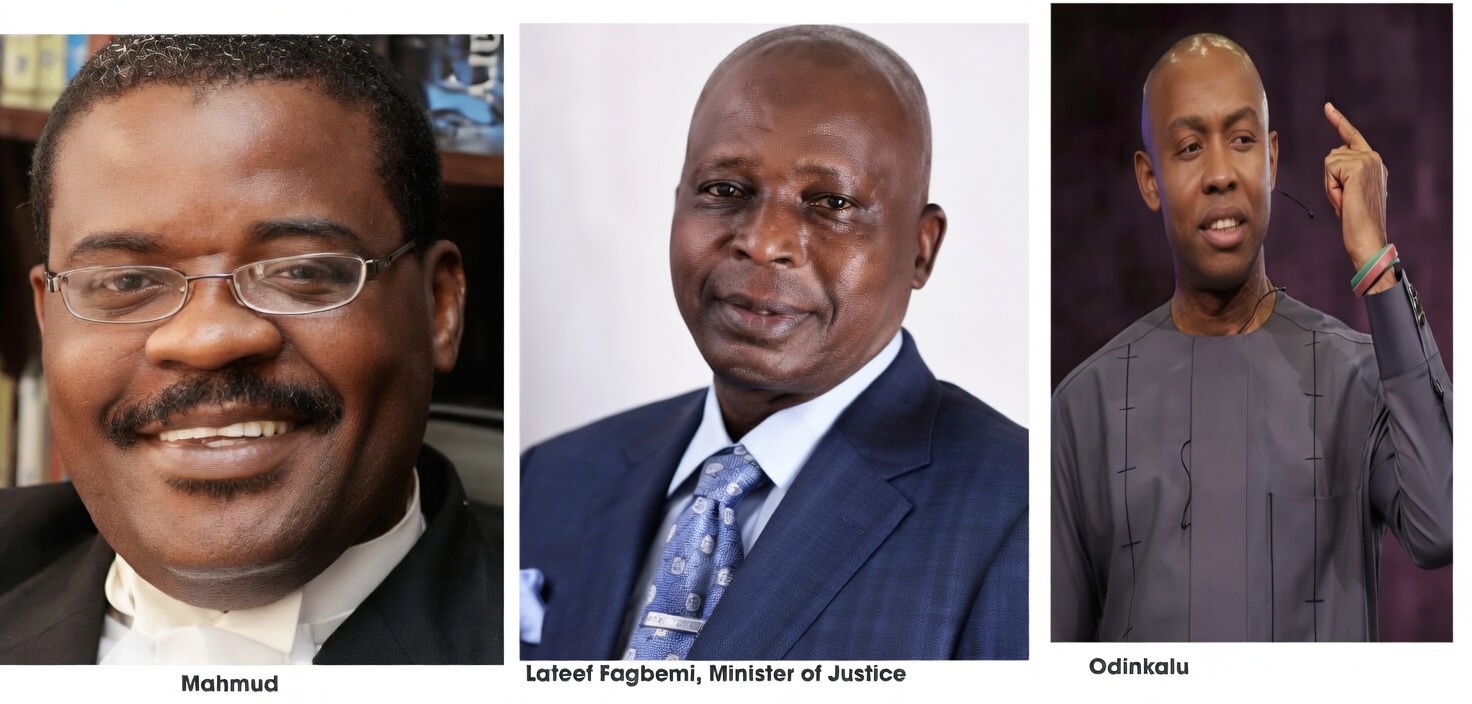
Justice Okon Abang, in a separate 15-page ruling, stated that because Mark had not obtained leave to appeal, the appeal was an outright nullity. Reacting, rights lawyer, Prof. Chidi Odinkalu said: “What this means is that there was in fact no appeal. It is difficult, therefore, to understand how he could have dismissed an appeal that did not as a matter of law exist.”
Three weeks after the judgment, INEC announced that it was withdrawing its recognition of Mark and Aregbesola as ADC leaders, citing compliance with the Court of Appeal’s status quo order.
The announcement, made on April 1, drew immediate criticism as party primaries are scheduled to begin in three weeks and under the new Electoral Act, parties must submit their membership registers to INEC 21 days before primaries. What this means is that if ADC doesn’t have any leadership, it can do neither.
Despite the crisis however, two senior lawyers say a constitutional solution is possibly available but that it requires full compliance with the Court of Appeal’s order.
Rights lawyer, Abdul Mahmud was asked whether appointing Ralph Nwosu as a nominal figurehead chairman —while the coalition continued with its congress and convention plans would satisfy the court’s directive.
Responding, he said it would not, and warned that attempting such an arrangement could expose the party to contempt.
“The Court of Appeal order directing a return to status quo ante-bellum is not symbolic; it is both restorative and preservative. It requires ADC to revert fully to the position that existed before the disputed changes in leadership.
“Status quo ante-bellum doesn’t create a leadership vacuum as some folks presume. It simply means return to the state of affairs before hostilities broke out. In practical terms, that means restoring Ralph Nwosu not as a ‘figure-head’ chairman, but as the substantive occupant of the office, with all the powers and responsibilities that come with it. “
He said if ADC wants to proceed with the congresses and the national convention, the safer way is to adopt some procedural legitimacy by fully complying with the order of the Court of Appeal and allowing the restored leadership to oversee the process where David Mark can emerge legitimately.
Another lawyer, Inihebe Effiong, who reacted on his X handle, pointed to the error made at the Court of Appeal stage, and urged the party to return immediately to the Federal High Court.
“ADC’s legal strategy in this case is problematic. The judge did not grant any restraining order. The ex-parte motion failed the moment the judge ordered the plaintiff to put the defendants on notice. They should have filed processes in vehement opposition to the motion and the substantive suit. But the legal team decided to file an interlocutory appeal against the order to show cause. It’s unusual. It’s untidy to me. If they choose to further appeal to the Supreme Court, it’ll be more problematic for them” he said.
With primaries and party registration deadlines fast approaching, the ADC has little time. But lawyers insist the party is not out of options. They say that Nwosu should be restored in full, not in name only; return to the Federal High Court and contest Nafiu Bala’s suit, then use the restored leadership to conduct a fresh congress and convention. Will the party listen? It seems only time will tell.