Follow Us on Google
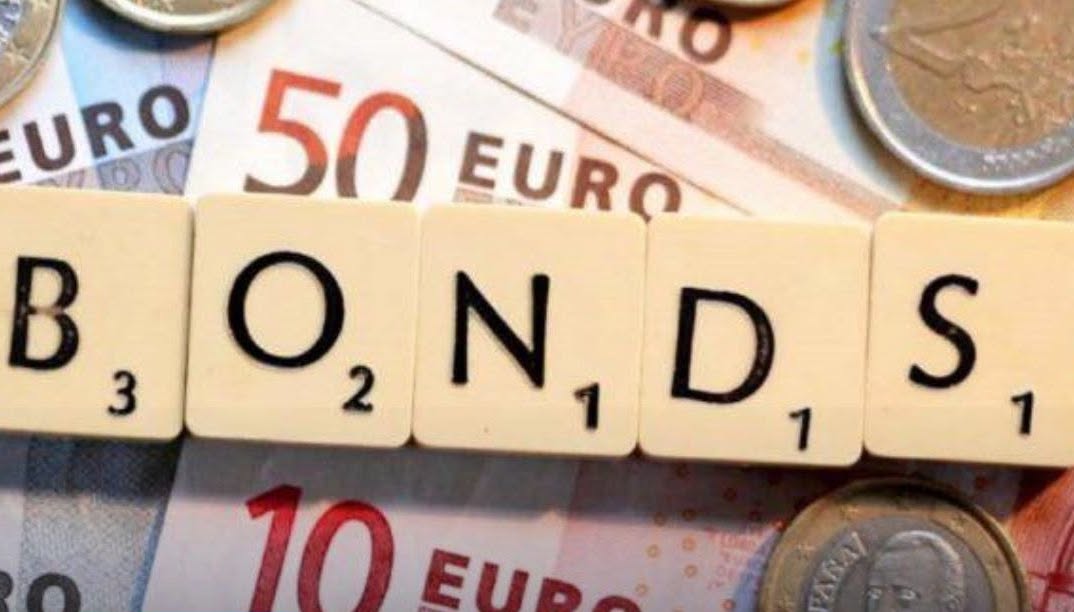
Nigeria’s bond market is expected to remain under pressure in the third quarter of 2026 as the federal government’s heavy borrowing programme is likely to keep interest rates on government securities high ahead of the Central Bank of Nigeria’s (CBN) Monetary Policy Committee (MPC) meeting later this month.
Analysts say the government’s increased appetite for domestic borrowing is flooding the market with bonds, forcing investors to demand higher returns before lending money to the government.
The outlook follows a weak performance in the bond market in June, when average yields on Federal Government of Nigeria (FGN) bonds rose by 148 basis points to 17.79 per cent. Bond yields move in the opposite direction to prices, meaning investors sold off existing bonds as expectations of fresh government borrowing increased.
The sell-off gathered pace after the Debt Management Office (DMO) announced a record N1.2 trillion bond offer in June—the largest single bond auction ever conducted by the agency. The move reinforced concerns that the government’s financing needs would continue to put pressure on the fixed-income market.
As a result, interest rates on the August 2030 and June 2032 bonds increased to 16.30 per cent and 16.50 per cent from 16.00 per cent and 16.15 per cent, respectively, at the previous auction.
The upward movement was recorded across all maturities, with medium-term bonds recording the biggest increase. Treasury bill yields also climbed by 103 basis points to an average of 18.54 per cent, reflecting the broad rise in borrowing costs across the market.
Other News
Market analysts believe the pressure is unlikely to ease anytime soon because the Federal Government still plans to borrow heavily to finance its 2026 budget deficit. The 2026 budget projects a deficit of N34.5 trillion, with about N29.2 trillion expected to come from domestic borrowing. Analysts say this borrowing plan has already influenced investor expectations and is likely to keep yields elevated in the months ahead.
Analysts at Cordros Research said the government’s fiscal position remains one of the biggest factors driving the bond market. Although ongoing tax reforms, improved revenue collection and stronger oil earnings are expected to boost government income, they may still fall short of funding planned expenditure.
According to the firm, the Federal Government is expected to generate N30.82 trillion in revenue, below its target of N36.87 trillion, while spending is projected at N57.70 trillion. This would leave a fiscal deficit of N26.88 trillion, equivalent to about 5.3 per cent of Nigeria’s Gross Domestic Product (GDP). Cordros also noted that bond and treasury bill yields have risen steadily this year as investors scaled back expectations of lower interest rates while responding to increased government borrowing.
The research firm expects yields to remain high in the third quarter, with investors likely to favour shorter- and medium-term securities while remaining cautious about locking funds into longer-term investments.
Attention is now focused on the CBN’s 306th MPC meeting scheduled for July 20 and 21. Analysts expect the committee to leave interest rates unchanged as it balances moderating inflation against lingering global uncertainties, including geopolitical tensions in the Middle East.
Overall, analysts believe the combination of aggressive government borrowing, large bond auctions and the likelihood of the CBN maintaining a tight monetary policy stance will keep bond yields elevated through the third quarter, limiting the chances of a strong recovery in the fixed-income market.