Follow Us on Google
By Christy Anyanwu
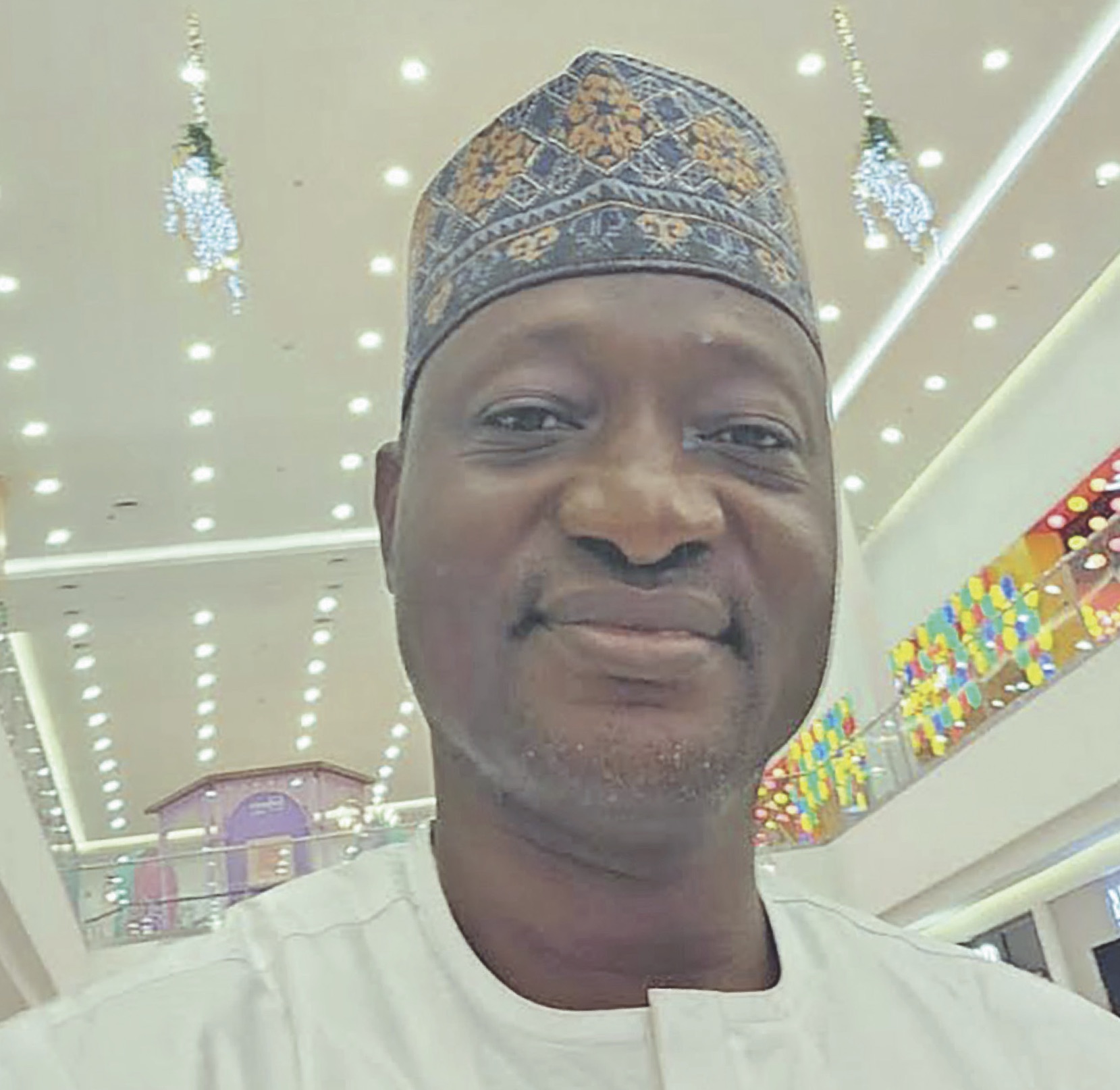
Ambassador Jamilu Mohammed Goma is thePresident General, National Shippers Association of Nigeria.
He was one of the facilitators at Shippers Day Celebration held by Nigerian Shippers Council in conjunction with Shippers Association Lagos State.
In this interview with Saturday Sun, Dr Goma noted that the association is doing its best to see that the sector continues to thrive as one of the biggest contributors to the national economy, despite challenges and the lack of a national shipping line or any indigenous-owned vessel.
How long have you been in this position as National Shippers Association of Nigeria President General ?
I got into the position about three months ago. When the last president died, I took over from him.
Before then, what were you doing?
Before then, I was the national vice president-general of the National Shippers Association of Nigeria (NSAN).
Why did you say you were an ambassador?
Yes, I am an ambassador to the United Nations.
How do you manage these responsibilities in the National Shippers Association and the United Nations?
You see, in the United Nations, they usually deal with the World Food Programme. There is a World Food Programme under the UN, and, being shippers, we are dealing with the movement of food cargo, especially food from one country to another country.
I am an agricultural produce exporter and importer. Because of the reputation and qualities they saw in us and the good things we were doing, moving shipments from one country to another country, they saw our work and awarded me as an ambassador to the United Nations.
I have been involved in this shipping business for more than 25 years. In fact, I was born into this business. My father is a shipper, a businessman, and I inherited the business.
And how has it been, considering you’ve been 25 years in the industry? How has it been over the years compared to now?
As you know, things are changing, almost everything is changing. Before, you know there is innovation, what it was before is not what it is as of today. But, Alhamdulillah, everything is going well. The government is doing their best and we are happy.
What are the challenges and what do you think the government can do to improve things?
You see, when it comes to challenges, there are a lot of multiple challenges related to everything you are doing, most especially in the shipping business. Because the shipping business is broad and large, there are a lot of challenges. One of the few challenges we encounter is duplication of efforts, multiple tariffs and exploitation by the shipping lines. I think that’s it.
How is the Shippers’ Council supporting local businesses and enterprises in the shipping industry?
You see, in the council, there are different regulations. So, actually, the shippers and the council are working hand to hand. The council is supporting us in the areas where we have problems in terms of our cargo, in terms of our containers, excessive charges of demurrage, detentions and so on. By the time we forward complaints to the Shippers’ Council they intervene. I think, recently, more than N13.8 billion was recovered by shippers to Nigerian Shippers’ Council, as part of their intervention for related cases and issues.
How is the council addressing challenges like port congestion and cargo clearance?
The Shippers’ Council controls every activity that is related to ports, import and export. So, whatever complaint comes to them, they attend to it. They make sure that most of the shipping lines vessels arrive on time and they protect all the containers in the port so that they enable other containers to have access to the port.
On the other hand, how is the organisation fostering partnerships with international shipping lines and stakeholders?
You see shippers, the shipping lines cannot do without shippers because we are the service provider for their business. Without shippers, they cannot be in Nigeria because shippers are the real owners of the business. They are looking for customers and we are the customers. So, we have a good relationship with them in terms of service provision. Sometimes, though, we are just battling with them in terms of bureaucracy because the government of Nigeria and Nigeria itself doesn’t own a vessel. It’s all foreign vessels; therefore, you know, bureaucracy will be there. But with the help of the Shippers’ Council, every day we are pushing to see that it is reduced to a minimum level. As you can see, some of the discussions I have done here are mostly with emphasis on the shipping line.
Why is it that Nigeria doesn’t have its own shipping line?
Well, it is left for the federal government to answer that question. Apart from that, I cannot say why we don’t own our vessels up to now as a country.
As you’ve been in this business for over 25 years, what are the lessons about life, business and other things?
Well, in business, whether you like it or not, you must work to survive. You must eat, whether you like it or not. There are no businesses in life without challenges. There must be some problems along the line, obstacles and challenges. Nevertheless, we remain focused and committed. That is why you see we are still progressing and we say Alhamdulillah.
During your tenure now as president, what are you bringing to the table? What are you planning to do as helmsman of this ship?
Well, part of our plans in the Nigerian Shippers’ Association is to make sure that we harmonise all Nigerian shippers to come under one umbrella. We will ensure that all shippers in Nigeria answer the same way, to make sure we offer maximum protection to Nigerian shippers. What affects one shipper in Nigeria affects all Nigerian shippers. We are one of the biggest revenue-generating groups in the country, because the government makes a lot of money through us. So, we make sure that we have a voice in the government. And we also make sure the government gives us a policy that is suitable for Nigerian shippers. This is one of the reasons we are working hand in hand, the reason why I am in Lagos as a national president. Otherwise, I would not be here to attend their celebration.
How was life growing up there in the North?
Life in northern Nigeria is good. As you can see, you can see me yourself. Even by seeing me, you know I am good. So, there is no problem. Life in the North is the same as in any other part of Nigeria.
Maybe you didn’t feel the impact of what I am trying to say, because your father was rich?
No, no, no. Being from a rich home, well, it doesn’t matter. Everybody can grow wealth with his bare hands. You know, especially if you are from a rich home. No matter how much they left for you, if you cannot invest it and use your hands, you waste it. We don’t intend to keep wealth for anybody. Whatever I have, I own it and I worked for it myself. Even though my father has money, I have also built my own money.
But you started in business with your father?
I worked with my father because he was an experienced person, a talented person. He gave me knowledge, he prayed for me and he showed me the way. So, I improved from what he taught me and I carried on from there.
What did you study in school?
I studied business management. For my second degree, I studied international trade. and the same for my PhD. I studied international trade.
Aside from being a shipper, what other things to you do? Do you have other jobs, maybe in government or elsewhere?
I am only a conventional businessman. We are into different segments of business. I am into farm produce, export and import. That’s all we are doing in life.
My academics was just to improve my life. It’s just to improve my business for myself. Not to work for the government or to work for anybody.
Do you have any intention to go into politics one day?
Well, for now, I cannot say. You know, destiny sometimes drags somebody from what you have not expected. Maybe, in the future, if God is willing, I will. But for now I am not into politics. I don’t know what tomorrow will be.
When you are not thinking about export, import, shipping and all that, how do you relax?
There is nothing to deprive me from sleeping. Whatever I am doing, once I pray to Allah, I turn off my phone, I have time for my family, I sleep, I relax. Because I cannot start over-thinking or looking for money to the point that it will affect my social life and even relationships with my family.
What advice do you have for the government as a businessman?
The advice I have for the government, considering some of the comments I made from the discussions, in the area of service improvement, the customs are doing their best. Compared to what has been happening for the last four or five years, we must commend them. But we must also encourage them to do more. Even the council, as a government, compared to what they have been doing for the last four to five years, has improved. Even the entire system of the government, they concentrate towards trade, export, to increase more of revenue in Nigeria. They are trying and, from the angle of the shippers, Nigerian shippers, we must commend the efforts of government and encourage them to do more than they are doing. They cannot get it right in one day, but, gradually, we will get it as a country.