Follow Us on Google

From Desmond Mgboh, Kano
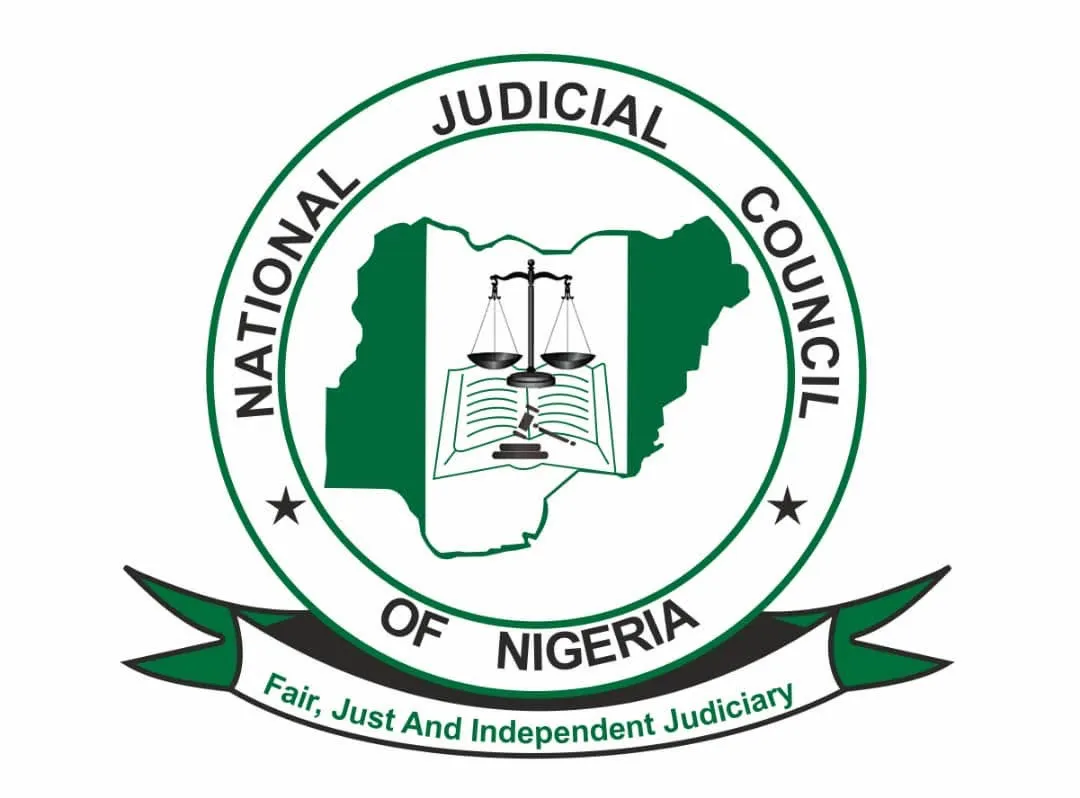
A group which identified itself as “Concerned Nigerian Citizens” has petitioned the National Judicial Council (NJC) to investigate alleged interference in the Supreme Court judgment that restored Abba Kabir Yusuf as Governor of Kano State in 2023.
The petition, dated 24 November 2026 and signed by K. Suleiman Malali, Kaduna State, was addressed to the Chairman of the NJC through the office of the Chief Justice of Nigeria.
The petition was copied to the Chief Justice of Nigeria, the President of the Nigerian Bar Association, the Attorney-General of the Federation and the National Assembly Committee on Judiciary.
The petitioners explained that they were acting to protect the integrity, independence and public confidence in the Judiciary, adding that they were not seeking to re-litigate, review or set aside the judgment, which they noted is final by virtue of Section 235 of the Constitution.
According to the petition, the 2023 Kano State governorship election was contested between Yusuf of the New Nigeria Peoples Party (NNPP) and Nasiru Yusuf Gawuna of the All Progressives Congress (APC). The petitioners recalled that the Election Petition Tribunal and the Court of Appeal nullified Yusuf’s election, before the Supreme Court reversed the decisions and restored him as duly elected governor.
The petitioners said their action followed a recent interview allegedly granted by Governor Yusuf to BBC Hausa, in which he was reported to have said, in substance, that he was instructed by his political mentor, Rabiu Musa Kwankwaso, to negotiate with the President, adding that he swore on the Holy Book that if the President would ensure that judgment was delivered in his favour, they would defect to the APC.
The petitioners said the alleged statements in the interview, if true, raised grave questions of law and judicial ethics, including breach of the Judicial Oath, breach of judicial independence, breach of the Code of Conduct for Judicial Officers, and erosion of public confidence in the Judiciary.
They stated that they were not asserting as fact that any Justice was compromised, but that the allegation was of such gravity that silence by the Council would further erode public confidence in the Judiciary.
The group therefore asked the NJC to constitute an independent panel to investigate the circumstances surrounding the allegation, and to obtain and authenticate the full, unedited recording and certified transcript of the BBC Hausa interview from the BBC.
They also asked the Council to invite Governor Yusuf to confirm or deny, on oath, whether he made the said statements and the full context thereof, and to invite any other person mentioned to respond.
They prayed for a review of the judgment and proceedings in Appeal No. SC/CV/1179/2023 strictly to determine whether the decision was in accordance with law and due process for institutional learning, and to make appropriate findings.
The petitioners further asked that, if any judicial officer was found to have breached the Judicial Oath or Code of Conduct, appropriate disciplinary sanctions should be recommended and, if no misconduct was found, a clear, reasoned public statement should be published exonerating the Justices and reaffirming the independence of the Judiciary.
They concluded that the Judiciary remained the last hope of the common man, and that a judiciary whose judgments were perceived as negotiated, rather than adjudicated, could not command obedience or respect.
Meanwhile, the APC Presidential/Gubernatorial Campaign Council in Kano State has rejected the petition, describing it as misleading, lacking credible evidence and based on a misrepresentation of the governor’s BBC Hausa interview.
Other News
In a press statement issued in Kano and signed by its Campaign Spokesperson II, Sanusi Kiru, the council argued that the petitioners had confused a request for presidential non-interference in judicial proceedings with an alleged attempt to influence the outcome of the case.
According to the council, Governor Yusuf had explained in the interview that his former political mentor, Senator Rabiu Musa Kwankwaso, instructed him to approach President Bola Ahmed Tinubu with an assurance that they would return to the APC if the President refrained from interfering in the legal proceedings concerning the 2023 Kano governorship election and the case ended in their favour.
The APC council maintained that asking the President not to interfere in judicial proceedings was consistent with the constitutional principle of separation of powers and could not, on its own, constitute evidence of judicial compromise.
It challenged the petitioners to identify any Supreme Court Justice allegedly involved in the purported negotiations, provide evidence of unlawful presidential instructions, or establish any improper communication, inducement or threat capable of influencing the judgment.
The council further argued that political discussions and subsequent political realignments could not, without supporting evidence, establish judicial corruption.
It cited the 18 March 2023 governorship election, in which the Independent National Electoral Commission (INEC) declared Yusuf the winner with 1,019,602 votes against 890,705 votes secured by his closest opponent, giving him a margin of 128,897 votes.
It also recalled that the Supreme Court, in its judgment delivered on 12 January 2024 in Yusuf Abba Kabir v. APC, INEC and NNPP, Appeal No. SC/CV/1179/2023, addressed issues including the validity of 165,616 deducted votes and the jurisdiction of lower courts over questions concerning political party membership.
According to the council, the Supreme Court’s reversal of the lower courts’ decisions was an exercise of its constitutional appellate powers, adding that the petitioners had not demonstrated any connection between the court’s legal reasoning and the alleged political interference.
On the petition’s legal basis, the APC council argued that the NJC lacked the constitutional authority to review or overturn the legal correctness of a Supreme Court judgment. It cited Section 235 of the 1999 Constitution, as amended, which provides for the finality of Supreme Court decisions, and argued that the NJC’s disciplinary powers should not be confused with appellate jurisdiction.
The council also questioned the timing and documentation of the petition, noting that it was filed more than 34 months after the Supreme Court judgment. It said the circulated version of the petition contained neither a verifying affidavit nor an authenticated recording or supporting exhibits to substantiate the allegations.
The statement further maintained that the demand for the governor to testify under oath must be considered within the constitutional protections afforded to him under Section 308 of the Constitution.
The APC council urged the NJC to conduct an appropriate preliminary assessment if the petition was formally presented, and to dismiss it if it failed to meet the required legal and evidential standards. It also challenged the petitioners to produce the complete authenticated BBC Hausa interview and credible evidence to support their allegations rather than relying on speculation.
The council said the right to petition constituted authorities must be exercised with factual accuracy, intellectual honesty and respect for established legal procedures.