Follow Us on Google
By Doris Obinna
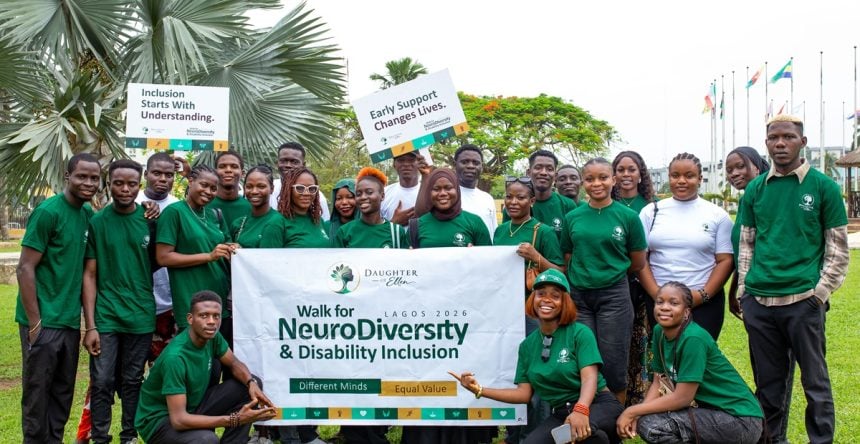
Daughter of ELLEN (DOE), in collaboration with experts in special education and disability advocacy, has called for greater inclusion, early diagnosis, and improved support systems for persons living with neurodivergence in Nigeria.
The appeal was made during an awareness campaign walk themed “Inclusiveness Matters,” which focused on promoting acceptance, support, and equal opportunities for individuals with neurodivergent conditions.
Advocates, educators, and disability rights campaigners urged governments, schools, parents, and religious institutions to stop viewing neurodivergent conditions as spiritual problems. Instead, they encouraged the adoption of professional diagnosis, inclusive education, and support services. They warned that stigma, ignorance, and limited access to services continue to negatively affect millions of children and adults across the country.
Project Manager, DOE, Joyce Owah, explained that the organisation was established to advocate for persons with disabilities and neurodivergent individuals. She noted that many Nigerians wrongly associate conditions such as Attention Deficit Hyperactivity Disorder (ADHD), dyslexia, autism, and Tourette syndrome with spiritual attacks or possession, rather than recognising them as neurological differences that require understanding and support.
Owah stated that neurodivergent individuals are not abnormal but simply process information differently. She revealed that approximately one in seven people globally are neurodivergent, a statistic that translates to millions of affected persons in Nigeria. “Despite this, many continue to face discrimination and exclusion in schools, workplaces, and communities due to widespread misconceptions and lack of awareness.”
She further lamented the low rate of diagnosis in Nigeria, noting that many parents misinterpret symptoms as stubbornness, laziness, or spiritual affliction. According to her, fear of stigma often prevents families from seeking medical evaluations, leaving many children undiagnosed and without the support they need. She stressed that early diagnosis and intervention are critical for helping children adapt, develop, and thrive.
Owah urged parents to seek professional assessment whenever developmental delays, hyperactivity, or unusual learning patterns are observed in children. She also called on the Federal Government to implement policies that improve accessibility and inclusion in schools, healthcare facilities, and workplaces. Additionally, she encouraged educational institutions to adopt flexible teaching methods that accommodate different learning styles and needs.
Lecturer, Department of Educational Foundations, Special Education Unit, University of Lagos (UNILAG), Dr. Similoluwa Aremu, described neurodivergence as a condition in which a person’s brain functions differently from what society typically considers normal. She explained that neurodivergence includes conditions such as autism, ADHD, Down syndrome, and other developmental disorders, while emphasising that affected individuals possess enormous potential that can be developed with the right support.
Aremu stressed that understanding and acceptance are the first steps toward improving the lives of neurodivergent persons. She noted that these individuals are capable of making meaningful contributions to society and can achieve success when provided with appropriate accommodations, therapy, healthcare, and vocational training. He also highlighted the need for subsidised healthcare and therapy services to ease the financial burden on families.
The lecturer condemned cases where children with developmental conditions are abandoned, isolated, or mistreated because of ignorance and societal pressure. She maintained that the home should be the first environment where children experience love, acceptance, and encouragement. While acknowledging government efforts through inclusive schools and special education centres, she noted that existing facilities remain insufficient to meet the growing demand for services.
Other News
Aremu called on governments at all levels to intensify awareness campaigns in communities, religious centres, and grassroots settings using local languages. She also encouraged successful neurodivergent individuals to share their stories publicly to inspire hope among parents and caregivers. The campaign concluded by highlighting the crucial role of non-governmental organisations, educators, caregivers, and healthcare professionals in reducing stigma and promoting equal opportunities for persons living with disabilities and neurodivergent conditions across Nigeria.
Surveillance systems critical to containing disease outbreaks
From Aniekan Aniekan, Calabar
Nigeria’s ability to stop the next epidemic before it spreads hinges on how fast it can detect it with robust surveillance systems and not the absence of drugs or vaccines.
National President, Epidemiological Society of Nigeria (EPISON), Dr. Matthew Ashikeni, disclosed this in Calabar during the annual general meeting of the society.
The conference with the theme: “Strengthening Epidemiological Resilience in Nigeria: Addressing Emerging and Re-emerging Health Challenges” attracted epidemiologists across the country.
Ashikeni told participants “Nigeria cannot fight outbreaks without robust surveillance systems. “Early detection and rapid response help to curb outbreaks of such diseases. We need consistent monitoring, improved sanitation, continuous training for health workers, and evidence-based policies.”
Governor Bassey Otu, represented by Commissioner for Health, Dr. Henry Egbe Ayuk, said his administration prioritizes disease surveillance alongside primary healthcare, immunization, and health insurance.
“Governor Otu has placed healthcare at the forefront of development through sustained investments in primary healthcare, disease surveillance, health insurance coverage, immunization programmes, and infrastructure,” Ayuk said.
He added that Cross River is among few states successfully delivering vaccines and essential medicines to hard-to-reach communities, a key test of any surveillance system.
Director General, Cross-River State Primary Healthcare, Vivian Mesembe, said resilience means systems must detect threats fast and Cross River demonstrates resilience through routine surveillance and prompt investigation.