Follow Us on Google

By Sunday Ani
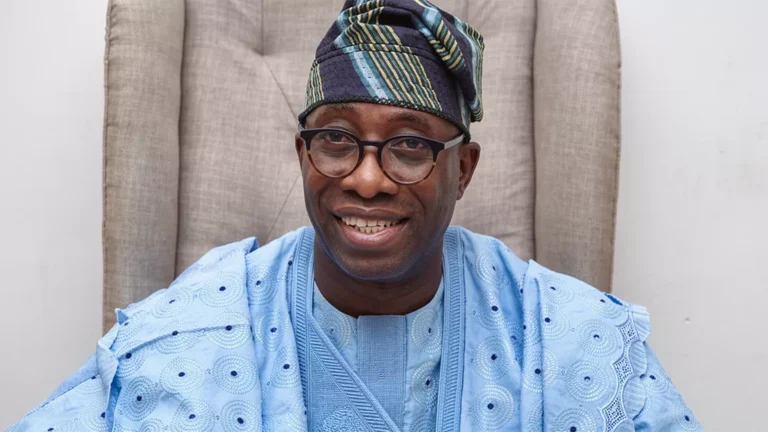
The 2023 presidential candidate of the Social Democratic Party (SDP), Prince Adewole Adebayo, has condemned the successive governments from 1999 till date for disposing of critical government enterprises under the guise of privatisation, stressing that privatization of government enterprises is wrong. He stated that part of the reasons for the massive infrastructure challenge in Nigeria today is because of the sale of public assets between 1999 and today.
In this interview, he speaks on a wide range of issues including the preparedness of his party towards 2027 general elections.
What is your opinion about Nigeria at 65, the journey so far?
I think one of the tragedies of Nigeria’s post-independence journey from 1999 to date, was the mistake of selling off our public assets. I am talking about the administration of former Olusegun Obasanjo just sold everything. The idea that you can sell Nigerian Electric Power Authority (NEPA), Nigerian National Shipping Line (NNSL) and National Insurance Corporation of Nigeria (NICON), in a developing country that hasn’t got an alternative to it and no pre-existing private sector equivalence is wrong. Even the US has not sold Fannie Mae and the other ones.
So, that is part of the reason we have massive infrastructure challenges we have massive savings challenge, we have massive unemployment, and we don’t have where to train people because in those days, if you finish school, you join NEPA, they will train you, raise you, many engineers were produced there, and many of the people became great products.
So, you have somewhere to go and work and then we destroy the public works department. So when you see any state governor stand in front of the camera, to commission or start a 10-km road, you will see one Lebanese person standing there. Even simple work that they could do with the public works department, they will not. I have more equipment in my compound than the entire Ministry of Works. I have more caterpillar equipment and other things in than the Works Department in Akure, Ondo State. So with that, what have we benefited from privatization? And the service is working. That’s the problem. If people look at it, some people have gotten rich out of it, but the service is working.
I would be able to solve our electricity problem. People are now generating electricity but what has happened is that many of these investments will rely on you to buy your own transformers. The idea is to reconstitute and raise new Nigerians who are going to now man these enterprises and then grow industries out of them. So, there are many things we can do, and I don’t want to look at this journey from differentials in the manifesto, because everybody in the country, every politician can’t believe in the same manifesto. Somebody can say I believe in privatization, others can say I don’t believe in it. Somebody can say I believe in a mixed economy, where we raise public resources to do certain things, and anything that can be done on the private side, you can do it.
But what I’m not going to do, I’m not going to have a sector that is fully public. Every sector, including defense, law enforcement and private persons are welcome. What I would never do is transfer public assets to you. Once you just start it, we’re trying to transfer some business to some people. So, you don’t need privatization; it doesn’t mean you carry assets of the public and give to the private person.
No, you privatize the industry, the sector, not the enterprises. Privatization of government enterprises is wrong. What you need is to open the sector.
What has your party, the SDP, been doing since the 2023 elections?
Well, what we have been doing after the election is to let people know that the conversation continues, because while we were campaigning, part of our talking points was for the immediate electorate. Most of it was for a longer vision about the country and it wouldn’t matter who won the election or who lost the election. Some issues would not leave us. And the earlier we build consensus around those issues the better so that hopefully they will not be subject of campaign.
We are probably one of the few countries in the world that are still campaigning about corruption. Every decent person knows that corruption is not good. It’s not a political programme. It is admitted by most people in the world that a corrupt society will not go anywhere. So, if we all agree about that, no one will choose a president with respect to the attitude towards corruption because all presidents, all presidential candidates, all politicians and all leaders at different levels of our national life will agree that corruption is bad. The fact that we need to be united around certain principles, like fairness, justice, equity and rule of law, should not make them political programmes. We had a guy, President Umaru Yar’Adua, who said the tenets of his administration would be rule of law. And I asked him, do you have an option? I mean, we have a government, but that’s the programme. And there was a debate as to where they were putting the 7-point agenda.
Other News
They were trying to put rule of law as part of the 7-point agenda. And I was thinking, rule of law cannot be a manifesto. Rule of law has to be basic, which everybody has to follow. So these are the conversations we’ve been having after the election so that people can know that these are not election issues. These are basic and fundamental issues of how to define our society and how to organize ourselves. So that’s what we’ve been doing since that time.
Do you have plans to settle for another party; what are your political leanings, thoughts and plans for 2027?
I joined the SDP in 1991 when I was 19 years old and even when the party was banned, I didn’t join any other party. As close as I was to those who were running the PDP in those days, I didn’t join the party even though some of them were my clients. I have relationships with some of them, and when they started this APC, I didn’t even consider it for a second. So, basically, the only party, the only political party I’ve ever joined in my life is the SDP, which I joined when I was 19 years old, and that’s where I will remain, unless the party ceases to exist, but I can’t join any other party. I will remain in the SDP.
There were rumours that the SDP was working for the APC or open to negotiations. What do you have to say about that?
Well, we don’t know the rumours and talk, what I know is what the SDP is doing officially. I only participate in what the SDP is doing officially but what I find out is that people who are in political parties tend to have loyalty outside their political party. I think it is part of the problems we try to solve by bringing more ethical leaders. But 100 percent of my own politics is done inside the SDP. And this day and time, there is no way you could have relationships with people and there won’t be evidence. They will see you with them, you will take a photo with them, they will trace their money to you or they will trace the activity to you. So, if you really want to know where somebody belong, other than just passing rumour or propaganda, you will know. There may be elements of people in the SDP who have sympathies for other parties but what we tend to do is when we catch them, we relegate them or expel them. But for the SDP, we know it has three different epochs. There was the SDP which I joined in 1991 which was the SDP of the Third Republic; that’s where you will see people like Rashidi Ladoja for example. He was our senator. You will see people like Lekan Balogun, Tinubu, Atiku Abubakar and so many of them like that, who were in the SDP at that time. So if you look around those who are in politics today, many of them were in the SDP. There were two political parties at that time, the SDP and the National Republican Convention (NRC). It looks like those who went to the NRC are not as successful as those who went to the SDP; you don’t see many of the NRC people any more. But the SDP ones, you’ll find them in every policy. So, sometimes when we go out, we meet them. This is always our party, we’re all together and things like that. So, if President Tinubu and many of the people around him still have that nostalgia about SDP, that’s one epoch. The second epoch of the SDP was when Chief Olu Falae came with Pat Utomi and so many of them like that, and they started and they revived the SDP. And so anywhere I go now and I say I am a leader of the SDP, Utomi is quick to say, “No, that’s my party; the position you are now, I used to be there.” So that’s the second epoch of it.
The third epoch is what we are doing now, which is the SDP of young people who don’t have the history of having occupied any office in the SDP. We just want to revive the little to the left principle of it, which incidentally coincides with chapter two for our constitution, Fundamental Objectives and Directive Principles of State Policy. So it achieved little to the right, never made it to the constitution. Everything that you find in chapter two is what you will find in the SDP. It has a unique constitution. Imagine if the British were to adopt the constitution and the objective, fundamental objectives and directive principle take the manifesto of the Labour Party and ignore that of the Tory or it is a chapter in the US Constitution that takes the platform of these Democrats and didn’t take that of the Republicans. So, I see that that’s a bit different. I think that the SDP tends to contest elections against any party that is in power or that is available, and on many occasions we have defeated them. Also, on many occasions, they defeated us. On some occasions, they cheated and said they defeated us but we actually defeated them. For instance, in Kogi State, we fought them. We know that we won, but they just stole it and it’s up to their conscience. In Ekiti State, we won it and they stole it but in some other states, they beat us handsomely because we don’t have strong people there. In Nasarawa State, we took two out of the three senate seats. We lost the third one because of some local problems around Doma. The candidate that the PDP chose has enthusiasm at home because the Doma people had been looking for a way to produce a senator. And we didn’t think about that one. Even when I spent like three nights in Doma, it didn’t occur to me that they were just looking at me, how will you not choose one of us for at least Senate or something? So we lost that. So, but our opponents, which we must have, also tend to demarcate us sometimes if people are talking positively about us, about our ideas, our enthusiasm and our independence. So they just say, oh, don’t mind them. It’s not something they will say. It’s normal in politics. But the SDP is an independent party. Our ideals are different. And it’s very rare to see a true SDP person that has interest in the APC or the PDP. It’s very hard because the idea of what they are doing is totally opposite to what we would do. So why would you, especially when the APC is open and in government, why would you waste your time to come to a more ideological party that has more work to be done, less money and less spread, when you can join APC in the village the next day and take a photo with the president, you know?
How will the SDP build a strong, sincere party with ethos and manifestoes, given that most parties are just platforms for seizing power?
It is possible and it has happened. When it comes to manifesto, you have the school of politicians and governors. You can ask your students to analyse, do a comparative analysis of the manifesto and look at the SDP and juxtapose it against what the constitution says. The manifesto is okay for us, we are fine with the manifesto. And you also remember that our manifesto did not arise from an emergency company of words put together for election. It is the product of the Centre for Democratic Studies. So, at that time, there was some ideological grounding and it was along that the party was founded. And I thank Chief Olu Falae, Professor Pat Utomi and others who, when they had the opportunity to create a new political party, decided to say, let’s go back to the SDP. Olu Falae was there, he ran for president on that platform.
So, the ideology is okay. What is required is democratic patience, because in my background, we are asked to do revolutionary patience. Not everybody wants to be revolutionary like me, so we say democratic patience, which is that I am running for president on ideas. I will do my best to win based on those ideas and if I win I will govern based on those ideas but if I don’t win and my time passes, another person is coming to carry that torch. That’s why Abiola is not here but I’m running on farewell to poverty and insecurity. I’m running on the last programme; we still play the same Abiola mantra; it is the same jingle that we’re running now in Abuja for the candidate of the Abuja Metropolitan Area Council (AMAC), elections. He came to me and he had done his manifesto, logo and everything. It’s following the same thing which the SDP used when Wole Adesina won this election. The first election to elect the mayor of Abuja was won by the SDP in 1992. Same thing that he used to campaign; the same logo was added to the Abiola, so it continues. So, a time will come, maybe in 2089, they will say SDP is 100 years old, so there will be a political party but that’s the idea so it’s not about the biofans club gathering together and I give them money and they are running after me. This is a political party that is going to be available and the principles are well known, so that’s the party already and you can see that the party is already showing signs of discipline and discipline is getting things to run well.
And anybody who is from outside and comes to SDP to try to use SDP processes or institutions or SDP persons for qualities other than what the party is set up for, will be suspended or disciplined; the party wants to run itself. I know that Nigerians believe that maybe it’s almost impossible for us to have a party of selfless people. But, I think if you come to the SDP, you will see a party of selfless people. And the struggle continues within us. The dialogue continues within us because even when I ran for president, there were elements that worked against us who were in the party. We had party agents who would not show up; party state chairmen who would collect our agent card and then go and give it to another political party. I went to Kwara, discovered that from our research sheets, we scored 122,000 votes, but they recorded only 22,000 for us. And the people who were working with us, who were supposed to protest and do everything, thought that they could have a relationship with the ruling party and then they messed that up. So we’re changing those leaderships, we’re bringing new people in. So it takes a while to get a political party that majority will be people who are selfless, patriotic and who are doing politics because they want nothing out of it other than a better country.
And even whether I’m present or not, the love for a better country; their love for a country they can belong to all; the restlessness in their spirit that ensures they are not a failure and to make the country great is not about my face. They make sacrifices, so those people who are already there want them in large numbers. From time to time, there’s a great envy of evil, so when someone does something unethical and untoward and they’re getting reward out of it, you will envy them.
So you want to know just like a person who works hard for the police or the army and is doing the right thing and we find junior officers riding Mercedes, building estates, building hotels, there can be an envy of evil. I come to you sometimes, why don’t I be like them but it doesn’t work because, ultimately, all of us are going to be accountable for the time we spent on that.