Follow Us on Google
By Oluseye Ojo
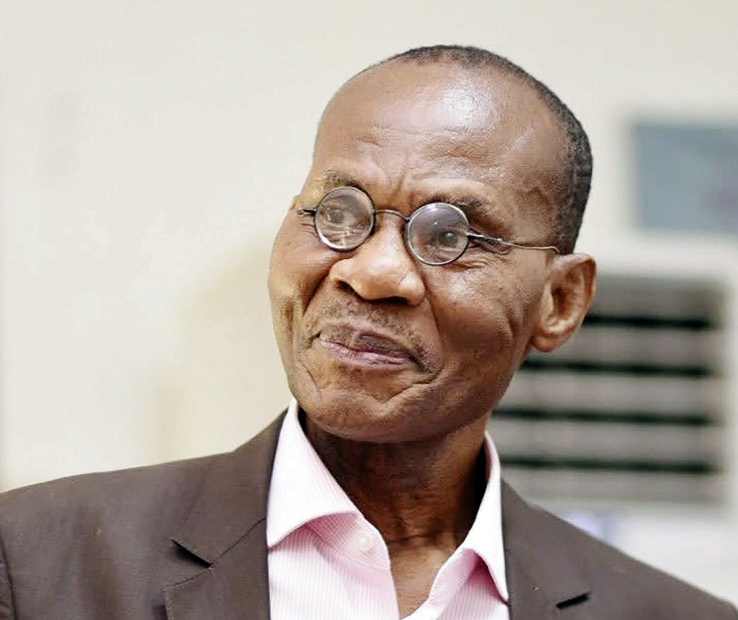
Few Nigerians have shaped the country’s film and broadcasting landscape as profoundly as Prof. Hyginus Ekwuazi. He is a distinguished film scholar, former Director-General of the Nigerian Film Corporation (NFC), and one of the true pioneers of film studies in Nigeria. He had also served as the pioneer Director, National Film Institute (NFI)
He taught for many years at the University of Ibadan, where he became a professor of Broadcasting and Film Studies and served as Head of the Department of Theatre Arts.
He later joined Pan-Atlantic University as an adjunct professor, helping to develop graduate programmes in film production. He had also served as Vice-Chancellor of Dominican University, Ibadan.
He has spent more than four decades teaching, mentoring filmmakers, developing academic curricula, and influencing media policy.
In this insightful interview, he reflects on his journey into film scholarship, the evolution of media education, the transformation of Nollywood, the opportunities and challenges presented by Artificial Intelligence (AI), and why Nigeria must treat its creative industry as a strategic national asset rather than a cultural afterthought.
What first drew you to film, broadcasting, and media scholarship at a time when these fields were still relatively undeveloped in Nigeria?
My first degree was a BA in English from the University of Ibadan (UI). But while I was in the English programme, I was also taking elective courses in Theatre Arts. I distinctly remembered Professor Joel Adedeji, who was then heading the Theatre Arts Department, calling myself and Harry Garuba into his office.
We were both English students. He asked us what we wanted to do after graduation. I told him I wanted to study film, and Harry said he wanted to pursue drama.
Actually, I only came to Ibadan because I couldn’t transfer my federal scholarship to go to a film school in the United States. The Ministry of Education needed an official letter from UI confirming that the university did not offer film studies at the time, but UI refused to issue that letter. So, I stayed.
Professor Adedeji told us, “Well, if you both join this department after your BA, I will secure scholarships for you to go to the States. You will both come back and teach here.”
We were only in our 200-level then. After graduating and completing my National Youth Service Corps (NYSC) assignment, I returned to the department. Fortunately, the scholarship Professor Adedeji promised materialised, and I went to the US.
Interestingly, when I was doing my master’s degree in the1980s, I chose to write my thesis on Nigerian cinema.
At that time, there was hardly anything called ‘Nigerian film’ in academic literature. I continued this focus into my PhD. There was absolutely nothing published on the subject. I remember Harry Garuba going to the main library to look up materials for me because I had nothing to work with. But this was long before the internet. Harry came back excited and said, ‘O boy, go to the main library. I saw a book there titled Nigerian Films’. He described the shelf, and I literally ran there. Guess what it was? Nigerian Firms, spelled F-I-R-M-S! (Laughter)
That shows how desperate we were for materials. Back then, if you read anything on African cinema, it was almost exclusively focused on Francophone films. If you look at the dossier published by the British Council at the time, African Films: The Context of Production, only Ola Balogun was mentioned from Nigeria. But it was that sheer interest that kept me going. After my PhD, I returned to teach.
Later, I was called upon to establish the National Film Institute (NFI) in Jos. After that, I became the Director-General of the Nigerian Film Corporation, before eventually returning to the University of Ibadan. My entire career focus has been dedicated to film and broadcasting.
Having taught and mentored students for decades, how do you assess the quality of media and film education in Nigerian universities today?
At first, there was no independent curriculum for film and broadcasting. What we had were a few scattered courses embedded within Mass Communication and Theatre Arts. I remembered writing a letter to the National Universities Commission (NUC), arguing that the quantum of film courses in Theatre Arts was minimal, less than nine per cent of the total courses required to graduate. I insisted it was not enough. I didn’t get a favourable response initially.
However, much later, things began to change. The NUC decided to anchor it firmly in the curriculum. I remembered I was invited to head a committee, and Professor Femi Shaka was in that committee and a few other people, to draw up a standard syllabus for a BA in Film Studies. That ran for a while before the Core Curriculum and Minimum Academic Standards (CCMAS) was introduced.
Mass Communication was eventually unbundled, and I was part of that committee as well. Today, we have two distinct pathways for film education at the university level: the BA in Film Studies in the Faculty of Arts, and the BSc in Film and Multimedia under the unbundled Mass Communication faculty. There have been massive, positive structural changes.
Can you draw a clear line between students going to the university to study Film and those opting for Theatre Arts?
They are two completely different courses, though the same basic entry qualifications can get you into either. Theatre Arts, much like the old Mass Communication setup, packs too many disciplines into one basket.
In Theatre Arts, you have elements of broadcasting, film, technical theatre, music, dance, and dramatic literature. Most people think Theatre Arts is only about acting and directing, which are the main pillars, but there are numerous sub-disciplines.
The best move for Theatre Arts would be to do exactly what Mass Communication did, which is to unbundle the department and allow students to choose distinct specialisations.
Theatre arts is not broadcasting, and theatre arts is not film, though it shares cross-cutting elements with both.
Are you explicitly recommending that Theatre Arts departments nationwide be unbundled?
Yes. But even if individual universities haven’t unbundled their departments yet, the NUC syllabus now officially recognises the BA in Film and the BSc in Film and Multimedia as standalone degrees. Anyone who strictly wants to study film no longer needs to go through the generalised routes of Theatre Arts or Mass Communication.
How has the digital revolution transformed broadcasting in Nigeria, and what lessons must traditional television and radio stations learn to remain relevant?
We are looking forward to a time when media consumers will select their television stations with the same fluid flexibility they use to choose radio stations. Total digitisation is coming. The hallmark of this digital evolution is Artificial Intelligence (AI). It is already reshaping the ecosystem.
Broadcasting stations must realise that they are catering to a dynamic audience that evolves with technology. In management science, there is a concept called ‘creative self-destruction’. It implies that if an institution does not want to be destroyed or made obsolete by external forces, it must proactively dismantle and repackage itself from within. That is exactly what forward-thinking broadcasting stations are doing in the wake of digitalisation. To remain relevant, they must continuously innovate, and many are succeeding at it.
In view of the fact that successive governments have spoken about developing Nigeria’s creative economy, what are policymakers still getting wrong?
The creative industries have finally gained formal recognition. There are several books and economic frameworks mapping the ecosystem, such as music, film, broadcasting, textiles, fashion, and hospitality.
The government acknowledges its raw economic power. Remember when Nollywood was majorly factored into the rebasing of Nigeria’s Gross Domestic Product (GDP)?
Where the government is still missing the mark is failing to recognise that the creative arts are just as strategic as agriculture, tech, or manufacturing. If you study national budgetary disbursements, you will find that the creative industry and culture get the least funding. We tend to relegate culture below the hard sciences.
Culture should be the salt; the foundational base of national identity and diplomacy. Policymakers erroneously assume culture is self-financing and can be left to survive on its own, ignoring the strategic reality that a nation’s soft power diplomacy springs entirely from its creative industry.
We have spent decades advocating for a National Endowment for the Arts. There are certain historic, educational, or nationalistic films and programmes that a private producer cannot fund independently because they may not yield immediate commercial returns.
If we have a functional endowment, creatives can access grants based on strict guidelines to produce content of national importance.
Any country serious about its creative economy sets up an endowment. Nigeria hasn’t done this sustainably. The closest we came was during President Goodluck Jonathan’s administration when intervention funds were released to the film industry. However, there was a lack of long-term strategic implementation and robust policing to ensure those funds targeted structural development.
What is the realistic baseline funding required to kick-start a sustainable National Endowment for the Arts?
The exact figures will naturally fluctuate with economic realities. The endowment shouldn’t operate on a rigid handouts model; it should be portfolio-driven. When I served on the committee that distributed the initial federal intervention fund under the Jonathan administration, we set a ceiling of N15million per beneficiary, with a minimum grant of about N5million.
But frankly, what can N5million or N15 million achieve in high-end film production today? The funding structure must scale dynamically alongside the economic demands of the specific project a creative brings to the table.
With Artificial Intelligence reshaping filmmaking, scriptwriting and broadcasting, do you view AI as an existential threat or a major opportunity for Nigeria’s creative industry?
AI is here to stay, but we must demystify it: AI is simply a tool. It is software. It does not possess a soul. In filmmaking, the ultimate anchor is the story. It is not the technique or the gadgetry; the story is the thing.
AI will undoubtedly scale up its capabilities and presence, but filmmakers must master AI as a tool to tell their stories, rather than allowing the tool to dictate the narrative. Human creativity remains the originator.
How has the meteoric rise of digital skit makers altered media and film education in Nigerian universities?
It has revolutionised the entire creative landscape, well beyond academia. Skit-making has democratised storytelling. If you own a smart phone, you own a production studio and a distribution network. It has generated immense employment and created an alternative training ground.
People are teaching themselves how to pace a narrative, edit, and gauge audience psychology through short-form content. It has become so influential that we now have major film festivals dedicated exclusively to mobile cinema and skits.
Beyond raw talent, what structural obstacles continue to hold back Nollywood, and how can they be dismantled?
Talent has never been our problem. Nigeria is teeming with incredible creative talents. Our bottlenecks are strictly structural. Thankfully, the New Nollywood era is actively bypassing some of these hurdles by adopting international best practices in production, distribution, and financing.
In developed film hubs like the United States, historical structures supported the industry. There was a time when the US Board of Trade granted tax rebates and exemptions to filmmakers whose projects projected positive aspects of American life. A well-organised industry creates incentives for its filmmakers.
We don’t have that cushion here. The Nigerian filmmaker pays multiple, overlapping taxes across local, state, and federal levels. The regime is heavily extractive rather than supportive.
In many developed countries, cinema is deliberately used to project a glowing national image. The reverse often seems to be the case in Nigeria. How do we fix this?
We must remember a fundamental rule of the media: he who handles the camera tells the story. If you leave a vacuum, outsiders will tell your story from their own ideological or prejudiced viewpoints. They will focus heavily on airport corruption or crime. Not that these issues don’t exist, but external narratives often lack context and empathy.
This happens because we are not yet the dominant voice in our own global narrative. This does not mean we should advocate propaganda or conceal national flaws. Developmental journalism and responsible art do not demand that you cover up systemic evils; they simply dictate that you amplify the virtues and human triumphs of your society just as loudly as you critique its flaws.
New Nollywood is already holding its ground beautifully. It has adapted to international technical standards, streaming metrics, and global distribution deals while keeping its narrative roots.
Look at Nigerian music and fashion; they are globally dominant while remaining distinctively Nigerian.
However, there is an inherent risk in foreign co-production deals. If a local filmmaker enters a lopsided financial agreement with an international studio that provides 90 per cent of the funding, that studio will inevitably dictate the creative tone.
They may demand that you tone down specific cultural nuances or rewrite aspects of your original story to suit a Western palate. That is a global industry reality, and our filmmakers must build local capital to protect their creative sovereignty.
If you were to grade New Nollywood today across storytelling, technical quality, business development, and cultural impact, what score would you give it?
I would easily give New Nollywood a 7 out of 10 (70 per cent). The industry has successfully consolidated its local audience and has expanded brilliantly into international theatrical markets and global streaming networks, going far beyond just the African diaspora. That is a massive historic feat.
Is Nigeria’s entertainment industry doing enough to shape public values and national development, or has commercial gain completely overshadowed social responsibility?
Commercial success hasn’t entirely overridden social responsibility because institutional safeguards are in place.
We have regulatory bodies like the National Film and Video Censors Board (NFVCB), the National Broadcasting Commission (NBC), and the Advertising Regulatory Council of Nigeria (ARCON) enforcing codes of conformity.
However, the danger arises when these regulations become overly stringent, effectively strangling artistic expression and creativity.
An artistic filmmaker must master how to navigate these boundaries. I teach filmmaking, and one of the practical modules I discuss with my students is how to ethically ‘cheat’ the censor; how to present profound, controversial, or critical truths safely without breaking the law.
But the ultimate censorship happens outside regulatory boardrooms. The greatest censor is the consumer who buys the cinema ticket. If the audience rejects the ethical or cultural values embedded in a film, negative word-of-mouth will kill that movie at the box office.
When the comprehensive history of Nigerian film and broadcasting is documented decades from now, what would you like your specific legacy to be?
Parts of that history are already documented. I was barely a Senior Lecturer when I was appointed to establish the National Film Institute (NFI) in Jos. I built the curriculum from scratch, starting it as a certificate programme, upgrading it to a diploma, and eventually turning it into a full degree-awarding institution.
Designing, planning, and executing that curriculum remains the definitive highlight of my career. If you look at the pioneer graduates of the NFI, they went out and completely revolutionised the technical and aesthetic landscape of Nollywood.
From there, I transitioned to the Nigerian Film Corporation as its Director-General, acting as the chief film producer for the nation and the principal adviser to the government on film policy.
Balancing that with my lifelong passion for teaching, curriculum development, and crafting benchmarks for the NUC has made my journey incredibly fulfilling. I’ve learned continuously on the job, and it has been an absolute ball.
What advice would you offer to young filmmakers, digital content creators, and media scholars stepping into the future?
Never lose sight of your audience. Your audience is your ultimate asset. Your primary daily question must be: How do I reach them, and how do I sustain their attention?
Remember that you do not hold a monopoly on their time. The competition is fierce. Everyone has access to tools; everyone is telling a story. You must constantly ask yourself: What makes my voice distinct? Why should an audience choose my narrative over the next creator’s own? That is the mindset that guarantees longevity.
It feels as though academia is finally catching up with the practical pace of the industry. Would you agree?
There is definitely a stronger interface now between academia and the industry than there ever was, but we still need significant improvement.
In developed societies like the US, highly insightful undergraduate and postgraduate research projects are frequently adopted by industries or classified by governments because they offer vital solutions to practical problems.
In Nigeria, brilliant theses, dissertations, and project designs simply sit on university library shelves gathering dust.
Consider the historic corporate-academic crossover of the late Professor Babatunde Fetuga at UI. His breakthrough PhD research on alternative protein sources became the precise scientific foundation that corporate brands utilised to revolutionise infant nutrition formulas in the Nigerian market. That is a classic example of academia directly driving industry growth.
Filmmakers and researchers need that same level of collaboration. Our students write profound, and data-driven analyses on audience trends, cinema economics, and technical developments, but the practitioners rarely read them to improve their output. Bridging that gap completely is our next big frontier.