Follow Us on Google

Any serious conversation about restructuring Nigeria always circles back to one familiar phrase: “true federalism.” True federalism is always invoked with near-religious reverence, as though the mere insertion of the word “true” can rescue a system already constitutionally defined. The proponents of “true federalism” present it as if Nigeria’s problem is only structural and as if governance were a machine that only needs recalibration, not human integrity, to function.
By definition, federalism is a political system in which power is constitutionally shared between a central authority and subnational units, each operating independently within its sphere. Therefore, the “true federalism” argument always provokes amusement. This is because Nigeria, made up of 36 states overseen by governors, with a federal government in place, is already running a federalism.
The 1999 Constitution clearly delineates executive authority. The President has the authority to govern the federation, while governors wield executive power within their states. Section 5(1) of the constitution states: “Subject to the provision of this constitution, the executive powers of the federation: (a) shall be vested in the President and may, subject as aforesaid and to the provisions of any law made by the National Assembly, be exercised by him either directly or through the Vice President and Ministers of the Government of the federation or officers in the public service of the federation.”
Section 5(2) also provides: “Subject to the provisions of this constitution, the executive power of a state: (a) shall be vested in the Governor of that state and may, subject as aforesaid and to the provisions of any law made by him, either directly or through the Deputy Governor and Commissioners of the Government of that state or officers in the public service of the state.” To show a distinction in the powers of the president and that of state governors, Section 5(3) summed it up by saying: “The executive powers vested in a state under subsection (2) of this section shall be so exercised as not to: (a) impede or prejudice the exercise of the executive powers of the federation.”
Nigeria fits the description of federalism. However, reality tells a different story. The country resembles a federation in form but a unitary state in behaviour. The most telling evidence lies not in constitutional ambiguity but in the conduct of those elected to uphold it. Governors, who derive their mandate directly from the people, increasingly behave as though their authority flows from Abuja. It is a quiet but dangerous inversion of democratic logic.
The drift is unmistakable. Governors shuttle endlessly to the federal capital, appearing more as fixtures in Abuja than leaders rooted in their states. Governors find pleasure in accompanying the president to foreign trips than sitting down in their states for governance. They have made themselves appendages to the president and do only things that they consider pleasing to the President. They prefer to be politically correct, in the eyes of the president, without giving much consideration to what would please their people. Governance at home has become secondary to proximity to power at the centre. Governors have, directly or indirectly, sacrificed federalism on the alter of politics and political survival. They have sold their rights to the centre and what we have are state governors being subject to the President and acting with the clearance from the Villa.
Other News
It is this “subject to the president” or “as the president pleases” attitude that has made the centre stronger and states weakened. It is such subordination to the president that would make a Plateau State governor, Caleb Muftwang, who ought to be sober and mourning owing to the mass killing of his people by terrorists, to ferry grieving families, whose dear ones were killed in cold blood by terrorists, to Jos Airport for a meeting with President Bola Tinubu, who ought to go to them at a time of sorrow. It is because of this subservient attitude that governors dare not confront the President when actions run counter to the constitution.
It has not always been this way in the country. There was a time in Nigeria’s political history when governors understood the weight of their office. They challenged the centre, when necessary, went to court to defend their rights and asserted their independence without apology. Even within the same political party, governors could disagree with the President and act on that disagreement. That was federalism in motion. It was dynamic, sometimes tense, but fundamentally balanced.
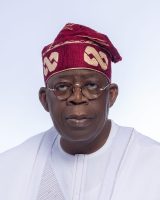
Ironically, one of the most notable examples of gubernatorial assertiveness came from President Tinubu, who now sits at the centre of power. As governor of Lagos State from 1999-2003, he challenged federal overreach in court, reinforcing the autonomy of states. Tinubu challenged the withholding of local government funds, arising from his creation of more local government areas, for example. The court had ruled that the federal government had no powers to withhold local government funds for whatever reason. Under President Obasanjo, governors in the Class of 1999-2003, as a group, and individually, went to court against him and the federal government severally. It was a defining moment for constitutionalism.
That spirit, however, seems in short supply among today’s state executives. It started gradually under former President Muhammadu Buhari. It has gained ground, to the consternation of discernible minds. Now, loyalty to the President often supersedes responsibility to constituents. Governors compete less on performance and more on proximity to the president, on who is most visible in Abuja, who is most agreeable with the central power and who is most aligned to the whims and caprices of the president. This is sad indeed as governors are not local government administrators appointed by Abuja. They are independently elected leaders with constitutional authority over their states.
The result of governors’ subservience is the gradual centralisation of power without any constitutional amendment. Nothing illustrates this better than the wave of defections into the ruling All Progressive Congress (APC). When governors abandon opposition platforms not on ideological grounds but in pursuit of federal favour, using internal crisis as excuse, democracy itself is diminished, opposition becomes not only hollow but also reduced to a temporary posture rather than a principled alternative. A multi-party system cannot survive when power is so heavily personalised that political relevance depends on allegiance to one individual.
Nigeria did not survive military rule only to create 36 elected “prefects” in the name of governors. The presidential system gives the governor a mandate separate from the President’s. Every time a governor phones Abuja before he moves, he is telling the next generation that federalism is a fiction and that power only flows one way. A healthy federation requires constructive tension, where governors can agree with the president, when necessary, but also dissent when their states’ interests are at stake. A strong federation needs strong governors, who can stand, not kneel.
There is need for constitutional courage by which governors must rediscover the spine that their offices demand. What is at stake is the very soul of Nigeria’s federalism. Governors should serve the people who elected them and not serve the power that intimidates them. They must speak when federal actions or president’s actions hurt their people, negotiate firmly on things that affect their people and defend the autonomy of their states without fear or favour.
It is worth saying that federation cannot function when its component units surrender their autonomy. When governors line up for presidential endorsement before acting in the interest of their people, they reduce their offices to administrative outposts. If the current trend persists, Nigeria risks becoming a one-man federation. When that happens, governors would have made themselves federalism undertakers rather than its custodians.