Follow Us on Google
• as NGF Chairman calls digital violence real-world threat
• AGF Fagbemi pledges stronger legal frameworks against menace
From Juliana Taiwo-Obalonye, Abuja
Nigeria Governors Spouses Forum (NGSF) has sounded a rallying call to end the escalating menace of digital violence targeting women and girls across the country.
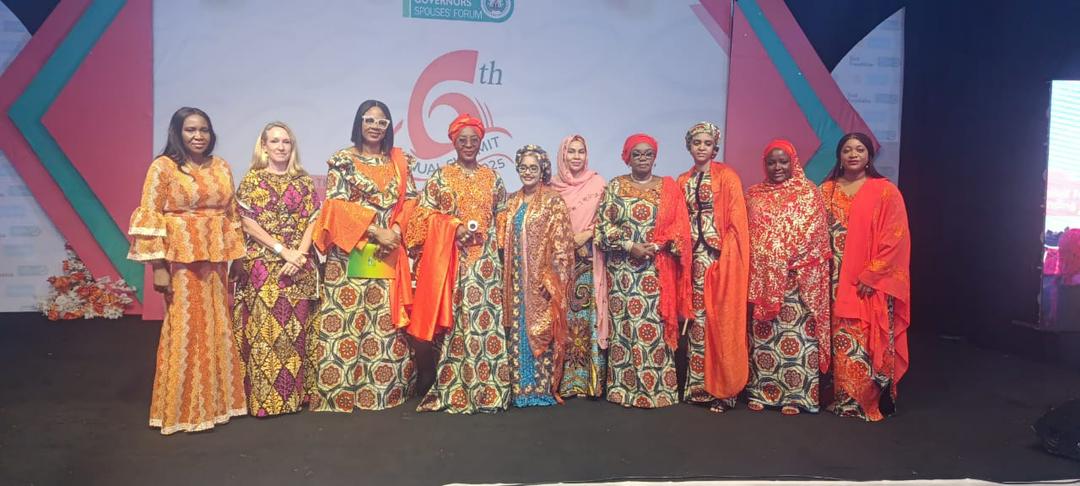
Speaking at the sixth annual conference held in Abuja Thursday, First Lady of Kwara State and Chairperson of the Forum, Olufolake Abdulrazaq, described the challenge as “both timely and compelling,” underlining the urgent need for coordinated national action.
“The digital world has become an essential part of our daily lives, expanding opportunities for learning, expression, and economic participation,” Abdulrazaq said. “Yet it has simultaneously created avenues to harm the vulnerable in society.”
Drawing attention to global evidence, Abdulrazaq cited technology’s role in facilitating “violence, cyber-stalking, online harassment, digital blackmail, gender misinformation, and various forms of exploitation” — trends that are escalating at an alarming pace with “profound psychological, social, and economic consequences.”
She warned, “We must recognize that digital violence is not a virtual problem. It is a real-world threat. It suppresses voices, distorts choices, erodes confidence, and limits participation in public life. When women and girls withdraw from digital spaces for fear of abuse, our society loses ideas.”
The summit’s theme, “Unite for Change; Men and Women to Ending Digital Violence Together,” brought to the forefront the urgent need to make Nigeria’s increasingly connected digital spaces safe and empowering, not intimidating. Abdulrazaq stated, “As our world becomes increasingly connected, digital spaces should be places of learning, opportunity, creativity, and empowerment—not platforms for intimidation or harm.”
Highlighting the Forum’s track record, she reflected on past successes, noting the pivotal role NGSF played in spurring the Nigeria Governors Forum’s declaration of a state of emergency on sexual and gender-based violence during the 2020 COVID-19 lockdown when incidents surged.
“In the last five years, the Nigeria Governors Spouses Forum has amplified advocacy and led impactful interventions to ensure Nigerian women and girls harness their full potentials and to mitigate sexual and gender-based violence,” Abdulrazaq stated.
“This includes expedited action for the passage of the Violence Against Persons Act, implementation of Gender Based Violence action plans, leadership in State Gender Based Violence coordinating mechanisms, and expansion of Sexual Assault Referral Centres and shelters.”
Looking ahead, Abdulrazaq reaffirmed NGF’s commitment to strengthening Nigeria’s digital protective frameworks. “We will continue to work with state governments to harmonize cybercrime legislation and digital safety laws across all states to ensure a more secure and predictable digital environment for citizens,” she said.
She added, “We will also work with state governments and community partners to expand digital literacy and online safety programs in schools and communities, with a focus on empowering young girls to confidently navigate digital spaces.”
To achieve this, the Forum intends to deepen “cross-agency coordination, bringing together justice, ICT, education, women’s affairs, and security institutions to ensure that policy enforcement and community education operate as a unified system.”
On governance and inclusion, Abdulrazaq expressed strong support for enhancing women’s political representation: “We are supportive of the initiative and campaign for women to have special seats in the Nigerian Parliament. The Governors will mobilize their members in the National Assembly to do the needful.”
She framed ending digital violence as “more than a moral obligation. It is a governance and development priority. A digitally inclusive Nigeria, where citizens can learn, walk, speak, and thrive online without fear—this is ours to move forward, and we can do that.”
The Chairman of Nigeria Governors Forum (NGF) and Kwara State Governor, Abdulrahman Abdulrazaq, described digital violence as not a virtual problem, but a real-world threat.
Abdulrazaq, who was represented by the k of Plateau State, Caleb Mutfwang, said that ending digital violence was more than a moral obligation saying it is a governance and development priority.
He said that digital world had become an essential part of human daily lives, expanding opportunities for learning, expression, and economic participation, yet created avenues to harm the vulnerable in society.
“As global evidence shows, technology facilitates violence, cyber-stalking, online harassment, digital blackmail, gender misinformation, and various forms of exploitation.
“These have all grown at an alarming pace, with profound psychological, social, and economic consequences, particularly in the United States.
“We must recognize that digital violence is not a virtual problem. It is a real-world threat. It suppresses voices, distorts choices, erodes confidence, and limits participation in public life.
“When women and girls withdraw from digital spaces for fear of abuse, our society loses ideas,” he said.
He expressed the forum commitment to work with the Governor’s Spouses Forum to address digital violence and make Nigeria digital space safer.
“For us at the NGF, today’s engagement reinforces our resolve to make Nigeria’s digital environment safer, especially for women and girls who are disproportionately targeted.
“Over the coming years, the NGF will continue to work with state governments.
“The NGF continues to intensify efforts to strengthen and harmonize cybercrime legislation and to strengthen and harmonize cybercrime legislation,” he said.
He also pledged that the governors commitment to promote digital safety frameworks and online protection laws across all states to ensure a more secure and predictable digital environment for citizens.
“We’ll also work with state governments and community partners to expand digital literacy and online safety programs in schools and communities, with a particular focus on empowering young girls to navigate digital spaces, communities, and communities.
“Furthermore, the Forum will prioritize deeper cross-agency coordination, bringing together justice, ICT, education, women’s affairs, security institutions, to ensure that policy, enforcement, and community education operate as a unified system.
“At the same time, we’ll encourage responsible technology use and pursue sustainable development,” he said
He called for collective action to create a digitally inclusive Nigeria, where citizens could learn, walk, speak, and thrive online without having to be targeted or excluded was paramount.
“Together, let us build a Nigeria where digital rights are protected, where human dignity is of health, and where the people of Nigeria are protected. The promise of technology is matched by its safety for all, he added.
The summit, attended by governors’ spouses, federal and state officials, and civil society leaders, created a platform for national reflection and action on digital violence’s growing threat.
Attorney General of the Federation and Minister of Justice, Lateef Fagbemi, on his part, highlighted the growing threat of digital violence against women and adolescents, emphasizing the urgent need for robust legal and policy responses.
“Across our nation, countless individuals, especially women and adolescents, experience various forms of digital violence with devastating consequences,” Fagbemi stated. He explained that the anonymity of digital platforms emboldens perpetrators, while victims face barriers such as legislative gaps, difficulties with evidence, limited digital literacy, and societal stigma, all of which hinder justice.
As Nigeria’s chief law officer, Fagbemi reaffirmed “the commitment of the federal government and the management of justice to strengthen legal and policy frameworks that protect citizens online.” He highlighted key laws including the Cybercrime (Prohibition, Prevention) Act and the Violence Against Persons (Prohibition) Act, noting ongoing efforts to update these laws to meet emerging digital realities.
“Just a few months ago, we concluded the bill for the amendment of the Violence Against Persons Act to propose stiffer penalties and ensure all forms of violence are covered,” he revealed. The Attorney General also pointed to the establishment of a dedicated Sexual and Gender-Based Violence (SGBV) unit within the Federal Ministry of Justice aimed at strengthening prosecution, reducing delays, and supporting survivors through coordinated legal, psychosocial, and referral pathways.
Fagbemi detailed ongoing federal collaboration with states to harmonize case management and responses nationwide, train prosecutors, investigators, and first responders for sensitive handling of cases, and push for legal reforms protecting women, children, and vulnerable groups.
Emphasizing multi-sector cooperation, he added, “We are intensifying collaboration with law enforcement, regulatory bodies, civil society, and technology stakeholders to enhance reporting mechanisms, bolster prosecution, and advance digital literacy and online safety for all.”
He commended the leadership of the Nigeria Governors Spouses Forum and state Attorneys General for their advocacy, improved enforcement, and law enforcement capacity building in tackling technology-facilitated gender-based violence. “These efforts are laying the foundation for a more responsive justice system that can address the complexities of digital-age crimes.”
Fagbemi underscored that ending digital violence demands collective responsibility from government institutions, law enforcement, education, technology companies, civil society, religious and traditional leaders, parents, and citizens.
Calling the summit “a valuable opportunity to share experiences, examine best practices, and develop comprehensive strategies,” he praised the Forum as “a unique platform with moral authority and grassroots reach to amplify prevention and support implementation at the state and community levels.”
He concluded, “The federal government stands firmly with you to build a Nigeria where every citizen—man or woman, boy or girl—can participate fully and safely in our digital future. I wish you all a productive and impactful summit.