Follow Us on Google
“We need men with moral courage to speak and write their real thoughts, and to stand by their convictions, even to the very death ”
— Robert Green Ingersoll
By Enyeribe Ejiogu
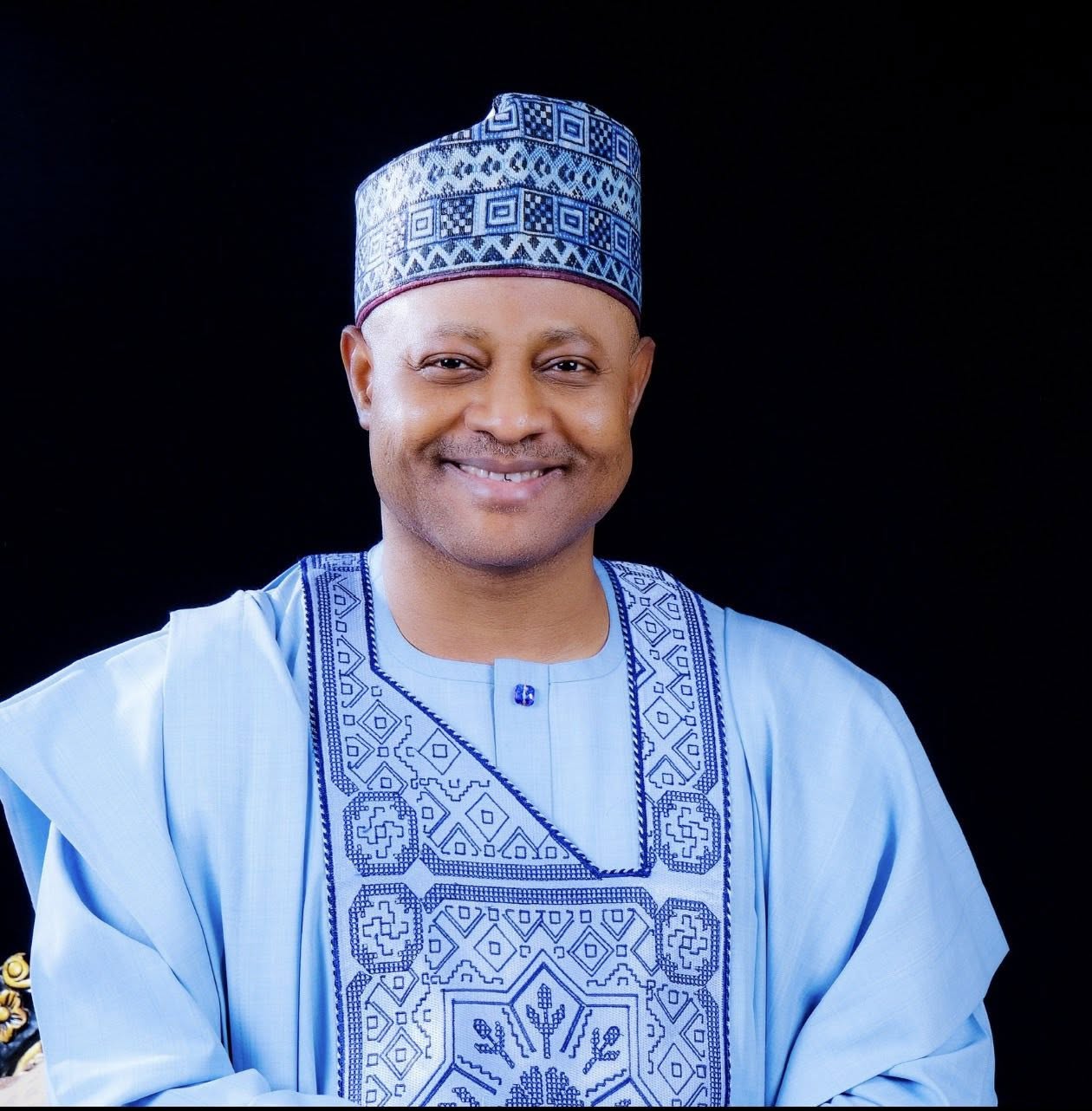
Kaduna State Governor Uba Sani, who is seeking re-election in 2027, ruffled feathers in certain political quarters of the state with his decision to name Mr Jerry Adams as his running mate.
The change resulted from the outcry by key stakeholders in the state against the Muslim-Muslim ticket imposed on the electorate by the former governor, Nasir el-Rufai, when he first ran in 2015 and again in 2019. When he enthroned Uba Sani as his successor, he made sure the Muslim-Muslim ticket was sustained in the 2023 governorship election.
Once Adams was announced, the online pushback by some Muslims was fierce and furious. They declared that his decision to end the Muslim-Muslim ticket concept, which lasted for three terms, would lead to the end of his rule.
A group, Nigeria Islamic Revolution, accused him of “betraying Muslims and the people of Kaduna State by choosing an infidel as his running mate.”
Others dismissed his decision as hypocrisy, noting that he supported Tinubu’s Muslim-Muslim ticket at the national level while dropping it in Kaduna.
Several commenters indicated that choosing a Christian would not save him as they predicted that he would suffer electoral defeat in the 2027 governorship election, and serve only one term.
Some accused him of “opportunism rather than genuine quest for unity.”
On the side of the aisle, Sani’s supporters suggested that “El-Rufai’s leadership style is a wrong compass on how leadership should be.”
The choice of Adams has, once again put the thorny and sensitive issue of religion fouling the political waters of the country on the front burner. On a social media platform, one commenter said, “Kai naija we have to remove religion politics if we want dis country to move forward.”
Picking up the gauntlet, supporters of Sani on different political platform pages focused their comments on the need for unity, competence and return to Kaduna’s inclusive governorship formula.
Other News
Particularly on AriseTV News, one of the panellists endorsed Sani’s decision, describing it as “a restoration of a long-standing tradition in Kaduna where governors have historically chosen Christian deputies from Southern Kaduna.” Clearly, in their view, Sani rightly repudiated the Muslim-Muslim ticket experiment initiated by el-Rufai with the widely believed intention to make it a permanent feature and fixture in the political governance of the state, which has occupied the cherished status of being the political capital of the Old North of the era of Sir Ahmadu Bello, the Sardauna of Sokoto and former Premier of the North.
They praised him for championing unity, promoting competence, and actively advocating inclusivity.
One said, “I stand with you Sani, we need inclusiveness and competence, not religiosity” while another offered a prayer: “God bless Uba Sani, a true leader.” Another chipped in: “Uba Sani is indeed a true leader who believes in equality of citizens. He will get all the support he needs to win,” affirming that Muslim-Christian governorship had been the tradition in Kaduna State until El-Rufai and his supporters sought to upturn the political applecart.
Sani’s supporters strongly stated the competence of the running mate and highlighted his records. Adams is a Fellow of the Chartered Institute of Taxation of Nigeria and the National Institute of Management who is widely recognised as a seasoned public servant and tax administrator. He is credited with transforming the Kaduna State Internal Revenue Service into one of the country’s leading revenue agencies through innovation, transparency and professionalism. They called him a man of integrity, humility and quiet strength who demonstrated commitment to peace, reconciliation and inclusive governance.
Governor Sani himself said of his governorship mate: “His emergence reflects our continuing determination to build a Kaduna where merit, competence and character remain the true qualifications for leadership.”
His supporters urged the people of Kaduna to see this moment not through the narrow prism of religion, ethnicity or geography, but through the broader vision of the Kaduna we are building together.
Kaduna has always been a hotbed of Arewa politics, and one of Nigeria’s most religiously diverse and politically sensitive states. In the state, religion is not isn’t just about faith, it shapes politics, settlements, and public debate.
In terms of demographics, the general understanding is that Muslims are the majority in the northern zones and urban centres like Kaduna metropolis, Zaria, and parts of Birnin Gwari, are Hausa and Fulani. The majority in Southern Kaduna and significant populations in the city are made up of Atyap, Bajju, Adara, Ham, Gbagyi, and other minority ethnic groups, who are Christians.
Census figures show that there is roughly a 50-50 split between the Muslims in Northern Kaduna and Christians in Southern Kaduna. That is the reason Kaduna is referred to as a “microcosm of Nigeria.” As has been noted, Kaduna had a long tradition of religious balancing until el-Rufai introduced the Muslim-Muslin ticket concept.
Interestingly, since he took office, Sani has given a pride of place to the Kaduna State Bureau of Interfaith, and regularly holds “Friends Day” services with Muslims and Christians together. The Interfaith Bureau has Muslim representatives from the Sultanate of Zazzau/Zaria, Jama’atu Nasril Islam JNI, Council of Imams, and Christian representatives from the Christian Association of Nigeria – Kaduna Chapter, the Evangelical Church Winning All (ECWA), the Catholic Diocese of Kafanchan and the Pentecostal Fellowship of Nigeria (PFN).
Throughout his first term, Sani has consistently communicated one message: “Build bridges of trust and understanding amid our diversity, which remains our strength,” to the end of having a “Kaduna where every faith is respected and every citizen has an equal stake.”
Through the governance process, Sani has been commended for walking the talk. His focus has been on unity, security and reconciliation. He has executed infrastructure projects specifically designed to unify the people of the state.
His efforts to improve security in parts of Southern Kaduna have enabled farmers to return to the farms. He has credited the dialogue between Emirs, Chiefs, CAN and JNI as being responsible for the improvement in security. In budgetary terms, his administration commits 25 per cent to education and 15 per cent to health, two sectors that cut across religious lines.
Back in February, he signed the N985.9 billion 2026 Budget, tagged Budget of Consolidation of Transformation for Inclusive Development, under which Education and Rural Transformation allocations of 25 per cent each.