Follow Us on Google
- As experts push Nigeria–UK pact on skills, tech transfer, green investment
By Henry Uche
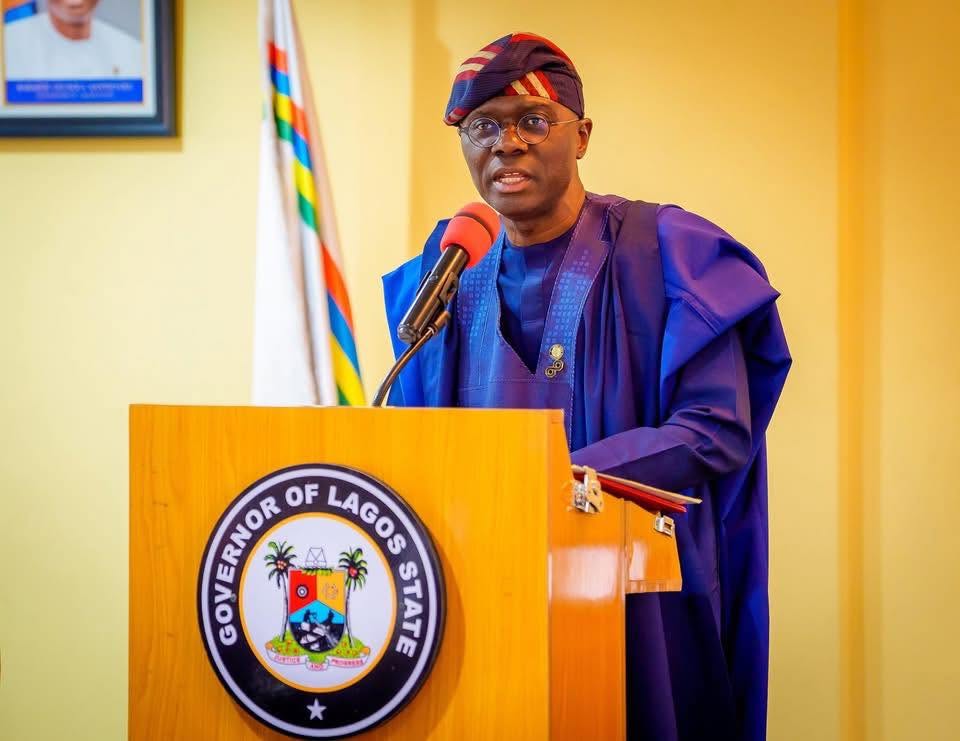
Lagos State governor, Mr. Babajide Olusola Sanwo-Olu, has called on Britain to establish a dedicated Lagos clean-power investment vehicle anchored by British institutional capital and Lagos own private sector- to finance the next phase of embedded and renewable generation.
Sanwo-Olu who was represented by the Commissioner for Energy and Mineral Resources, Mr. Biodun Ogunleye, made this call at the 2026 annual lecture series of the Nigeria-Britain Association, urging that such investments should begin with a distributed solar and storage programme for the smart city commercial districts and public institutions.
“We bring bankable projects and a credible offtake environment; we ask Britain to bring patient capital, technology partners and the skills programmes to train young Nigerians for these jobs.
“Most importantly, our transition must not leave ordinary people behind. Green power must also mean affordable power, reliable power and accessible power”
The governor noted that Nigeria and Britain sit at different points on the energy journey, but now read from the same map. “The future of energy will be cleaner, smarter and more decentralised, and because it will be decentralised, it will be built city by city, Lagos intends to lead that build. I want us to move from conversation to collaboration, from ambition to investment and from policy to practical results” he implored.
During the discourse, experts and business leaders urged Nigeria and the United Kingdom to forge a stronger economic pact on skills development, technology transfer and green investment, stressing that deeper bilateral cooperation could boost industrialisation, create jobs and open new growth opportunities for the Nigerian economy.
The Keynote Speaker, Engr. Akin Olateru – Chairman/CEO Omni-Blu Aviatoon Limited, recalled that, for nearly a century, energy policy meant one thing: ‘securing supply’, but today, it means three things at once: – Security, Affordability, and Sustainability: and no country, rich or poor, has fully solved that equation.
With the theme, ‘Global Energy Crises and the Transition to Green Power: Implications for Nigeria and Britain’, Olateru maintained that energy security cannot be sacrificed on the altar of transition. Moreover, Nigeria still faces the challenge of gas flaring, grid instability, and over 80 million citizens without reliable power, even as it holds some of the world’s largest gas reserves.
Britain, meanwhile, has learned through recent energy shocks that moving too fast from reliable sources without adequate storage and grid capacity creates its own fragility. But there are opportunities: Gas is Nigeria’s genuine bridge fuel – cleaner than diesel generators, and abundant. If used well, it can power industry and homes today while renewables scale.
“For Britain, decades of experience managing a transitioning grid, offshore wind, and carbon markets are lessons Nigeria does not have to learn the hard way. We need to accelerate domestic gas production and utilisation, decentralised, offgrid renewable solutions, decentralize the National grid and empower states and private companies to generate and distribute power.
“Now, all this should be done in parallel not sequentially: and formalise a Nigeria–UK energy security dialogue that shares grid-management expertise”
He noted that capital and technology will follow policy certainty – not the other way round, but the challenge is that, global investors have trillions available for clean energy, however, Nigeria has struggled to attract its fair share, held back by regulatory unpredictability, currency risk, slow project execution, and chronic insecurity.
This, he said affects not just power generation but power distribution and utilization as well, resulting in a situation where sustainable renewable energy and electrification are moving faster abroad than at home.
“But there are opportunities: Nigeria’s youthful population, growing tech ecosystem, and vast solar and hydrogen potential make it a natural destination for climate-focused venture capital and blended finance: and British institutions are among the world’s most active in exactly this kind of financing. So we need to establish a joint Nigeria–UK green investment facility, with clear regulatory guarantees, to de-risk early-stage clean energy and clean-transport ventures on both sides.
“The transition must create jobs, or it will not be sustained. The challenge here is, energy transitions around the world have too often been designed by engineers and financiers, with too little regard for the workers and entrepreneurs whose livelihoods depend on the old system.
“But we have an opportunity: With the right support, solar assembly, EV manufacturing and maintenance, green hydrogen, and carbon-market services can flourish as genuine Nigerian industries; not merely imported technologies, but vibrant sources of skilled employment, innovation, and entrepreneurship for young Nigerians.
“We need to launch a Nigeria–UK skills and technology transfer partnership, anchored in vocational training and university research links, that builds local capacity rather than dependency. There is need for energy security through balanced sourcing and investment through policy certainty, Jobs through deliberate design and needs assessment.
“These are not separate agendas, they are one agenda, and Nigeria and Britain are better placed to pursue it together than apart. The global energy transition is often described as a race. I would rather we treated it as a bridge; one that Nigeria and Britain are already standing on, together” he added.
In an address, the President, Nigeria-Britain Association, Mr. Ademola Sanya, explained that, energy is no longer simply a question of powering homes, businesses and industries, but a question of economic competitiveness, national security, investment, jobs, technology, climate resilience and the quality of life of the people.
The president of the Association decried how millions of Nigerians and businesses had continue to experience challenges with access to reliable and affordable electricity despite huge abundant resources.
“There are opportunities in: investment, renewable energy, technology, infrastructure; research and innovation, development finance, skills development, electric mobility, energy efficiency, and entrepreneurship. Britain has significant experience, expertise, technology and financial capacity. Nigeria has a large and growing market, enormous human capital, abundant natural resources and an urgent need for innovative energy solutions”
Sanya stressed that the opportunity is not simply to discuss what Britain can do for Nigeria, but what can Nigeria and Britain build together. Since no single institution can solve the energy challenge alone; the government has a role, regulators have a role, energy companies have a role, investors have a role, development institutions have a role, technology companies have a role, and professional and business associations such as the N-BA have a role in connecting these interests and creating platforms for collaboration.
“Every crisis creates challenges, but it also creates opportunities for innovation, investment and new businesses. The transition to green power will create new industries, new technologies, new professions and new businesses.
“Our responsibility is therefore not simply to discuss the future of energy. We must prepare people for that future. We should be thinking about the skills, entrepreneurship, innovation and investment opportunities that will enable young Nigerians and young Britons to participate meaningfully in the emerging green economy. The global energy transition is already happening.
“The question is not whether Nigeria and Britain will be affected by it. The question is whether we will simply respond to it, or actively shape the opportunities it presents. Let us move from crisis to opportunity, from conversation to collaboration, and from collaboration to action. The Nigeria-Britain Association is ready to play its part in bringing the right people and institutions together to help make that happen” he assured.