Follow Us on Google
From Noah Ebije, Kaduna
A quiet transformation is unfolding in Kaduna, a state that was synonymous with deep-seated divisions, painful demolitions of houses and tension between communities.
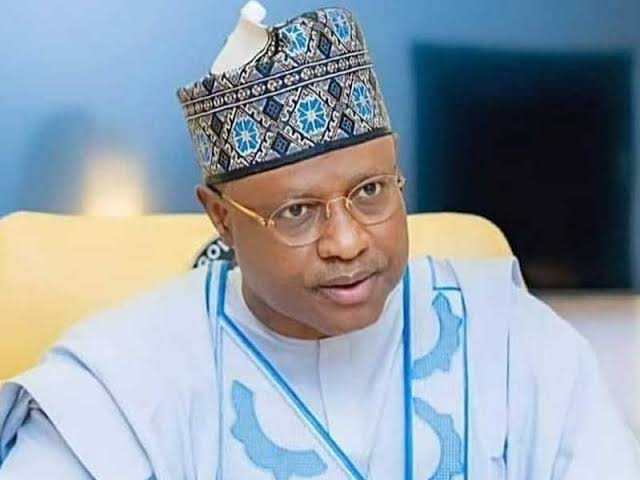
Today, however, the state is gradually returning to normalcy and is witnessing development driven by dialogue, inclusion and empathy. Unlike his predecessor, Nasir El-Rufai, whose policies, though progressive in intent, often left a bitter taste of resentment, Governor Uba Sani has opted for a more humane path to development. His mantra is to build and unite, without inflicting suffering.
It is no secret that Kaduna has faced challenges like religious tension, ethno-political division, and uneven development, but Governor Sani appears determined to rewrite that narrative. His approach blends pragmatism with empathy, earning him praise across divides.
“Governor Uba Sani is not just building roads; he’s rebuilding trust. He understands that development without human consideration breeds resentment. His leadership is people-first, peace-first,” an analyst in Kaduna said.
In the markets of Rigasa, the schools of Kafanchan, and the farmlands of Giwa, the mood is gradually changing in these communities. The bulldozers of the past have given way to dialogue tables. Homes once marked for demolition now stand firm, renovated, not razed. Even his critics admit: the governor is charting a new course. One defined not by confrontation but by cooperation; not by fear but by faith.
At the 35th Anniversary Synod of the Diocese of Kafanchan, Anglican Communion, former Minister of Aviation, Femi Fani-Kayode, offered a spiritual lens through which to view the governor’s emergence. Speaking to a congregation still healing from years of pain, he described Uba Sani’s rise as “divine intervention.”
“The governor you have today came as a consequence of prayer. There was a time when Christians in Kaduna were treated with contempt and disdain. But today, God has raised a humane leader, one who sees both Christians and Muslims as children of one God,” Fani-Kayode said.
Fani-Kayode did not mince words in contrasting the past with the present. He recalled the tragic Christmas Day massacre of 2016, when over 800 people in Southern Kaduna were slaughtered in what he described as “a Christmas Day present of blood.” Hospitals were shut, victims abandoned, and communities left to mourn alone.
“Those were dark days. But prayers have been answered. Uba Sani came to heal, not to hurt. To bridge, not to break,” he said.
From the onset of his administration, Senator Uba Sani made reconciliation a cornerstone of his governance. One of his first symbolic gestures was the establishment of the Kaduna Elders Forum, an inclusive body bringing together both Christian and Muslim leaders, a first in the State’s history.
“The forum is not just a talking shop,” a senior government aide said. “It’s a platform for reconciliation, policy dialogue, and peace-building.”
This inclusiveness, observers note, marks a sharp departure from the combative style of previous administrations. In a state once marred by sectarian suspicion, Uba Sani has sought to restore confidence between the government and the governed. His visit to a Christian church, where he respectfully removed his cap during worship, was hailed as a powerful act of humility and solidarity.
“Kaduna now belongs to both Christians and Muslims,” Fani-Kayode observed. “This is the kind of leadership Nigeria needs.”
Other News
While peace building remains a priority, Governor Sani’s government has not neglected the bread-and-butter issues that define governance, education, infrastructure, and workers’ welfare.
Recently, he approved the implementation of 70 percent of the 2024 CONPCASS/CONTEDISS salary structure for staff of all state-owned tertiary institutions, effective October 2025. The decision brought long-awaited relief to lecturers and non-academic staff across Kaduna’s polytechnics and colleges of education.
According to the Head of Service, Mrs. Jummai Bako, this move represents “a milestone in the administration’s commitment to staff welfare.” She added that salary adjustments have already reflected in October pay slips, describing the governor’s gesture as “bold, compassionate, and visionary.”
“Governor Uba Sani is a listener. He engages, consults, and delivers. This is what sets him apart,” she said.
Union leaders across the state’s tertiary institutions have echoed similar sentiments, lauding his transparency and responsiveness. In their words, “The governor has restored hope to the academic community.”
Governor Sani’s compassion-driven governance also extends to environmental and infrastructural renewal. Under the World Bank-supported ACReSAL project, Kaduna State has earmarked N1.4 billion to compensate 891 households affected by upcoming remediation works in erosion-prone areas like Zaria, Rigasa, and St. Peters in Kawo.
At a sensitization meeting with the Emir of Zazzau, Ambassador Ahmed Bamali, the Commissioner for Environment, Abubakar Buba, emphasized transparency. “The governor has made the funds available. Lists of beneficiaries and payment details will be publicly displayed. No one will be shortchanged,” he assured.
The Emir commended the initiative, describing it as “timely, people-centered, and visionary.” Traditional leaders and local communities, he pledged, would offer full cooperation to ensure smooth implementation. Beyond compensation, the government plans to reintroduce monthly sanitation exercises across the state, part of its wider environmental sustainability drive.
The state has also witnessed a significant shift in its political landscape, with several lawmakers from the opposition party defecting to the All Progressives Congress (APC).
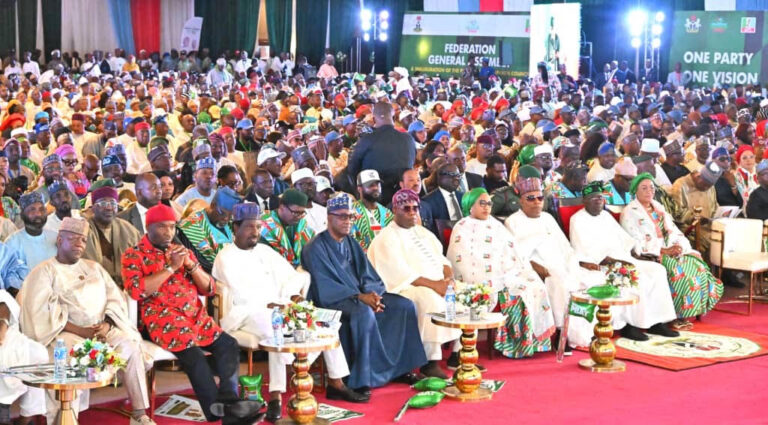
At a recent mega rally in Kafanchan, Governor Sani attributed the defections to his administration’s efforts to run an inclusive government, treating everyone equitably regardless of political, religious, or ethnic affiliations.
“When we came on board, we made it clear to everyone that we took a solemn oath to be fair to all, to run an inclusive government, and to ensure that we treat everyone equitably. “I am happy to say that there is no local government in Kaduna State that is not benefiting from our transformation efforts,” Sani said.
The defections have transformed Southern Kaduna, a region that was once a PDP stronghold, into an APC haven. All elected members from the region are now part of the ruling party. Chief of Staff to President Bola Tinubu, Femi Gbajabiamila, attributed this shift to the President’s reforms, which have positively impacted everyone in the country. Gbajabiamila praised Governor Sani’s efforts, saying, “Thank you for containing terror in the state, thank you for your giant steps of development.” Speaker of the House of Representatives, Tajudeen Abbas, described the defections as a “political earthquake,” highlighting the good work of the defecting lawmakers.
As Kaduna State continues to march towards progress, Governor Sani’s leadership style serves as a model for other leaders. His commitment to inclusivity, fairness, and development has earned him praise and admiration, even from his former opponents. The people of Kaduna State look forward to more progress under his leadership.