Follow Us on Google
From Noah Ebije, Kaduna
Kaduna State Governor, Uba Sani, has said the state was well positioned to serve as a model for effective implementation of the World Bank-funded projects in Nigeria, citing strong governance systems, transparency and continuity in leadership.
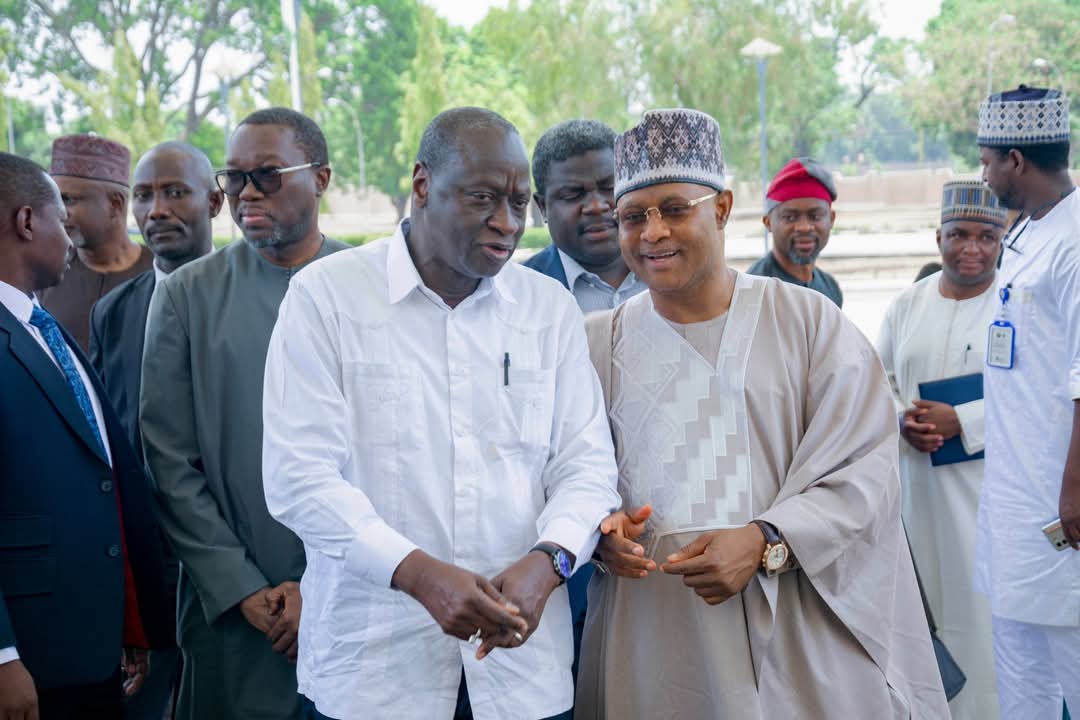
The governor made this assertion yesterday, while receiving the Regional Vice President of the World Bank, Mr. Ousmane Diagana, at the Sir Kashim Ibrahim House, the seat of government in Kaduna.
Commending the World Bank for its long-standing partnership with Kaduna, Governor Sani noted that the state had enjoyed substantial support across a diverse portfolio of development projects targeted at improving lives.
“These projects have not only reinforced our development agenda but have also significantly contributed to poverty reduction, improved access to healthcare and education, agricultural productivity and environmental resilience,” the governor stated.
He emphasised the administration’s readiness to strengthen existing partnerships and explore new areas of collaboration to deepen the impact of foreign assistance on the state’s development goals.
Governor Sani outlined eight World Bank-funded projects currently being implemented in Kaduna State, with a total value exceeding $885 million. He praised the projects’ alignment with the government’s policy objectives in critical sectors, including youth development, infrastructure, health and climate resilience.
The Governor listed the Adolescent Girls’ Initiative for Learning and Empowerment (AGILE) Project, with $80 million in credit, adding that the AGILE Project “has advanced secondary education opportunities for adolescent girls, achieving over 70 percent disbursement and notable progress in school infrastructure and enrolment campaigns.”
He further disclosed that the Accelerating Nutrition Results Nigeria (ANRiN) Project had been fully disbursed and now closed, adding that, “the $17 million health and nutrition project significantly improved nutrition services for pregnant and lactating women, adolescents and children, helping to reduce maternal and child mortality.’’
According to him, the State has also benefited from the Nigeria COVID-19 Action Recovery and Economic Stimulus Programme (NG-CARES), which is designed as a COVID-19 recovery effort.
Other News
He said: “This $20 million project is supporting vulnerable households and small enterprises. Approximately 45 percent has been disbursed and fully utilised to date.’’
He disclosed that Kaduna State has drawn from a $700 million pool of the Agro-Climatic Resilience in Semi-Arid Landscapes (ACReSAL), adding that the project addresses land degradation and climate resilience through watershed management and afforestation.
He further disclosed that “over $5.8 million has been disbursed, with implementation gathering momentum.”
On Kaduna State Rural Access and Agricultural Marketing Project (KADRAAMP), he said: “This $20 million rural infrastructure project is enhancing agricultural market access through rural road rehabilitation. Half of the loan has been utilised, and requests for 2025 counterpart funding are under review.”
According to him, Kaduna State’s portion of the $700 million Sustainable Urban and Rural Water Supply, Sanitation And Hygiene (SURWASH) Programme “is progressing, with over $4.2 million drawn down.”
He disclosed that more than ₦11.5 billion has already been committed as counterpart funding by the state government.
He disclosed that 30 percent of the $20 million had been disbursed to the implementation of the Livestock Productivity and Resilience Support (L-PRES) Project, which began in early 2024.
He said that the Immunization Plus & Malaria Progress by Accelerating Coverage and Transforming Services (IMPACT) Project wass targeting immunization and malaria reduction.
He noted that under 50 percent of the IMPACT $18 million project had been disbursed, adding, “implementation continues with an emphasis on increasing coverage and service transformation.”