Follow Us on Google

From Abdulrazaq Mungadi, Gombe
Gombe State Government has announced that plans are underway for the establishment of a sustainable and inclusive Faecal Sludge Management (FSM) system, as part of the state’s drive for environmental resilience, public health safety, and socio-economic development.
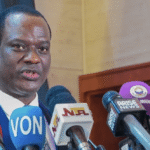
Commissioner for Water, Environment and Forest Resources, Mohammed Saidu Fawu, made the disclosure while speaking at a Media Dialogue on FSM organised by the Gombe State Rural Water Supply and Sanitation Agency (RUWASSA) in collaboration with UNICEF in Gombe.
Represented by the Director of Water Resources, Mohammed Abubakar Sadiq, Fawu commended UNICEF for its continued support in advancing WASH (Water, Sanitation and Hygiene) initiatives in the state, and applauded the Gombe State Rural Water Supply and Sanitation Agency (RUWASSA) for leading the transformation of rural sanitation.
Commenting on the theme of the media dialogue, Fawu emphasised the urgent need to address the growing health and environmental risks posed by poorly managed on-site sanitation systems, such as pit latrines and septic tanks.
“Overflowing pits, indiscriminate disposal, and groundwater contamination are not mere inconveniences, they are threats to human dignity, water security, and the health of our population.”
The commissioner highlighted the government’s multi-pronged strategy to strengthen FSM across the state, which includes defining institutional roles, enhancing regulatory frameworks, partnering with private desludging operators, and constructing treatment plants in strategic locations. He also emphasised the integration of FSM into the state’s broader sanitation roadmap.
He said part of the state’s approach includes capacity-building initiatives for local actors and a sustained behavioural change campaign targeting households and communities.
“We are also exploring innovative waste-to-wealth models. Properly treated faecal sludge has the potential to be transformed into energy, bio-fertiliser, or non-potable water, supporting our environmental and economic development targets.”
Commenting on the Open Defecation (OD) situation in Gombe, the WASH Sector of the RUWASSA, Abubakar Lumumba, revealed that a total of 896 communities have been ‘triggered’ across the state under the Community-Led Total Sanitation (CLTS) approach, out of which only 320 have self-declared Open Defecation Free (ODF) status.
Lumumba added that 119 communities have been officially verified by the LGA WASH departments and awaiting verification by the state and national team to be declared ODF. However, Lumumba expressed concern over the pace of implementation of projects and campaign against open defecation in the state.
Meanwhile, Chief of Bauchi Field Office (BFO) of UNICEF, Dr. Nazhat Rafique, assured that the United Nations (UN) agency is committed to supporting Gombe in attaining ODF and FSM. Represented by the WASH Officer of the BFO, Nanbam Michael, the Chief stated the need for sensitisation and attitudinal change among community members.
On his part, Communication and Advocacy Officer at UNICEF BFO, Opeyemi Olagunju, stated that the media dialogue was intended to spark broader advocacy, enhance public awareness, and mobilise key stakeholders in the drive towards a cleaner, safer, and healthier Gombe State.