Follow Us on Google
From Ajiri Daniels, Abuja
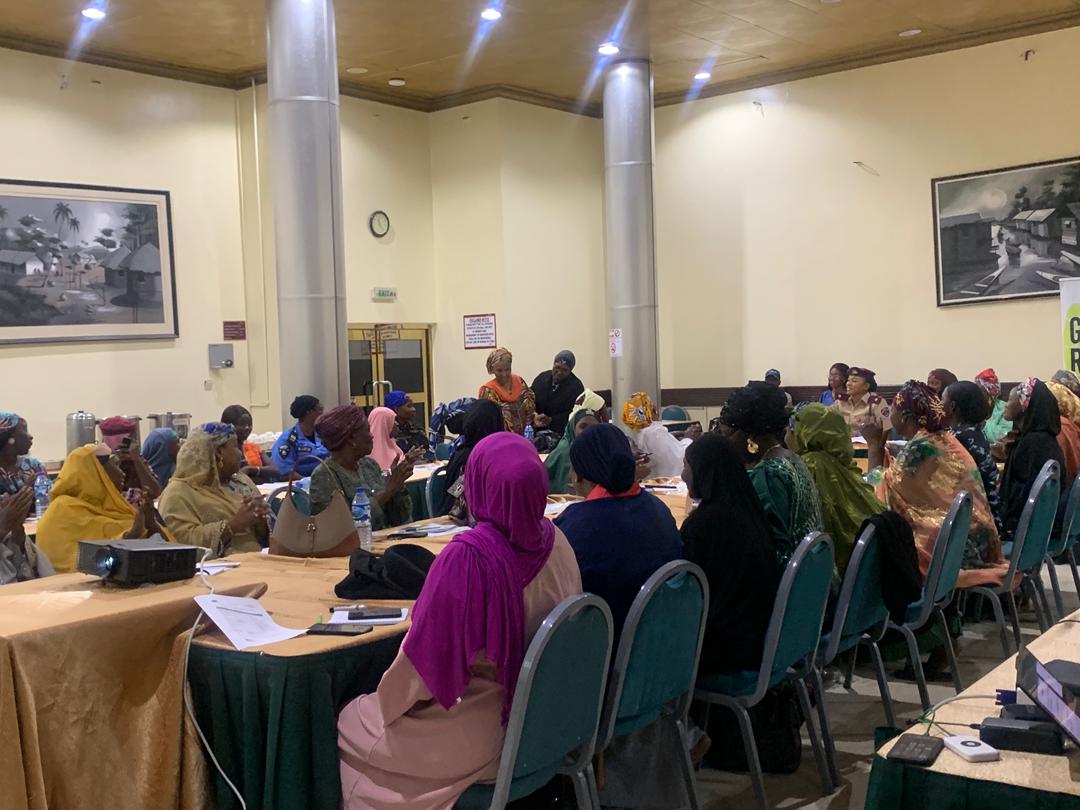
Global Rights, an international civil society organisation, has held a mentorship workshop for 20 women members of Community Dialogue Committees from Kaduna State, aimed at enhancing women’s participation, confidence, and leadership in community peace-building initiatives.
The two-day workshop, held in Abuja, is part of the organisation’s ongoing efforts to promote inclusive governance and empower women to take active roles in mediating and resolving community conflicts.
Speaking with journalists, Programme Officer Noya Sedi explained that the project, which has been running in the Northwest for about two years, focuses on empowering women and ensuring their inclusion in decision-making platforms. The initiative began in Kaduna, Sokoto, and Kano states and has now expanded to all senatorial districts in these areas, establishing multiple Community Dialogue Committees.
“Some of the newer women are not as outspoken as the older women,” Sedi said. “They need training and mentoring on decision making, confidence building, public speaking, and why they need to speak up for themselves.” She noted that the workshops provide an open space for experience sharing, with older CDC women and other women working in peace, security, and legal advocacy guiding participants.
Sedi highlighted the impacts of the project, pointing to significant behavioral shifts: “We now have a woman in the traditional council in Kaduna State. Women are leading engagements and speaking up for themselves, something that didn’t happen before.” She added that men in the communities are also increasingly accepting women’s leadership, thanks to advocacy and collaboration with traditional and religious leaders. The initiative is deliberately inclusive, extending opportunities to women with disabilities, who face multiple layers of marginalization. “Including them ensures they have a platform, a voice, and representation at the community level,” Sedi said.
Other News
A major highlight of the workshop was a presentation by Dr. Zubaida Ahmad Nagee on understanding leadership and agency in community peacebuilding. Dr. Nagee explained that leadership and agency are vital in promoting peace and inclusion, and that women leaders play a transformative role by fostering empathy, collaboration, and resilience. She described leadership in peacebuilding as guided by purpose rather than power, requiring deep listening, meaningful engagement, and mobilising others toward a shared vision of peace.
Agency, she noted, is the belief and capacity to act intentionally to influence outcomes, enabling individuals, particularly women, to make decisions that shape their lives and communities. Women’s leadership enhances social cohesion, ensures peacebuilding reflects diverse community needs, and makes peace not just the absence of conflict but the presence of justice, equality, and opportunity. Dr. Nagee highlighted that women are increasingly moving from being seen as victims to becoming active leaders and mediators, coordinating grassroots initiatives, building cross-community coalitions, participating in networks, rallies, campaigns, and raising awareness for peace.
She also emphasized the psychological dimensions of leadership, including self-awareness, motivation, and emotional intelligence, which build confidence and help foster trust, belonging, and collective identity. Dr. Nagee acknowledged challenges such as gender bias, limited resources, political exclusion, and lack of technical skills but highlighted opportunities for growth through mentorship, education, inclusive peace policies, government support, and growing interest among women in politics.
Dr. Nagee concluded by underlining the inseparable link between leadership and agency in achieving sustainable peace. “Effective peace building requires strong and empowered agency. Women’s leadership adds empathy, inclusivity, and long-term perspectives. Empowering diverse voices transforms communities and sustains peace for future generations,” she said.
The workshop ended with interactive sessions where participants reflected on their experiences and committed to applying the lessons learned to strengthen peacebuilding efforts across Kaduna State.