Follow Us on Google
From Uche Usim, Washington DC
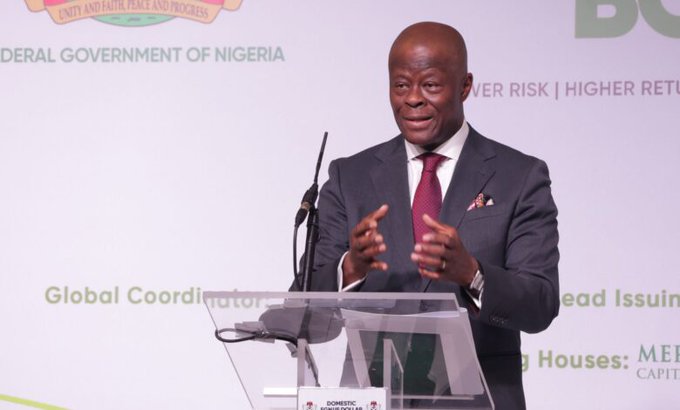
Nigeria’s Minister of Finance and Coordinating Minister of the Economy, Mr Wale Edun, has renewed calls for key reforms to the global financial architecture, warning that high borrowing costs and rising debt service obligations are severely constraining the ability of developing countries to fund growth and deliver sustainable development.
Speaking yesterday the G-24 Meeting in Washington, D.C., Edun said the current financing environment is placing disproportionate pressure on low- and middle-income economies, limiting fiscal space at a time of heightened global uncertainty.
He urged multilateral institutions, including the International Monetary Fund and the World Bank, to move beyond incremental adjustments and provide stronger support mechanisms, particularly in the form of additional liquidity and enhanced risk management tools designed to lower the cost of capital.
“To do more, we would definitely like them to provide, particularly at this time, additional liquidity, risk management tools that bring down the cost of financing,” he said.
Edun warned that elevated interest rates and heavy debt servicing commitments are now consuming a significant share of public revenues in many developing economies, weakening their capacity to invest in infrastructure, social services, and long-term transformation.
“The elevated borrowing costs and the debt servicing burden that developing countries are paying is weighing heavily on their ability to transform their economies and to achieve sustainable development,” he added.
Other News
He noted that while global financial institutions have introduced policy reforms and expanded lending instruments in recent years, the underlying gap in development financing remains wide, particularly for countries facing structural vulnerabilities and external shocks.
Edun highlighted ongoing discussions around IMF policy adjustments, including efforts to recalibrate programme design for developing economies, but stressed that more decisive action is needed, especially on debt-related charges and the cost of borrowing.
He pointed out that some G-24 member countries continue to rank among the highest globally in interest payments to multilateral institutions, even after recent reductions in surcharge rates.
The minister also referenced the uneven impact of global energy shocks, noting that while oil-exporting countries may experience temporary revenue gains from higher prices, the broader transmission of inflation affects all economies through rising fuel, food and fertiliser costs.
According to him, the current crisis highlights the need for resilience-building rather than policy reversals, with targeted and temporary interventions preferred over broad subsidy regimes that strain public finances.
Edun referenced Nigeria’s ongoing economic reforms since 2023, including fuel subsidy removal and foreign exchange market adjustments, describing them as necessary steps to strengthen macroeconomic stability, even as external shocks continue to test the reform agenda.
He called for coordinated global action to ensure that developing economies are not left behind in a tightening financial environment, warning that without meaningful reforms, efforts toward sustainable development could be significantly delayed.