Follow Us on Google
By Rita Okoye
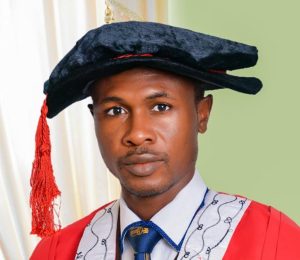
Maternal and child mortality remains one of the most daunting public health concerns in Nigeria and other resource-limited regions. At the forefront of efforts to address this challenge is Dr. Gabriel Dogbanya, a consultant obstetrician and PhD candidate in Maternal and Child Health at the University of Maryland, whose pioneering research is shaping interventions that save lives.
A fellow of both the West African College of Surgeons and the National Postgraduate Medical College of Nigeria, Dr. Dogbanya blends years of frontline clinical experience with evidence-based research. His work spans obstetrics, gynaecology, and public health, with a clear mission: to reduce preventable deaths among mothers and children.
“Combating maternal and child mortality demands both swift medical interventions and broader, community-driven strategies,” Dr. Dogbanya asserts.
His research portfolio is vast, covering emergency obstetric care, perinatal health, and assessments of large-scale health initiatives. One of his groundbreaking contributions lies in the management of postpartum haemorrhage, the leading cause of maternal death. His studies demonstrate that combining tranexamic acid with oxytocin during caesarean deliveries significantly reduces blood loss, thereby improving survival outcomes for mothers.
He has also led research on stillbirth prevention, underscoring the importance of early identification of high-risk pregnancies and timely medical interventions. Findings from his work in Zaria show that structured monitoring and rapid-response systems in secondary healthcare facilities can drastically cut stillbirth rates.
Dr. Dogbanya is equally passionate about the psychological dimensions of maternal health. His research highlights that perinatal mental health support not only strengthens adherence to medical guidance but also enhances overall wellbeing for both mother and child.
Community engagement is another cornerstone of his work. He has championed initiatives that equip women with knowledge about reproductive health, birth preparedness, and the early recognition of danger signs during pregnancy—empowering them to make informed decisions that prevent complications.
His evaluation of health programmes such as the Baby Friendly Hospital Initiative has provided valuable insights into infant feeding and breastfeeding practices, both critical for child survival. Beyond hospitals, his research interrogates the social determinants of health, including food insecurity, cultural practices, and barriers to accessing healthcare. For Dr. Dogbanya, lasting progress requires context-specific interventions that reflect the realities of the communities they serve.
“Mortality is not just a medical issue—it is intertwined with education, nutrition, and equitable access to quality care,” he explains.
His frontline experience with Médecins Sans Frontières in Jigawa State further deepened his understanding of the obstacles rural communities face—such as inadequate infrastructure and workforce shortages—in providing lifesaving care.
Beyond research and practice, Dr. Dogbanya is committed to mentorship. He has trained medical students and residents, ensuring that the next generation of health professionals embraces research-driven approaches to reducing mortality. His publications, ranging from studies on preeclampsia to emergency obstetric protocols, continue to influence both global scholarship and local policy.
Collaboration is central to his vision. He works alongside governments, NGOs, and health institutions to design and implement interventions that place maternal and child survival at the heart of policy and practice. His ultimate goal is clear: to translate cutting-edge research into sustainable, practical solutions that strengthen health systems while saving lives in the immediate term.
As Nigeria and many low-resource settings grapple with maternal and child mortality, Dr. Gabriel Dogbanya’s work stands as a model of how clinical expertise, rigorous research, and community engagement can converge to bring about transformative change.