Follow Us on Google

By Kareem Islamiyat
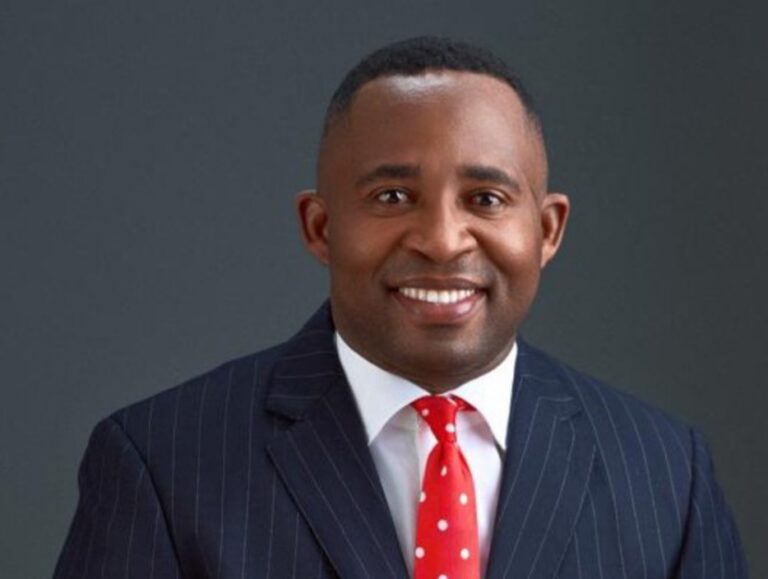
An accounting and financial reporting expert, Joel Odeniyi, has disclosed that artificial intelligence (AI) is rapidly transforming everyday accounting tasks by helping professionals eliminate repetitive processes and devote more time to analysis, strategic decision-making and business advisory.
Odeniyi, who has more than 11 years of accounting experience across multinational organisations in North America and Africa, said the growing adoption of AI should not be viewed as a threat to the accounting profession but as an opportunity to improve efficiency and strengthen the quality of financial services.
In an interactive session with our correspondent, Odeniyi said AI had evolved from being a futuristic concept into a practical tool capable of supporting accountants across several areas of their daily responsibilities.
“AI is not here to replace accountants. Its real value is in removing repetitive work so that finance professionals can spend more time on analysis, business partnering and strategic decision-making,” he said.
According to him, his experience working with accounting and enterprise systems, including QuickBooks, Microsoft Dynamics NAV, SAP, Oracle NetSuite ERP and Oracle Financial Consolidation and Close, has shown him how technology has progressively changed the profession.
He said the transition from paper-based accounting to cloud systems, enterprise resource planning and intelligent automation had demonstrated that technology changes the way accountants work without changing the fundamental purpose of the profession.
“Our responsibility is still to produce reliable financial information that supports sound business decisions. Technology may change the process, but it does not change that responsibility,” Odeniyi said.
He identified management reporting as one of the areas where AI could deliver significant productivity gains, explaining that accountants could use the technology to generate preliminary explanations of revenue movements, expense fluctuations and budget variances.
“AI can help generate an initial narrative explaining what happened in the numbers within minutes. Instead of starting with a blank page, the accountant can review that draft, apply business knowledge and refine it,” he said.
However, Odeniyi stressed that human judgment remained critical.
“AI can explain what changed. The accountant has to explain why it changed,” he said.
He also identified technical accounting research as another area where AI could save valuable time, particularly as financial reporting standards become increasingly complex.
Odeniyi said AI could help accountants summarise technical guidance, compare accounting treatments and highlight relevant considerations, but warned that professionals must verify such information against authoritative accounting literature before relying on it.
“AI can significantly reduce the time spent on research, but it does not remove the accountant’s responsibility to understand, interpret and apply the standards correctly,” he said.
On month-end reporting, Odeniyi said AI could assist finance teams with close checklists, reconciliation templates, journal-entry explanations and the identification of unusual account movements that may require further investigation.
Other News
He noted that the technology could make the month-end close process more organised without taking away the professional responsibilities of accountants.
Odeniyi, who has also coordinated statutory audits with external auditors, said AI was increasingly useful in improving audit readiness.
According to him, finance teams can deploy AI to organise Prepared-by-Client schedules, summarise supporting documentation, draft explanations for unusual transactions and help prepare responses to audit queries.
“The auditor still requires reliable evidence. AI simply helps accountants organise and prepare that evidence more efficiently,” he said.
The accounting expert further highlighted the potential of AI to strengthen internal controls and reduce financial risks.
He said intelligent systems could help identify duplicate payments, unusual vendor activities, segregation-of-duty concerns and transactions that deviate from established patterns.
“These insights give finance teams the opportunity to investigate potential problems much earlier. That can reduce operational and financial risks before they become bigger issues,” he said.
Beyond corporate accounting, Odeniyi said AI was also becoming a useful tool in training and mentoring the next generation of accountants.
Drawing from his experience as an ACCA tutor, where he has taught Financial Reporting, Audit and Assurance, Strategic Business Reporting and Advanced Audit, he said AI could make accounting education more interactive.
“AI can generate practice questions, explain difficult concepts from different perspectives, create case studies and provide examples that reinforce what students learn in the classroom,” he said.
He, however, maintained that educators must continue to play a central role in ensuring that information provided to students is accurate and consistent with professional standards.
Odeniyi also identified the preparation of accounting policies and standard operating procedures as another area where AI could improve efficiency by helping finance teams organise ideas, structure documents and produce clearer drafts.
Despite the growing capabilities of AI, he cautioned accountants and organisations against allowing technology to take over responsibilities that require professional judgment and ethical consideration.
“AI cannot understand an organisation’s culture. It cannot replace ethical judgment, challenge management assumptions or determine materiality in complex situations,” he said.
“It cannot sign an audit opinion or certify financial statements. Those responsibilities remain with qualified accounting professionals.”
Odeniyi urged organisations to establish clear governance frameworks around the use of AI while investing in continuous training to ensure that finance professionals understand both the capabilities and limitations of the technology.
He said the future would favour accountants who were able to combine technological competence with the core principles of the profession, including integrity, objectivity, competence, confidentiality and professional judgment.
“The accountants who will thrive are not those who resist AI, and they are not those who depend on it unquestioningly. They will be those who learn to work alongside it,” Odeniyi said.
“AI is changing accounting, but it is not changing the accountant’s purpose. Our role has always been to transform financial information into trusted business insight. AI simply gives us better tools to do that work.”