Follow Us on Google
By Juliana Taiwo-Obalonye
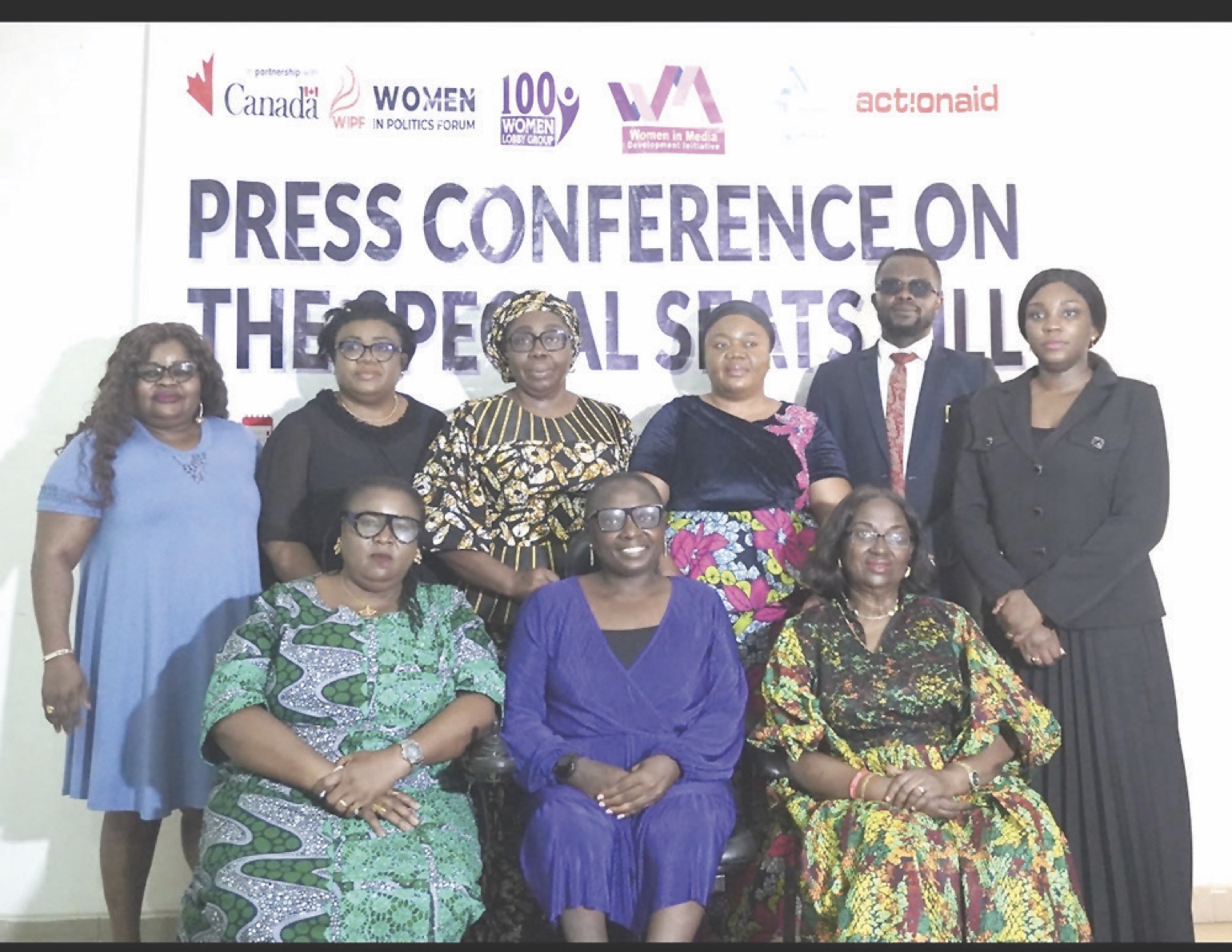
Picture this: A packed Abuja press conference erupts as women’s rights warriors, faces flushed with fury, slam fists on tables, their voices thundering accusations of betrayal against Nigeria’s power brokers. “This list that is giving us only 4.11% is unacceptable!” roared Ebere Ifendu, leading a coalition from Women in Politics Forum (WIPF), 100 Women Lobby Group, Women in Media, Nigeria Association of Women Journalists (NAWOJ) and Safe Point and Care Initiative.
The spark? The Senate’s bombshell rejection of mandatory electronic transmission in the Electoral Act Amendment Bill, coupled with the All Progressives Congress’ insulting 77-member National Convention Committee boasting just three women—a paltry 4.11%. These twin insults, as it were, piled atop the stalling Special Seats Bill, have ignited a firestorm of rage among Nigeria’s women who vow to unleash voter hell in 2027.
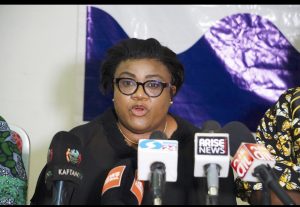
“Nigerian women are no longer sleeping. Nigerian women, we no longer keep quiet. Nigerian women have our votes, and at the moment, any political party tries to undermine us, we will pay back with our votes,” Ifendu bellowed last Thursday, her words now a rallying cry rippling from markets to mansions.
The Senate’s February 2026 passage of the Electoral Act Amendment Bill—rejecting mandatory electronic uploads to INEC’s IReV portal—struck like a betrayal dagger to women’s electoral safeguards. Lawmakers chose vague “INEC discretion,” slammed by activists as a blueprint for rigging. The coalition’s statement blazed: “We express strong concern over provisions that weaken the mandatory electronic transmission of results from polling units to the INEC Results Viewing (IReV) Portal. Electronic transmission has become one of the most important safeguards for transparency, public confidence, and electoral integrity. Any rollback—explicit or implied—creates room for manipulation, heightens post-election disputes, and undermines trust in the electoral process.” Their ultimatum rang out: “We therefore urge the National Assembly to reverse this provision and fully restore mandatory electronic transmission of results as a non-negotiable pillar of credible elections.”
Princess Hamman Obels of The Electoral Hub linked the fury to constitutional treason: “Concerning the political parties, it’s an issue of no commitment to their constitution. Once something becomes a legal framework as a party they are obliged, mandated to honour it, to comply with it. So the fact that they (APC) have affirmative action in their constitution and they are not complying is illegal, that’s an electoral offence. So that’s something political parties need to start thinking about. It’s not about writing things. It’s about actually complying with what you wrote.” She didn’t stop there, weaving in the Senate sleight, she said: “So you can’t be functioning as a political party, and you’re not meeting up with constitutional requirements of Nigeria. You must be inclusive. So you will be called out and you will be taken to court. You must know that time has passed for you, unlike time past where nobody says nothing, but now you will be compelled to comply with your own constitutional provision.”
Ifendu hammered on the 2027 elections: “That means whatever we do, we have to all be vigilant, within our political party, within our society, so that anywhere you see a sign of marginalization against women, you speak up. So this is the reason we are calling them out.” The raw anger? Rooted in 2023’s manual collation nightmares, where women voters and candidates felt robbed—now amplified as a direct assault on their electoral armor.
If the Senate lit the fuse, the APC’s February 2 77-man Central Coordination Committee for the party’s March 2026 National Convention, —chaired by Kwara Governor AbdulRahman AbdulRazaq with a measly three women among governors and bigwigs—poured gasoline. The coalition seethed: “This is deeply troubling. The APC, as the ruling party, explicitly affirms inclusion and affirmative action principles in its constitution. Yet, by failing to meet even the minimum 30 per cent benchmark for global women’s representation and 35% national, the party undermines the very principles it claims to uphold.” Ifendu angrily said: “What I’m saying, if you look at APC constitution, it is clearly stated they have adopted affirmative action, and it shows that, and it means that anything that they are doing within their party, we should not have less than 30% of women. So this list that is giving us only 4.point11% is unacceptable. The party should do better. You have a constitution, you must honour your constitution. That constitution was not imposed on APC. It was their constitution that they adopted, and I see no reason the party will not honour it. And this is not just about APC. It’s about all the political parties in Nigeria not showing commitment to women’s inclusion. So this is not just about APC, but because their list is the one that we have now. So we are calling them out, and we’re using this opportunity to tell other political parties that we are not sleeping. We are watching every step and every activity that they are doing.”
Other News
Obels detonated: “The fact that APC has affirmative action in their constitution and they are not complying is illegal, that’s an electoral offence. These 77 persons committee that only has three women it’s a no, no—they’re going against their own constitution. This is a warning to all parties: you must comply with the provisions of your constitution drawing from Nigeria’s constitution as well. Three women out of 77 is not allowed, not acceptable—we reject that. APC leaders should go back and reconstitute that committee.”
Felicia Onibon of 100 Women Lobby Group piled on the shame: “For a leading party to have only three women in a committee of 77 strong persons. It’s actually a shame we are unhappy, and I believe that the leadership of the APC should go back to their drawing board and bring in the equivalent of 35% of women for planning the convention.”
Chibuzor Maureen Nwosu, FIDA Abuja Chairperson, indicted the enablers: “We also will use this opportunity to call on all parties legal advisers to wake up to their duties and uphold the oaths of office that they’ve taken, to advise their parties properly and ensure that the party’s constitution is being followed. The provisions of the party’s Constitution are being abided in taking decisions. So for what we are talking about this moment, the APC convention list is a big indictment, and it will spillover to other parties coming from the leading political party at this point, not considering inclusion of women and other members, like people with disability, other parties will see it as a normal and follow that.”
Don’t Stall Special Seats Bill, Hasten Now—Put Nigeria First!
The Special Seats Bill—eyeing 37 Senate, 37 House, and 108 state seats for women—languishes despite assembly nods, with postponements screaming sabotage to activists. Pressed on risks, Ifendu fired back with urgent pleas: “Well, I think with the Electoral Act amendment bill that the Senate just passed, even though it is not what we expected to get from the Senate. But there’s a kind of movement towards looking at the constitution amendment bills before them. We are hoping that the special seats will be the next. We are also aware that it’s not the special seats bill alone that they have not passed. It means that the constitution amendment bills will come together. We are not saying that they are deliberately moving away from passing the bill. We know that there are challenges, but we understand also that the committees are set and they have all the bills before them. They have studied the bills. I want to believe all through the holidays, and I know that very soon we’ll have a date… And also we’ll be waiting for the presidential assent, and that’s why we asked the President to come out fully to say, ‘Look, I am waiting for this bill. I will assent to it once it gets to my table. That will ginger them, you know?
So the bill before the National Assembly, we want it hastened, that’s what we are requesting from them. We are saying to the lawmakers, you have had a lot of holiday time. This is time for them to work. They can also skip whatever holidays before them and put Nigeria first and do what is supposed to be done.”
Lois Auta of Network of Women with Disabilities bellowed on underrepresentation of women on the APC’s 77-man committee: “This already is a big problem. We are excluded, and it is time that we move from problems to possibilities and from possibilities to prosperity and include everyone. We are tired of saying the same thing every time, everywhere. Let’s move from declarations to delivery. We want those numbers to be seen and activated everywhere, on political party systems and structures. Let’s move from policy to action. And with a loud voice, we say: “Include us (women and girls with disabilities) now.”
Onibon shamed the silent sisters: “As part of this coalition, I’ll just like to call out our women politicians… We are not seeing our women moving or announcing their movements. We are not seeing our women aligning and realigning with different parties, just as your male counterparts are doing… Women politicians this is the profession you have taken and our expectations of you are quite high… If women are not given the opportunity then it means we are shutting the gates and the doors for our girls. So I would like to call on our women. We appreciate the work you do so far, but we need you to come out. We need you to speak out, we will help amplify your voice.”
Obels rallied the troops: “Also, we are encouraging women politicians. I know the challenges you face. We know this whole idea that if you speak up, you’ll be seen to be working against your parties, and they can come after you. We understand that like other parties everywhere in the world, women work across party lines and for the fact that you are so few within a party system. Please don’t be discouraged, but speak up. It’s about you. You shouldn’t be quiet. Speak up. Talk to your party leadership. They need to include you to do so much work. I mean, look at APC’s women leadership, they went around the country. We saw the videos. They went around engaging with different governors and across the different regions of the state. So why are they excluding them now? Women do a lot of work for the APC, popularising the party. So I mean, the party should pay them back for that loyalty with inclusion. Let their voice count. Let them be included.”
The women concluded by saying, democratic credibility cannot coexist with systemic exclusion… A democracy that excludes women is not merely incomplete—it is unstable, unjust, and unsustainable. Nigeria must choose inclusion, not convenience; reform, not retreat. The time to act is now.” As 2027 looms, this rage—fueled by Senate snubs and APC slaps—promises an electoral inferno of not addressed.