Follow Us on Google

The Managing Director of the Transmission Company of Nigeria(TCN), Mr. Sule Abdulaziz, has raised the alarm that funding constraint remained a majot setback to its operational goals.
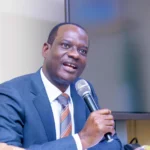
Abdulaziz stated this at the Middle East Energy Strategic Energy Conference held in Dubai recently “The number one challenge we face in the sector is funding, especially as the Transmission Company of Nigeria (TCN). The generation and distribution arms of the sector are owned by private companies so they are able to source funding through various investors and banks.
He said TCN is availed only three sources of funding– government allocation, internally generated revenue, and donor funding from multi-lateral organisations including the World Bank and the African Development Bank.
According to him, TCN currently has over 100 ongoing transmission projects (lines and substations), but always striving to pool funds to complete each project.
He explained that TCN currently have companies approaching it with Power Purchase Agreements(PPAs) PPAs and have signed MoUs and agreements so that these projects can be actualised.
‘‘We have also partnered with certain parties we call eligible customers, mainly steel companies based in Nigeria, to build the needed infrastructure to advance the sector.”
Also speaking, Senior Legislative Aid to the Senate President, Olabode Sowunmi, decried the current gap in Nigeria’s energy infrastructure which has caused stagnation in development.
He argued that often times, what has been noticed is a disconnect between policies and the private sector, for whom the policies are intended.
This, he said, is because there have been inadequate opportunities for interactions and effective constructive engagement between beneficiaries, adding that for sustainable development,there must be consistent, regular, and effective communication between the private sector and policymakers”.
For his part, Chief Executive Officer, Tetracore Group. Olakunle Williams, while sharing his thoughts on the future of energy infrastructure and development in Nigeria, said, “In the next five years, Nigeria will need to improve its energy access by getting more people connected to the grid.
We will also need to considerately step up our gas-based industries because as we continue to meet power needs, we have huge requirements to industrialise in a very short time,’’.
On solar power and other renewable energy sources, he said, he would want to see a situation where we can incorporate them more into our national energy mix and be a major player when it comes to expanding clean energy across Africa.
Middle East Energy is a global energy industry event that addresses the entire product spectrum of the power industry, year after year, the event attracts a more diverse audience of professionals seeking to source products from multiple sectors, drive cost-effectiveness and efficiency, and move projects forward. MEE has been an essential part of the Middle East and Africa’s economic expansion, connecting businesses and introducing new products to the regions to build infrastructure, real estate, and commerce. MEE is now helping governments, organizations, and SMEs diversify the generation and supply of energy and build a sustainable future.