Follow Us on Google
•How we’ve been coping, saving costs

Across Nigeria, many are the afflictions of motorists. The current astronomical increase in the pump prices of premium motor spirit, otherwise known as petrol, has deepened their pain and suffering.
With a litre of fuel costing N500 and more in different parts of the country, motorists are now devising new ways to deal with the unbearable situation. While many have sold their cars or put them up for sale, some others have ditched their vehicles and have embraced public commercial transportation. Some others said they have since turned their vehicles to unregistered taxicabs, better known as kabukabu.


Our reporters crisscrossed Nigeria’s six geo-political zones and the Federal Capital Territory, speaking with different motorists. They all bemoaned the hardship the abrupt fuel subsidy removal had brought upon them and their families, praying, hoping and pleading with the federal and state governments to find ways to ameliorate the situation.
ABUJA
From the Federal Capital Territory (FCT), ISAAC ANUMIHE reports that many motorists are going through hard times following the removal of petroleum subsidy by the Federal Government.
Mr Emma Njoku said that he now parks his car in a filling station close to his house (because his house is far from the main road) and go to office in a public transport. When he closes from office, he picks his car and drives it back to the house. This, he said, is a way to save cost.


Hear him: “Removal of petroleum subsidy is a welcome development because past governments have tried to implement the policy without success due to lack of political will. But for this administration to do it is a welcome development. The only sore point is that they didn’t do the first thing first, which is the palliative. They should have brought in something that could cushion it. This is why the policy is biting hard.
“Before now, I used to fill my tank with N10,000 but now with N15,000, I will get a half tank. So, I don’t go to the office with my car unless I have an important place to go. And the place must benefit me financially,” he said.
For Mr Christian Nwachukwu, it’s a different story. He said he now converts his car to an unregistered taxi cab (kabukabu in the local parlance) to and from his office to be able to buy fuel. According to him, even though it’s risky, he has no choice.
“The situation is very harsh. Unlike before when a litre sold for N185, the pump price for a litre now has been increased by more than 300 per cent. An average worker who has a car spends more than N4,000 a day on fuel, depending on the distance. Some who cover longer distances spend more than that.
“What does an average worker earn? He has other responsibilities. He has to pay school fees, feed, pay house rent and a whole lot of things. How much does a director in the ministry earn, not to talk of others under him?
“As a car owner, sometimes I pick passengers on the way, which is risky, because you don’t know who you are picking,” he submitted.
LAGOS
Motorists in Lagos have also been lamenting the fuel price increase and its attendant hardship, reports LUKMAN OLABIYI.
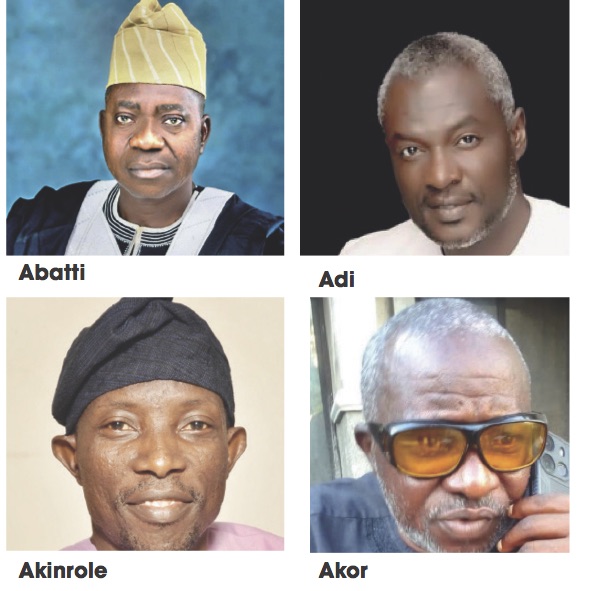
Chairman of League of Yoruba Media Practitioners (LYMP), Mr. Sam Akinrole told Saturday Sun: “As a motorist, the experience has been one with mixed feelings. One thing that is absolute about the new price regime is that things have been tough. I now buy N5000 fuel every other day, unlike before that I used the N5000 fuel for a week. It is now every other day.
“When you combine this with the fact that you have to also buy fuel for the generator at home, and for some of my colleagues who run offices, it is a very huge cost burden.

“When I look at the cost in summary, that is around N10, 000 every other day. At times we have to run without the generator at home – thank God for the current weather conditions. And we also have to go through public transport. Even the public transport is also expensive when you are going out in groups or as a family,
“However, on the other hand, the roads are freer now, except few places that we usually encounter traffic whether due to bad portions on the road or road construction.
Mr Tolani Abati said before the removal of the fuel subsidy, he bought N5000.00 worth of fuel every week, which gave him, about 30 litres. He noted that now, N10000.00 could only get him 20 litres.

“I make sure I don’t go anywhere that is not compulsory or that will not generate something into my pocket,” he informed. “I avoid traffic, and that is why I wait till 9.30 pm or 10 pm before leaving for home.”
Mr. Peter Fowoyo also revealed the strategy he has deployed in coping with the fuel situation.
He said: “It has not been easy taking the car out ever since the increase in fuel pump price. I used to take my car from Sango Ota to Ikoyi every day before, but since this price increase, I have stopped.
“What I do now is to take the car from home and park it at Sango Toll Gate and enter public transport from there to the Lagos Island. When I’m done, I’ll return with public transport to Sango Toll Gate, pick my car and drive back home.
“The only time I take the car is whenever the family is going out or there’s load to take from one point to another. I’ve also done away with my generator and embraced solar system. I’m cutting down on PMS as much as possible.”
ENUGU
In Enugu, some car owners who spoke to JUDE CHINEDU expressed sadness over the development, revealing that they could barely meet up with their daily financial needs due to the fuel prices increase.
Ernest Odo said aside from the high cost of fuelling his car, the removal of subsidy has negatively affected his business and made life difficult for his family.
Odo, a pharmacist, called on the government to fix available refineries in Nigeria in order to bring down the price of petroleum products.
“Generally the increment in fuel price affected everything. It affected the cost of feeding and cost of transporting children to school. Even school buses hiked their prices. A lot of traders have doubled the prices of their goods. The same thing has also affected my business. Every company has doubled the price of their products. The cost of running my business now is high. Aside from the issue of transporting the goods, there is no reliable power source to maintain the drugs so everybody relies on generators.
“If you attach the price of the fuel to the cost price of the product, you can imagine how costly it would be. If there is no light we use N2500 to run the generator in a day. These are challenges we are facing. I used to fill my tank with about N13, 000 but now N30000 cannot fill my tank. 30,000 can only get 60 litres or thereabouts.
“This recent increase in fuel price is too worrisome. It has affected my family severely. We now limit our movement. We don’t just move for pleasure. It must be of utmost importance before we move. When you look at the cost of movement, you have a change of mind. I feel for people who are on basic salary.
“The appeal I am making to the Federal Government is that if we refine our fuel by ourselves, things will not be like this. If we refine our fuel here, the price of fuel will not be more than N350 at most.”
A civil servant, Ugochukwu Eze, said his income can barely take care of his basic needs due to the high cost of fuel.
“If you watch the way things are going in the country, you will see that nothing is going well. You can see the way businesses are collapsing. Even the filling stations are not meeting up. Some of them have started losing their customers.
“I went to a filling station in Enugu and the manager said they would not sell fuel because there is no light from EEDC and he was not ready to power the standby generator because of the cost of fuel. For two hours they refused to sell fuel.
“There is no more traffic in Enugu. You only see commercial drivers on the road. A family man who used to buy fuel for N7, 000 a week is now expected to spend close to N30, 000 on the same quantity of fuel. So how much is he earning? From all angles, I have been affected.
“I was buying fuel of N7, 000 or N10,000 before in a week, depending on my schedule for the week. But now I spend 25,000 on fuel and it is not even enough. How will I meet up with that kind of expense on fuel?
“The only thing I want the government to do is to bring the price down. I don’t care about what they are saying about subsidies. They have to bring it down. This is the only thing the masses will be happy with. Because of this fuel price increase everything is now costly in the market. This is sad,” he bemoaned.
For Chukwumerije Aja, a journalist, the increase in petrol pump price has been a source of worry as he spends over 400 per cent more than what he used to spend on fuelling his car.
“Well, it has not been very easy since the removal of fuel subsidies. In two weeks, I have bought fuel of N28, 000. Every time I go to buy fuel, I buy N5000. When they were selling fuel for around N200, if I buy 5000 I almost have a full tank. I will use that fuel for two weeks.
“Now, N5000 fuel is just about eight litres, depending on the filling station. Some pumps are not even accurate. So it’s been difficult. I think that if we can fix our refineries and stop the Importation of fuel things might get better. But no one is even thinking of that. How can a country like Nigeria, an oil producing nation, be importing fuel?
“I always liken it to a farmer who cultivates yam and at the end of the day you sell your yam to a hotelier who will then make pounded yam and you go there to buy. Why not buy a mortar? It will be cheaper. So it hasn’t been easy for me as an individual and also for others.
“If you look at the roads now, the roads are dry except for transporters who make money with their vehicles. Every car owner has parked his car because using public transport is cheaper than driving your own car. Those who use six-cylinder and 12-cylinder engines have all parked their cars.
“Someone jokingly said that anyone who enters a filling station now and demands a full tank should be arrested because he is a criminal. Where would you get money to buy a full tank now?”
RIVERS
It’s the same situation in Port Harcourt, Rivers State, according to Saturday Sun’s TONY JOHN.
Jackson Ojo, a security expert said: “As a matter of fact, I haven’t been running any of my cars now because all my cars are SUVs. The car I was filling the tank with N20,000.00 before, I need about N70,000.00 to fill the tank now. Where is the money? Is it affordable? No. The effects of hike in fuel price are biting.
“So, what I do now is to join Keke NAPEP (tricycle) to where I want to go. For the Keke, before, where it was taking N1,500, now, it is N3000. So, I can manage this. Coping with the situation, I have readjusted my lifestyle and movements, which have not been easy. I spend an average of N70,000 every week, whereas before, I spent about N15,000 weekly.
In his response, Festus Ogwuche, a lawyer, informed the reporter: “It hasn’t been easy. I have four cars. Since this hike in fuel price, we’re just using only one for now. We could manage that one to accommodate our movement. In fact, it has affected our general livelihood.
“The pang of the hike is so much unbearable and has affected the family income. The percentage of what I spend on car fuel rose astronomically. It increased to about 20 to 30 per cent of my regular income from what it was to what it is now. The average is N10,000 daily.”
Another lawyer, Angus Chukwuka, also lamented the fuel price increase. His words: “The fact is that one has to adjust one’s lifestyle in view of the fuel increment. One has to curtail certain movements that might not be important.
“Secondly, one has to leverage on public transportation in some instances. Instances where one would have been in a luxury or private car, one would now use public transport to augment those other times one would use private vehicle. It is a delicate balancing now. The situation is very unbearable now.”
TARABA
In Jalingo, the Taraba State capital, many are also complaining..
As the reality of fuel subsidy removal by the federal government settles and the untold hardship that comes with it unfolds, most car owners are contemplating selling off their cars while others, stripped of better options, have continued to groan under the heavy weight.
Mrs Gladys Yahaya, a teacher and mother of two, told Saturday Sun’s SYLVANUS VIASHIMA that fuel now takes a chunk of the family budget, while the attendant rise in the prices of other items has made life tough to cope with.
“Honestly, this is not funny. If it were not because I have children, I would have parked the car since. It is simply draining. The trauma of buying fuel is bad. We spend on fuel more than any other single item in the house.”
Mr Mfeseer Jigere, a recent graduate of the Department of Business Administration at the Taraba State University, Jalingo has put up his car for sale, saying he could no longer cope with the cost of fuelling the car.
“I put my car for sale already. What is the essence of maintaining a car when I can no longer afford fuel? While in school, I maintained the car because I stayed far from school. Thank God I’m done with my final examinations. I am looking for whoever would make me a good offer. I will rather go into any other business because using the car for taxi is also no longer profitable.”
Mr Felix Agaigbe, a commercial bus driver, also said that the business is no longer lucrative at all.
According to Agaigbe, “we are only working for those who own fuel stations. Most times you travel from here (Jalingo) to Lagos and come back empty handed literally because fuel takes everything.
“You will notice that there is almost 300 per cent increment in the price of fuel but you cannot even double the price of transportation. It is very frustrating,” Agaigbe lamented.
For many car owners in Taraba, the options are between selling off their cars or parking them at home. In many homes, fuel has taken a priority position in their family budgets.
KADUNA
Also in Kaduna, car owners are bemoaning their fate. As reported by NOAH EBIJE, most car owners in Kaduna City have not been finding it easy fuelling their vehicles following fuel subsidy removal which resulted in a hike in petroleum pump prices.
Some of the motorists shared their experiences on how they’ve been coping with the situation.
Mrs. Asabe Ndoma, a private sector civil servant told Saturday Sun: “The situation is not funny at all. Things have not been easy, especially driving and maintaining a car since the removal of the fuel subsidy. It sounds like a dream seeing myself abandoning my car occasionally to jump into public transport because of my inability to fuel the car that will last for more days. I felt embarrassed the other day when my fuel finished suddenly on my way to the office. I had no option than to pull out a container and walk to a nearby filling station to buy a small quantity that took me to the office. So to cope with the ugly situation, I have decided to alternate my movement by using the public transport. However I want to use this opportunity to appeal to the relevant authorities to put palliatives in place to cushion the effect of this subsidy removal.”
For John Femi Adi, a media consultant and fish farmer, “the situation has compelled me to stop driving my car to work because my daily consumption of fuel is far above my daily income after I did a rough calculation.
“On the average, I spend N3000 daily to buy fuel from my house to my work place. That is about N90, 000 monthly. My average earning is about N120, 000 monthly.
“If fuel takes N90, 000 out of N120, 000, I am only left with N30 000 to feed myself, my wife and our two children. So, I decided to park the car and use public transport.
“Until the situation changes, the status quo remains. I will continue to use public transport, except on occasions when it is mandatory.”
A Kaduna community leader, Chief Patrick Lawson was short of words when asked to comment on the fuel situation and how he’s been coping with fuelling his car.
Lawson said: “My mouth cannot say it all; the situation is something else. I can no longer have a full tank of fuel in my car. And this is affecting my fuel pump because there is not enough fuel to pump, making the pump to be getting weak. Sometimes I take public transport to work, but going to social gatherings in public transport is not ideal at all. The situation is like a palm wine tapper that has just come down from the palm tree. He cannot tell you about all the things he saw up there. That is why I told you from the beginning that I cannot tell you everything about how I am coping with the situation. But let me use this opportunity to appeal to the Federal Government to ensure that palliatives are provided to the people, otherwise, we are in for real hardship, worse than what we went through under the eight years of former President Muhammadu Buhari.
Also speaking, Mordecai Sunday Ibrahim, an evangelist, expressed pain over the sudden fuel hike following the subsidy removal, saying that most car owners like him are paying through their nose to drive and service their cars.
“I give honour and glory to God for the gift of life. Any other thing aside the gift of life is extra blessings from God. The truth remains that owning a car in Nigeria is a necessity because successive administrations in Nigeria have not thought it important to establish a viable intra city transport system. Where are the trains and KSTA buses? Whether government likes it or not, we shall survive the hardship by the special grace of God. This is not the first time we are going through socio-economic hardship in this country. The last one was the eight years under former President Muhammadu Buhari who took us 30 years backward. Most Nigerians survived it through the mercy of God. However, for me and my family to cope with this present ugly situation, we occasionally use public transport which is a little bit cheaper. Cars are meant for man to drive, cars are not meant to drive man. In every bad situation there must be a way out.
“Having said that, I wish to call on the Federal Government to provide palliatives to the people to cushion the painful effects of this subsidy removal. Otherwise we are in deep economic crisis, which is adversely affecting our daily income.
“If you buy 10 litres of fuel to drive from Gonin Gora to Kawo, Kaduna as a civil servant, it won’t serve more than two days and that is if your car is performing well. Otherwise, you can only use it for a day. Meanwhile, we see these people in government drive in convoys of between 15 and 20 cars at our expense, all in the name of security. What are they afraid of?”
BENUE
From Makurdi, the Benue State capital, SCHOLASTICA ONYEKA reports that it is tales of woe everywhere, as car owners are almost gnashing their teeth to navigate through the rough time.
While some said they have reached their threshold in adjusting their daily budget to meet their fuel needs, others describe the situation as a nightmare.
Mr Terfa Akor lamented that it has become a nightmare trying to buy fuel for his daily movements.
“It has really not been easy, even though the governor has started paying some salaries now. But it has really not been easy. We have adjusted and adjusted and sometimes, get fuel of N2,000 just to get to the point I want to go, whereas when it was not increased, N2000 would get you fuel that you could use for two to three days before you started thinking of buying more. But these days, you buy fuel every day.
“It is really very bad. We have adjusted to the point that we have adjusted other budgets just to make ends meet if you must ride a car. It’s really not encouraging at all.”
Akor suggested that before other palliatives come, the Benue State government can make an immediate arrangement by providing transportation for workers, noting that “it’s challenging and very hard on us.
“I feel the government can do something for the masses, especially for those who go to the offices. They can decide to subsidise this with vehicles that pick us at some points and take us to the office, and after office hours, it drops us at that point and then we’ll make the rest of the journey with our legs. At least, there should be something to cushion the effect of the hardship that the subsidy removal has bestowed on us,” he said.
For John Baaki, “I am not happy at all. Every time I buy fuel, I am very bitter. What kind of government is this? The arrangement is very poor.
“Before the increase, if you have N5000, you will have almost a half tank. But now, you can’t even get 10 litres of fuel from it.
“People are not paid salaries, the economy is tight everywhere and you removed subsidy. It was not properly timed. I’m really tired, only that there is nothing I can do.”
Another resident, Hannah Apaa, who described the situation as being terrible, said: “I live in the Judge’s Quarters area of Makurdi. From here to my children school in town, I use N16, 200 to get 30 litres of fuel, which I use for one week. But before the fuel price increase, I used N10,000 to fill my tank and use it for two weeks.
“This N16, 200 is a weekly thing. Multiply it by four and see. I’m not finding it funny. A lot of people have parked their cars and you won’t blame them. How much is my salary? Even if I earn much, will my children not eat? Will I not pay school fees? By next term I am contemplating withdrawing them and putting them in a nearby school where they can walk to school and come back so that I can reduce that stress.”
While she acknowledged that the subsidy removal will benefit the ordinary Nigerians in the long run, Mrs Apaa urged the government to always put the suffering masses first and adopt measures to ameliorate their suffering. She insisted that the timing was wrong.
On his part, a youth leader, Franklin Aguboshim said it has not been easy since the fuel price became too expensive.
“Today I got just 18 litres of fuel for N10,000. Meanwhile before the increase, with the same N10,000, I could get almost a full tank for my car. Or maybe I would use some for my car, a little for my generator and a little for the shop. But now it’s no longer possible.”
Frank called on the Federal Government to look into the issue with a view to reducing the suffering of Nigerians.
He also suggested that the Federal Government should rehabilitate the refineries and refine oil within the country, so that the price can reduce. He also advocated quick payment of workers’ salaries and arrears.