Follow Us on Google
By Vivian Onyebukwa
Naturally, the rainy season in Lagos is associated with some challenges when it comes to transportation. The sign of rain puts Lagosians on their toes. Some might decide to go home fromwork or their businesses earlier than usual to avoid the rains, and others might want to brace up with the challenges.

In Lagos, the rains cause a lot of traffic on the roads as a result of floods and bad roads. As a result, a lot of passengers get stranded because of scarcity of transportation. Transport operators also use the opportunity to increase fares, knowing full well that passengers would be desperate to go home.

And now, the increase in petroleum pump prices has added to the high cost of transport fares.
From Ikotun to Abaranje, for instance, transport fares used to cost between N300 and N400 before the increase in pump prices. “Now that it is the rainy season, one can’t dictate the price, especially when the transporters discover that passengers are stranded. They inflate their prices. But thank God for these big buses. Their prices are affordable and that is why a lot of people patronise them. It has also helped me a lot. Otherwise, how would I have been able to spend so much money from Ikotun to Abaranje”, said Ngozi Nwaji who works in one of the restaurants in Ikotun. Nwaji said she always prays to meet the big buses whenever she is going home since those ones charges are more affordable.
Patrick Oluchi revealed how he has managed to cushion the effect of high transportation as a result of the rain and the recent high cost in pump prices. “I have tried to limit my movements within the environs based on my kind of business. Even when it is necessary that I would use public transport, maybe on my way out because of time, but when going back home I would trek a lot more distance to cushion the effect of the cost of my transport fare. Even the transporters are confused because so many people have limited their movements. On my way to Cele today from Coconut Bus Stop in Apapa, I saw a lot of people also trekking, especially from Mile 2. On getting to Cele, I discovered that some of them were still going beyond Cele.”
Bisi Eretan, a beautician is among those who live in Lagos who have decided to reset their brains accordingly. She said, “I go out when it is extremely necessary, and car pooling is now the in-thing. Before now, I could go out four times in a week to buy goods, but now I do it once in a week and even team up with some other people going my way.
A sales personnel with a logistics company in Surulere, Lagos, Chidinma Okwuchi, narrated her ordeal to Saturday Sun while going home last Sunday. Although she said she only visits very important places these days because of the high transport fares, she said she had to step out of her home that day after church service.
“I live at Jakande Estate. While I was going home on Sunday the 25th of June, I needed to take a vehicle from Cele going to Jakande gate and I met a large crowd waiting to board vehicles. I stood for more than 30 minutes but I couldn’t get a vehicle. Each time a vehicle came, passengers would rush and struggle to get in. Of course, each time it rains in Lagos, transportation fare increases. Now, with the new pump prices of petrol, it has become worse. Instead of N200 charged by Keke and Korope operators, the price rose to N500. Even at this rate, passengers were still dragging one another to board vehicles.”
Okwuchi described the situation as horrible, noting that there was a serious traffic caused by bad road from some point of Cele to Jakande Gate. She said she decided at a point to trek from Cele to Gate instead of paying the exorbitant amount, but noted that because she was tired, she said she had to pay to board the vehicle. “With the rate of traffic, I even got home very late,” she added.
Talking about her own experiences, Mariam, a drinks seller at Jakande Gate said: “At Isolo where I live, there were certain places where we used to pay N100 or N150 depending on the distance. For instance, from Isolo to Jakande Gate has increased from N100 to N200 with Keke as a result of the new pump price. Now that we are in the rainy season, you can’t be sure what you would get, because as soon as the transport operators see a large crowd, they inflate their prices without consideration. When you complain, they tell you that there is traffic. For some who can’t afford it, they trek. But then, how long would you trek everyday? What some do is, if they don’t have enough transport that would take them for the day, they simply sit back home and use the little they have to feed. That is what my neighbour did last week and I have emulated that.
“How much do I make in a day that I would spend close to N1500 to and from Ikotun and Ikeja where I do petty trading. It is worse when it rains, and also with this new petrol pump price. What I do is to trek half of the journey to save money because I would still provide for my family when I get home. I am tired of this whole thing,” Boniface Ekpo lamented.
Chiamaka Josephine also said she walks a little distance from Ikotun Roundabout where she works as a hairdresser before she would board a vehicle to Ijegun where she lives, to reduce the cost especially, when it rains.
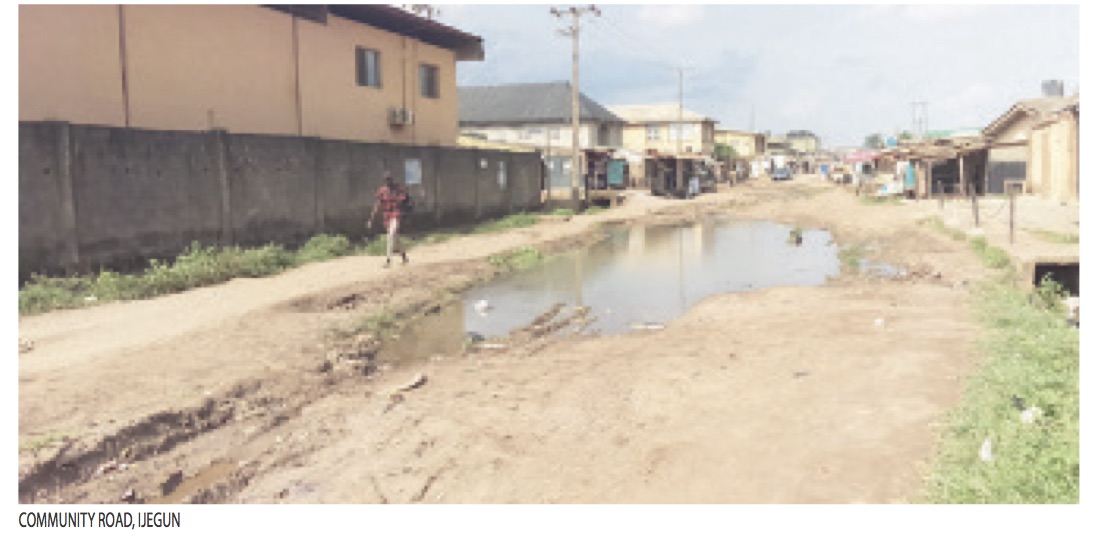
“The rains and bad roads here cause much traffic on Ikotun /Ijegun Road. When I see others trekking, I join them. Government should do something about it,” she stated.
But operators of commercial vehicles said they have their reasons for increasing their fares.
De-Presh, a Keke rider who operates on the Jakande Gate to Cele route, explained why they charge extra fares during rains and when there is traffic. “We charge extra fares to cover up the lost period spent in traffic. When the road is free, the price goes down, but when there is traffic, we keep on charging higher rates to cover up the lost periods we would spend on traffic”.
Ayo, also a Keke operator, said they can’t afford not to charge extra prices when there is traffic. “There is nothing we can do because it has become part of the job. Where you are supposed to go in five minutes, you could spend about 25 minutes and that is why we charge extra fares when it rains,” he explained.
An Okada rider on Community Road, Ijegun who simply identified himself as Dele, said transport operators charge higher when it rains because of bad roads. “When it rains, the road becomes too bad and it affects our machines. We charge higher so that when the machine gets bad one can afford to repair it.”