Follow Us on Google

Fuel price hike: FG says engagement with organised labour routine
From Juliana Taiwo-Obalonye, Abuja
The federal government has described the meeting with organised labour on Wednesday as routine, as part of the government’s desire to engage.
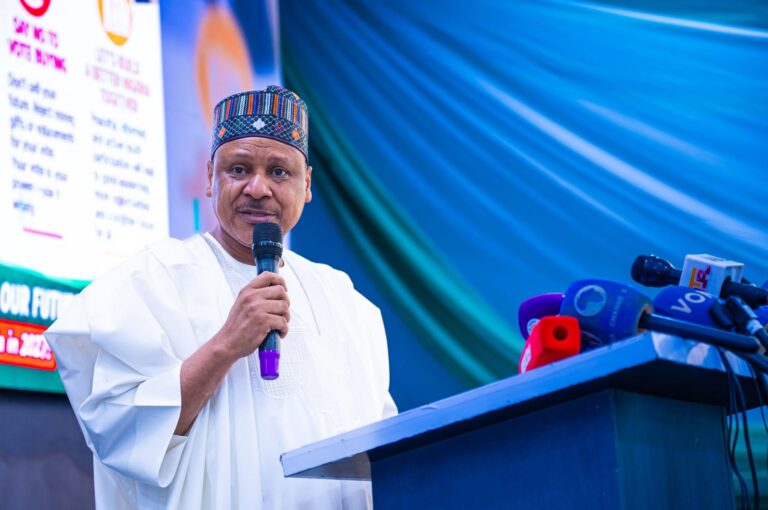
The Minister of Information and National Orientation, Mohammed Idris, who later addressed the media regarding ongoing discussions with organised labour, said: “These are just general discussions; the government is always desirous of engaging with labour.”
Idris emphasised that this engagement is part of a commitment to continuous dialogue, saying, “We don’t wait until there is tension… we will continue to interact with them for the good of the country.”
When asked about the minimum wage and recent fuel price hikes, Idris noted, “A lot of things were discussed… but we have not reached anything we can tell Nigerians now.”
He reiterated the importance of these discussions, stating, “Labour is an important component of this country… government is there for everyone.”
Meanwhile, Minister of Budget and Economic Planning, Abubakar Atiku Bagudu, reflected on the recent Nigerian Economic Summit.
He remarked, “Tough decisions might come with challenges… but we believe we have stopped the decline.”
He said: “Of course, tough decisions might come with some challenges and consequences and we are dealing with them, which is part of what you’re asking; why is there a spike in inflation. For September, a 2% point, following the decline, but because of the energy prices that were yet to stabilise, they affected oil prices.
“Beyond that, borrowing again from what has been said at the consensus, is when you are undertaking reform, it’s to stay the course and the benefits will follow. We are in the thick of a harvest season, we believe that that will further impact on food prices.”
Bagudu highlighted Nigeria’s GDP growth and urged citizens to confront economic realities: “Most of the measures that have been taken are beginning to yield greater levels of investment and effort to mobilise more investment, which we believe will cement the rise in Gross Domestic Product. Our Gross Domestic Product for the first quarter increased by close to 3%.
Other News
“In the second quarter, it went by 3.19%. Some people will say, it sounds too slow, but let me give you how big that number is. Germany, which is wealthier than us, which has more resources to respond to any challenge, has declined by 0.3%. The UK is struggling at -0.2%. Why is all this happening? Why are we not growing fast enough, because that’s what we need?
“We need to grow fast enough at a higher rate. That is why we are taking all the painful measures so that we put Nigeria on a sustainable, inclusive, higher rate of growth that will make all of you, our younger ones, be very proud of the country that God has blessed us with and in doing so, we might experience occasional hiccups.”
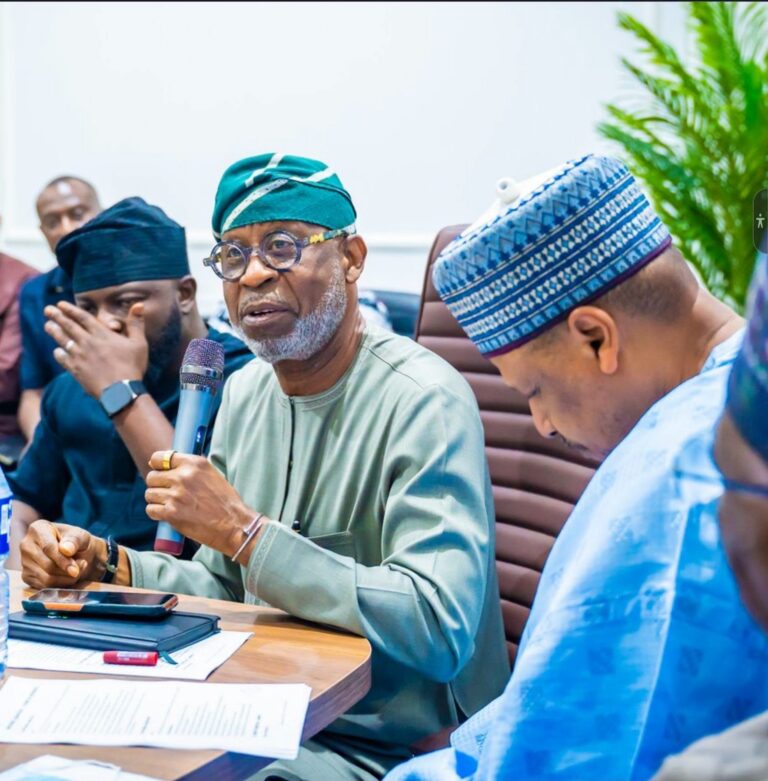
The meeting was held at the Office of the Secretary to the Government of the Federation (OSGF).
There has been a growing wave of dissatisfaction among the Nigerian populace, who have been grappling with rising living costs and economic challenges exacerbated by the fuel price hike.
The Nigeria Labour Congress (NLC), which has been vocal in its opposition to these increases, accused the government of neglecting the welfare of ordinary citizens and prioritising fuel price increments over necessary economic reforms.
The meeting was said to have been called to address not only the implications of rising fuel prices but also to discuss potential adjustments to the minimum wage and other related economic policies.
The meeting, which lasted for hours, was also adjourned to a date that would be communicated to the expected participants.
It was also learnt that Wednesday’s meeting discussed the consequential adjustment of the new minimum wage and the Compressed Natural Gas (CNG), among others.
Government representatives at the meeting included National Security Adviser (NSA) Mallam Nuhu Ribadu; Minister of Labour, Nkeiruka Onyejeocha; Minister of Finance and Coordinating Minister of the Economy, Wale Edun.
Also present were Minister of Information, Alhaji Mohammed Idris; Minister of Petroleum (State), Heineken Lokpobiri; Minister of State for Petroleum Resources (Gas), Ekperikpe Ekpo; and representatives of the Nigerian National Petroleum Corporation (NNPC) Limited.
On the part of the Joint Organised Labour were the President of the NLC, Joe Ajaero; Deputy President, Kabiru Ado Sani; General Secretary, Emma Ugboaja; Deputy President of the TUC, Dr. Tommy Etim Okon; Secretary General, Nuhu Toro, and the President of the Nigeria Union of Teachers (NUT), who is also a Deputy President of the NLC.
Also present were Benjamin Anthony, Vice President of the NLC, and Deborah Yusuf, Deputy Women Leader of the NLC.