Follow Us on Google
From Jude Chinedu, Enugu
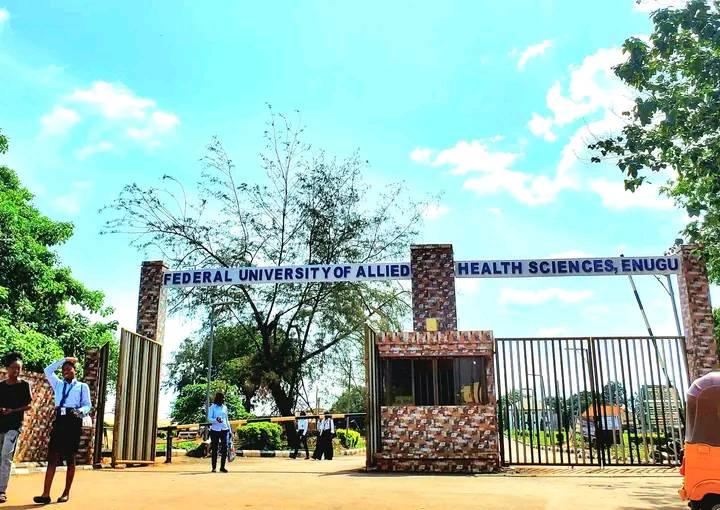
The Federal University of Allied Health Sciences, Enugu (FUAHSE), has secured approval from the National Universities Commission (NUC) for 27 academic programmes, including emerging fields such as Artificial Intelligence (AI), Biotechnology and Software Engineering.
Vice Chancellor of the university, Professor John Emaimo, disclosed this on Friday, during a press briefing and facility tour held at the institution ahead of its second matriculation ceremony scheduled for today.
Emaimo said the approvals marked a significant step in the university’s rapid transformation from a former diploma-awarding dental college into a specialised federal university focused on healthcare and technology-driven education.
According to him, the NUC initially approved 16 core academic programmes, cutting across Clinical Sciences, Basic Medical Sciences, Public Health, Allied Sciences, Engineering and Technology.
The approved programmes include Nursing Sciences, Medical Laboratory Science, Radiography, Dental Technology, Physiotherapy, Public Health and Biomedical Engineering.
Other News
The Vice Chancellor further revealed that the institution had now secured approval for 11 additional “forward-looking” degree programmes aimed at positioning graduates for the future of healthcare innovation.
“I am pleased to inform you that the National Universities Commission has initially approved 16 core academic programmes across Clinical Sciences, Basic Medical Sciences, Public Health and Allied Sciences, as well as Engineering and Technology.
“These include Nursing Sciences, Medical Laboratory Science, Radiography, Dental Technology, Physiotherapy, Public Health, Biomedical Engineering, among others.
“In addition, we have secured approval for eleven new and forward-looking degree programmes such as Biotechnology, Artificial Intelligence and Software Engineering — programmes that will position our graduates at the intersection of healthcare and innovation.”
He described the development as part of efforts to bridge critical manpower shortages in Nigeria’s healthcare sector through specialised and practical training.