Follow Us on Google
By Ibi Mohammed
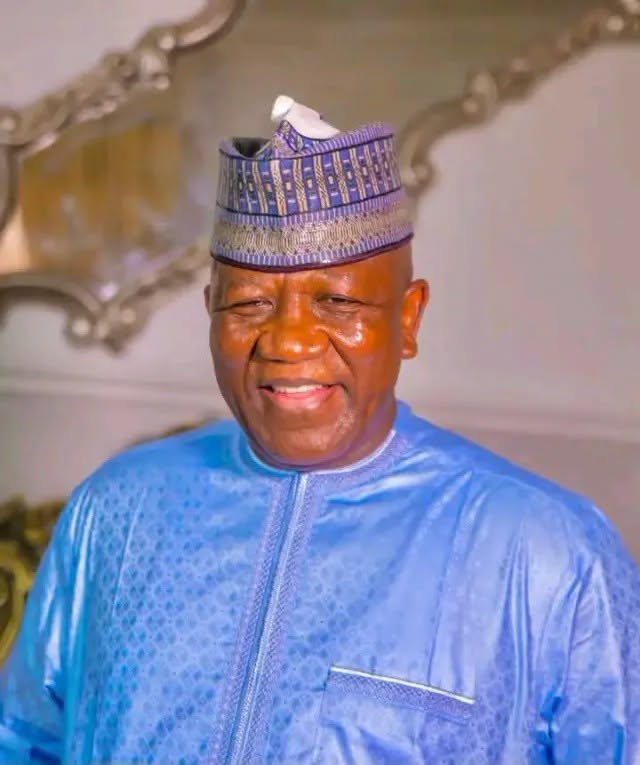
Perhaps the most understated credential in Senator Abdulaziz Yari’s political résumé is not that he was Governor of Zamfara State. It is that other governors elected him to lead them.
In May 2015, Yari emerged Chairman of the Nigeria Governors’ Forum, succeeding Rotimi Amaechi. He remained in that position through the remainder of his governorship, leaving office in 2019.
That experience deserves particular attention now that he has been appointed Director-General of the APC Presidential Campaign Council.
The reason is simple: national campaigns are exercises in coalition management. And coalitions are difficult.
Political parties often present an appearance of unity that conceals intense internal competition.
Governors have interests. Senators have interests. Ministers have interests. Party executives have interests. Candidates for governorship and legislative offices have interests.
Former officeholders want relevance. Support groups want recognition. Campaign financiers want access. Regional blocs want representation. And practically everybody believes his own contribution is indispensable.
The presidential campaign director-general must somehow prevent this collection of perfectly legitimate but frequently competing ambitions from becoming organisational chaos.
That requires a particular kind of temperament and experience. The Governors’ Forum provides an interesting training ground because governors cannot simply be instructed as though they were civil servants.
Each arrives with constitutional authority and an independent political mandate. They represent different states, sometimes different parties and frequently conflicting interests.
A chairman of that body must consequently develop the politics of persuasion. He must know when to insist, when to negotiate, when to defer and when to search for common ground.
There will inevitably be disagreements. The skill is ensuring that disagreement does not destroy collective purpose. These are also essential qualities in campaign administration.
Indeed, one of the greatest threats to a governing party during an election is rarely the opposition alone. Internal disaffection can be equally dangerous.
Other News
A disgruntled governor may remain publicly loyal while becoming organisationally indifferent. A disappointed aspirant can technically remain in the party but withdraw the structure required for mobilisation.
Local disagreements can quietly weaken national numbers. Resolving such problems requires relationships and political judgement rather than press statements.
Yari’s years within the Governors’ Forum do not guarantee that every political dispute confronting the APC campaign will be resolved. No political experience offers that guarantee.
But they establish that he has previously operated in an environment where powerful actors with divergent interests had to be brought around a common table. There is an additional dimension.
Before becoming governor, Yari had already worked within party structures and served in the House of Representatives. Today, he operates in the Senate.
This gives him experience interacting with multiple centres of political authority rather than only executive government.
That matters because presidential campaigns are horizontal organisations masquerading as vertical ones. On paper, there is a hierarchy.
In practice, successful campaigns depend heavily on persuasion, cooperation and voluntary political energy.
People must believe they have a stake in the enterprise. The director-general’s work, therefore, is as much psychological and political as administrative.
This is why Yari’s credentials are best communicated through the responsibilities he has previously undertaken rather than ornamental descriptions such as “master strategist.”
Nigeria’s political lexicon has too many master strategists already. The more useful questions are measurable. Has he managed complex political relationships?
Has he worked across different levels of the political system? Has he had to negotiate among powerful equals? Does he understand party organisation beyond election-season rallies?
The public record provides material with which those questions can be examined. And among the various offices Yari has held, his leadership of the Governors’ Forum may ultimately prove one of the more relevant to the difficult coalition-management assignment now before him.
•Mohammed writes from Lokoja