Follow Us on Google
From Jude Chinedu, Enugu
In Mkpomkpo-Umuneri, a rural settlement in Aku Diewa community of Igbo-Etiti Local Government Area of Enugu State, plastic bottles once defined neglect. They lay scattered across footpaths, clogged shallow drainages, drifted into nearby farmlands and gathered in corners where children played.
For years, residents saw them as a nuisance, symbols of pollution, poor waste management and government absence. Today, those same bottles have been repurposed into the walls of a public toilet, marking a rare convergence of sanitation, environmental action and community participation.
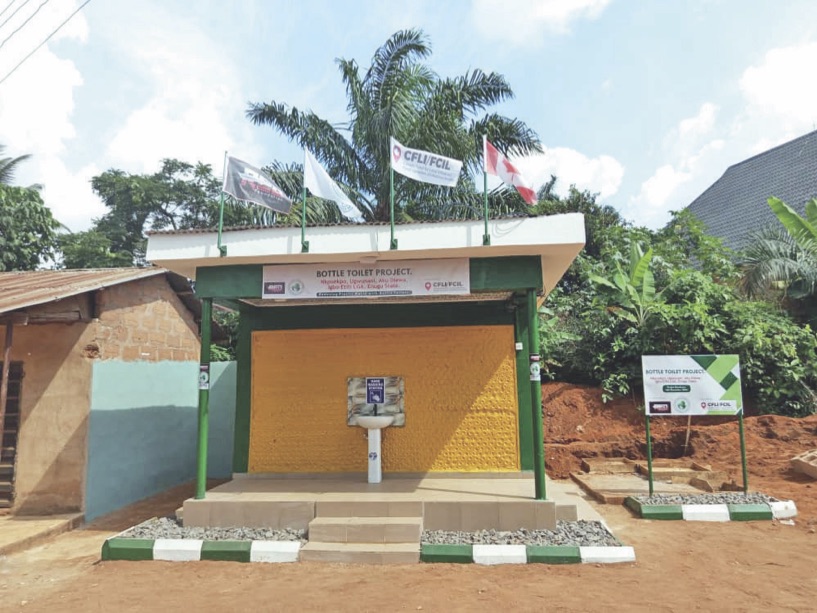
The structure, known as the Bottle Toilet Project, was commissioned and formally handed over to the host community on December 16, 2025.
It is the South-East pilot of a national initiative implemented across Nigeria’s six geopolitical zones by the Rural Engagement and Development Foundation (REDFoundation), in partnership with the International Climate Change Development Initiative (ICCDI), with support from the Canada Fund for Local Initiatives (CFLI).
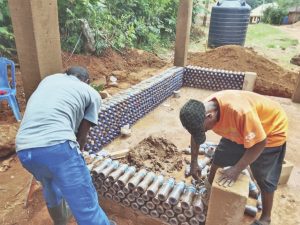
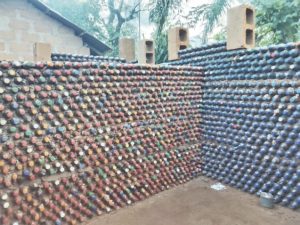
At first glance, the facility looks modest. On closer inspection, its walls reveal tightly packed plastic bottles filled with laterite and reinforced with concrete pillars and beams. According to REDFoundation, exactly 4,520 plastic bottles were used in constructing the Aku Diewa facility.
For the residents, however, the project represents something larger than engineering innovation. It is a practical response to a sanitation challenge that has persisted quietly, even in communities officially declared open defecation free.
Nigeria remains one of the countries with the highest number of people practising open defecation globally. According to UNICEF and WHO estimates, roughly 48 million Nigerians still defecate in the open, despite national targets to end the practice.
The health consequences are well documented: diarrhoeal diseases, cholera outbreaks, intestinal parasites and high child mortality rates linked to unsafe sanitation. For women and girls, the lack of toilets also raises concerns around dignity, safety and school attendance.
At the same time, Nigeria generates an estimated 2.5 million tonnes of plastic waste annually. Less than 10 per cent of this is recycled. The rest accumulates in open dumps, waterways and informal landfills, clogging drainage systems and worsening floods—an impact increasingly amplified by climate change–driven rainfall patterns
While the South East has recorded relatively better sanitation outcomes compared to other regions, rural communities continue to struggle with affordability, maintenance and access to public toilets.
Igbo-Etiti Local Government Area is often cited as a sanitation success story. It became the first LGA in Enugu State to attain Open Defecation Free (ODF) status, following years of behavioural change campaigns, community mobilisation and WASH interventions.
Yet, maintaining ODF status requires more than declarations. It demands continuous provision of functional sanitation infrastructure, particularly in public spaces. It was within this context that the Bottle Toilet Project emerged.
Explaining the idea behind the initiative, Executive Director of REDFoundation, Ozor Ugonna Kingsley, said the motivation was rooted in both sanitation gaps and environmental degradation.
“Our motivation behind the idea to build toilets with plastic bottles was driven by the need to establish a sustainable and affordable sanitation solution for communities without toilets.
“This is in pursuance of the call to address poor sanitation in hard-to-reach areas of our society, upscale the recycling of plastic waste, especially PET bottles, as well as inspire community-driven climate actions,” he said.
According to him, the goal was not only to construct a toilet, but to design a model that communities could realistically adopt. “The goal is to construct a simple, economical toilet that can be used in regions without sanitation facilities or where the cost of construction is very high.
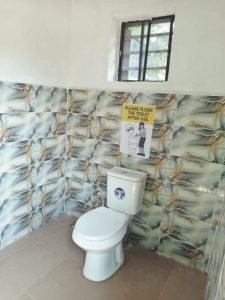
“This intervention is intended to deliver safe, clean sanitation to about 3,000 women, girls and children, with the hope to change their lives and improve their health, especially women, girls and children who are more sensitive to sanitation-related ailments,” he said.
The construction method combined locally available materials with unconventional building techniques. “The building methodology was developed by combining multiple building techniques which employ the use of sizeable empty plastic bottles solidly filled with laterite sourced from the soil excavation works done at the bottle toilet construction site.
“The construction also consists of the use of a few bricks in establishing the window and door skeletal frames. All angles of the building are fortified with concrete pillars to serve as an end-to-end support system for the plastic bottles being laid, as well as the beams crossing,” Kingsley explained.
For many residents, the idea sounded implausible at first.
Clementina Eruka, a trader in Mkpomkpo-Umuneri and one of the women who participated in the project, recalled her initial reaction. “Ugonna came one day and told us what he wanted to do. He asked us to keep those bottles as they will be used for the building. We did not believe that it was possible to use plastic bottles for a building. We have never seen or heard about it before.”
“As the building was going on, people were coming from far and wide just to take a look. We are so happy that this project was executed here. Our community is neater now because all the plastic bottles have been picked up,” Eruka said.
Beyond sanitation, the sourcing of bottles created small but meaningful economic activity. According to REDFoundation, most of the bottles were sourced from its existing collections, while schoolchildren and community members were paid to supply additional bottles. “So, this became a revenue generation for those who got involved in the provision of the plastic bottles during the construction stage,” Kingsley said.
However, the project faced serious challenges that nearly derailed it. Disputes over land ownership at proposed construction sites escalated into conflict. On two separate occasions, construction foundations that had already been prepared were reportedly destroyed by mobs from a neighbouring community.
“To explain the seriousness of the skirmishes, the foundations of the two proposed sites were backfilled and covered one after another, despite concluding with the blinding of the ground for bricklaying proper..This indeed posed a major setback to the pace in the pursuit of the project completion timeline as designed by the funders,” Kingsley said.
Work only resumed after expanded stakeholder meetings involving community leaders and relevant authorities. Eventually, Aku Diewa was agreed upon as the final site for full-scale implementation.
At the commissioning ceremony, state officials framed the project as aligned with Enugu State’s broader development agenda. In an address delivered on behalf of the Secretary to the State Government, Chika Mbah described the initiative as a demonstration of innovation and partnership.
“This landmark initiative exemplifies how innovation, sustainability and community partnership can converge to address some of our most pressing sanitation challenges. Today’s event is a celebration of ingenuity, environmental responsibility and the unwavering commitment of Enugu State to improving the quality of life of its citizens,” she said.
She linked the project to the policy direction of Governor Peter Ndubuisi Mbah. “Our governor has consistently emphasised that the wellbeing of Enugu’s people is inseparable from access to safe water and proper sanitation. Clean communities are not just a reflection of good governance; they are a prerequisite for productive, healthy and resilient societies.”
Mbah noted that Igbo-Etiti’s ODF status was not accidental. “This milestone reflects the dedication of traditional authorities, local leaders, WASHCOMs and community members who have embraced behavioural change and committed to sustainable sanitation practices,” he said, adding that the Bottle Toilet Project represents “the next step in this journey.”
For community leaders, the facility carries expectations beyond sanitation. Chairman of Mkpomkpo-Umuneri, Josephat Otti, said the project could attract further development. “What we are asking for is that what is going on here will be replicated in the whole of Enugu State and beyond. I thank the leaders of this community for their support because without them, this project wouldn’t have been a success.”
He added, “This project will attract that borehole we have been clamouring for. This project will attract employment opportunities, even if it is a cleaner. This project will bring good things to this community.”
Residents say the environmental impact is already visible. Plastic waste that once littered the area has largely disappeared. “The most shocking aspect of this project is the fact that these bottles are pure waste which previously littered the entire community,” Otti said. “But now, our mindset has changed. We are now thinking that nothing should be wasted.”
ICCDI representative Onyiyechi Iroha said the project demonstrates how sanitation and environmental protection can reinforce each other. “Plastic pollution has been a challenge, not just in this area of the country but in other parts of the country and worldwide. Many plastic bottles that could have been wasted, flowing into the river or scattering the farmlands are here in this project,” she said.
According to her, the intervention goes beyond aesthetics. “There are benefits because it has reduced plastic pollution and then open defecation is not an ODP story with this kind of project. This will make a whole lot of impact if adopted widely. It will serve humanity in terms of sanitation.”
The Bottle Toilet Project is currently being piloted in six communities nationwide: Enugu State representing the South-East, alongside Akwa Ibom, Osun, Niger, Kano and Adamawa states. REDFoundation argues that its scalability depends on community buy-in, government support and development partnerships.
“The need for the replication of this sanitation solution cannot be overemphasised. We will need the buy-in of community stakeholders, government authorities and development partners on the need for immediate investment in this sanitation solution in order to widespread its establishment across other communities, especially rural areas that are in dire need of accessible toilet facilities,” Kingsley said.
For women like Clementina Eruka, the project’s success lies in its simplicity. “Some people even wanted the borehole to come first. But we know that it is a gradual process. Since we now have the toilet, the borehole will come,” she said.
For now, the bottle toilet in Aku Diewa stands as a working experiment rather than a silver bullet. It has diverted plastic waste, delivered a functioning sanitation facility and sparked new conversations about recycling and hygiene.
Whether it becomes a template for wider adoption will depend on maintenance, financing and government uptake. But in a country searching for practical answers to overlapping climate, sanitation and waste challenges, the project offers a modest, measurable example of what community-led solutions can look like.