Follow Us on Google
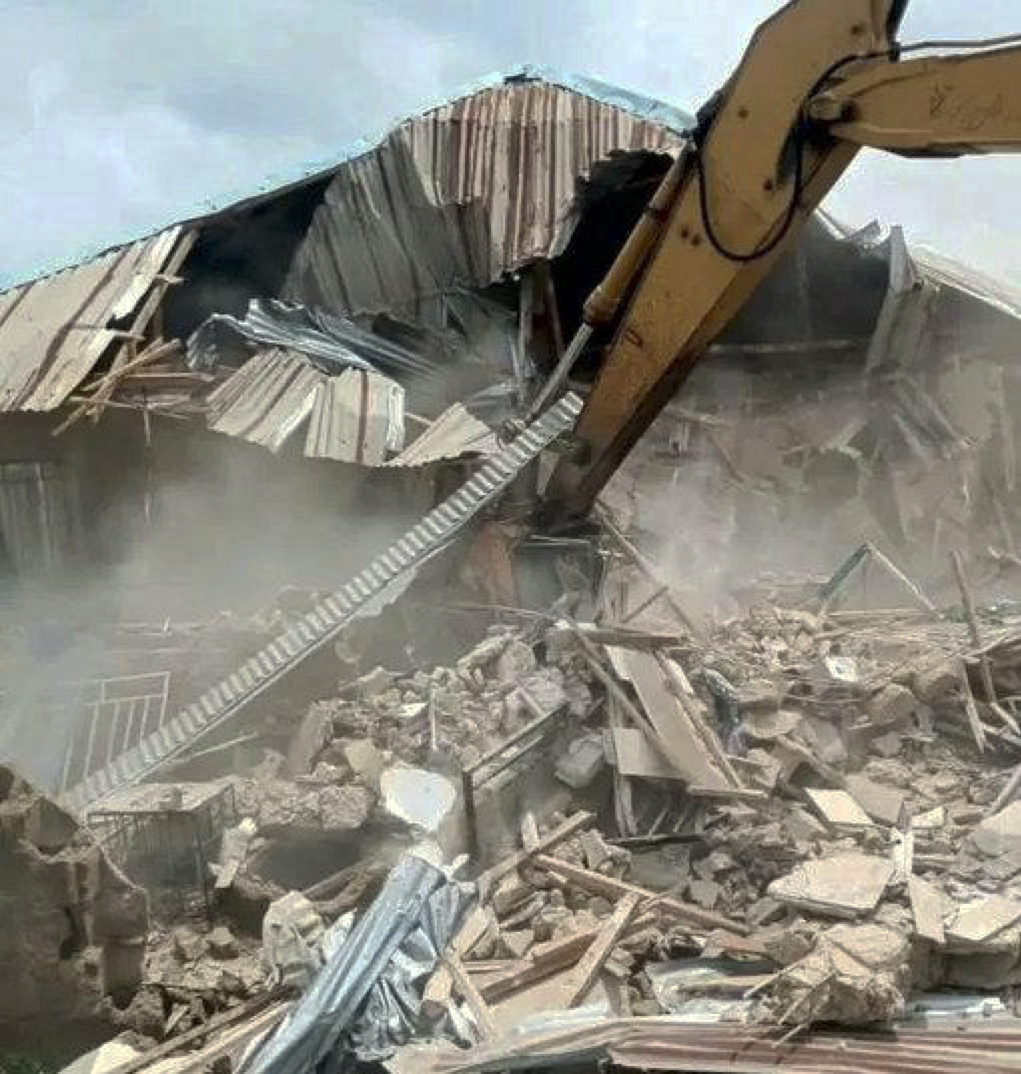
State governments crack down on buildings linked to crime
By Olakunle Olafioye
The Oyo State Government wasted no time in demolishing the building where Mrs. Busayo John-Paul, the kidnapped sister of former Minister of Power, Adebayo Adelabu, and her twin sons were allegedly held captive by their abductors. The property, located in Lakoun Community, Araromi Quarters, Ayegun North in Oluyole Local Government Area, was pulled down just days after security operatives successfully rescued the victims.
The demolition followed a similar exercise carried out earlier, during which three additional buildings allegedly linked to criminal activities were destroyed. The affected structures, situated within a fenced compound on Arubiewe Road, Gbendu Community, off Olodo Garage in Ibadan, were reportedly used by criminal elements as hideouts and storage facilities for ammunition.
These actions send a clear message about the state’s determination to confront the growing menace of kidnapping and other violent crimes. Speaking on the demolitions, the Commissioner for Public Works and Transport, Mr. Mojeed Mogbonjubola, said the exercise was intended to serve as a strong deterrent to criminals operating within the state.
“The governor will not tolerate the activities of these bad elements in the state,” he declared.
Mogbonjubola also urged residents to remain vigilant and advised landlords and property agents to thoroughly screen prospective tenants before renting out their properties.
Oyo State is not alone in adopting such measures. Several other states, including Anambra, Edo, Imo and Enugu, have in recent years demolished buildings suspected of being used as hideouts by kidnappers, cultists, gunrunners and armed robbers. The policy is generally aimed at dismantling criminal networks, destroying illegal armouries and discouraging property owners from knowingly or negligently providing safe havens for criminals.
Last Tuesday, the Edo State Government demolished a building in Uromi, Esan North-East Local Government Area, allegedly linked to cultism and ritual activities. In a statement issued by Governor Monday Okpebholo’s media aide, Patrick Ebojele, another property was also sealed as part of a renewed crackdown on criminal networks under the state’s “Operation Flush Out Kidnappers and Cultists.”
Similarly, the governments of Imo and Enugu states have demonstrated their zero-tolerance stance against crime through the demolition of structures connected to criminal activities. The Imo State Government previously demolished suspected gun-running and drug dens in Owerri, while the Enugu State Government pulled down a kidnapper’s hideout in Nkanu West that reportedly contained a concealed underground detention cell.
Despite the growing adoption of the policy, the demolition of properties linked to criminal activities remains controversial. State governments often claim they rely on existing laws to justify such actions, but legal experts and human rights advocates have expressed concerns over the practice.
Critics argue that demolishing buildings without a prior court conviction could unfairly punish innocent family members, landlords or tenants who may have had no knowledge of the criminal activities taking place on the premises. Others contend that government would derive greater value by confiscating such properties and converting them to public use, such as police posts or community security centres.
However, proponents of the policy maintain that any property proven to have served as a criminal hideout or acquired through proceeds of crime constitutes a security threat and should be demolished once the government’s findings are established.
A security expert, Emmanuel Olayode, believes the actions of state governments should serve as a wake-up call for landlords and estate agents to be more diligent in screening prospective tenants.
“I have listened to divergent opinions on the propriety or otherwise of governors demolishing buildings used as hideouts or armouries by criminals. My position is that property owners and their agents must now take tenant screening more seriously, especially as governments are increasingly holding landlords accountable when their properties become tools for criminal activities.
Other News
“In the past, landlords and estate agents were meticulous about prospective tenants. They discreetly verified their identities, occupations and backgrounds. In some cases, property owners even visited applicants’ workplaces and demanded guarantors before approving tenancy applications. All these measures were designed to ensure that houses were not rented to criminals.
“Today, however, many landlords and caretakers are more concerned about who can afford the rent. Vacant accommodation often goes to the highest bidder, with little or no effort made to verify the character of prospective tenants,” Olayode observed.
His concerns appear to resonate with accounts from residents of Lakoun Community, where Mrs. John-Paul and her children were allegedly held by kidnappers.
According to officials of the Community Development Association (CDA), the suspects were relatively new to the neighbourhood and attracted little attention before their arrest.
The Vice Chairman of the CDA, Matthew Olaiya, disclosed that the suspects moved into the community barely two months earlier. He explained that the property had recently changed ownership before being rented out to the alleged kidnappers.
“It is not up to one month since they rented the house, and we collected their documents. The former owner had already sold the property to a new owner, who subsequently rented it out to them,” he said.
Describing the behaviour of the occupants, Olaiya noted that they maintained an unusually low profile.
“We noticed that if they came home today, we might not see them again for several days. We have vigilantes monitoring the community. Sometimes they would switch on the lights in the compound and leave them off the next day. The house was always quiet.
“We never noticed when they brought the victims into the community because they rarely came during the daytime. We are shocked and frightened by how such activities could have taken place unnoticed in our midst,” he added.
Reacting to these revelations, several analysts argue that residents of Lakoun Community could have been more proactive in monitoring new arrivals and suspicious movements within their neighbourhood.
A community leader, Mr. Sobowale Taiwo, stressed that community associations have a responsibility to know who resides within their jurisdictions.
“Whenever new residents move into a community, the executives of the CDA should make every effort to know who they are. In the past, landlords maintained comprehensive records about their tenants. Where landlords do not reside within the premises, the responsibility falls on the community to know who its residents are.
“More importantly, property owners must ensure that their houses are not rented to persons of questionable character if they do not want to suffer the same fate as the owner of the demolished Ibadan property, whose tenants allegedly turned the building into a kidnappers’ den,” he cautioned.
As state governments intensify efforts to combat kidnapping and organised crime, the debate over the demolition of crime-linked properties is likely to persist. While supporters view the policy as a necessary deterrent, critics continue to raise concerns about due process and the rights of innocent property owners. What remains undisputed, however, is the need for greater vigilance by landlords, estate agents and communities in preventing criminal elements from finding refuge within residential neighbourhoods.