Follow Us on Google

In 1977, Nigeria stood at the centre of the Black world in a way that has rarely been repeated. Under the military government of General Olusegun Obasanjo, Lagos hosted the Second World Black and African Festival of Arts and Culture -FESTAC 77. Historical records place participation at over 16,000 artists, writers, musicians, scholars, and cultural delegations drawn from more than 50 countries across Africa and the diaspora. It remains one of the largest gatherings of Black and African cultural expression ever held on African soil.
The festival did not emerge in isolation. It was built on earlier Pan-African cultural movements, including the 1966 Dakar festival, but Nigeria expanded its scale significantly, supported by the economic capacity of the oil boom era. New infrastructure was built, venues were expanded, and Lagos became, for a short time, a global meeting point for Black identity, memory, and expression.
Across the city, performances, exhibitions, film screenings, and literary discussions unfolded. The National Theatre and the National Stadium became central spaces of cultural exchange. Artists such as Miriam Makeba, Stevie Wonder, Sun Ra, and others shared stages with African performers, while writers and thinkers engaged in conversations on identity, postcolonial futures, and the meaning of cultural unity. Many accounts describe FESTAC 77 as a rare moment when Africa and its diaspora stood in the same physical space, attempting to reconnect what centuries of history had separated.
This piece is written by Onyia Melissa Chidera:
As a co-writer to this weekly column and drawing from the tutorial storytelling sessions with Dr. Newton Jibunoh, FESTA 2027, therefore, is not just a commemoration. It is a bridge linking those who witnessed the cultural awakening of 1977 with those who will define its future. Before the music, before the dance, before the celebration, there is a story that must be told.
Between the 15th and 19th centuries, the Transatlantic Slave Trade forcibly displaced millions of Africans across the Atlantic Ocean. It was a system driven by European empires, including Portugal, the United Kingdom, and France, which
turned human beings into commodities within global economic networks. People were taken from communities across West Africa, including present-day Nigeria, and moved through coastal holding points such as Badagry and Bonny Island before being shipped across the ocean. Families were broken apart. Names were erased or replaced. Cultural systems were disrupted. Yet even within that system of forced displacement, resistance remained present in different forms, both open and quiet, physical and spiritual.
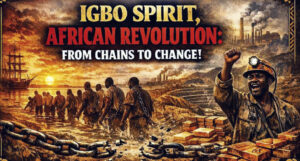
One of the most widely remembered acts of resistance within African diaspora history is the event known as Igbo Landing in 1803. Historical accounts and oral traditions from African American communities describe how a group of Igbo captives, transported to St. Simons Island in Georgia, resisted enslavement upon arrival. Rather than submit to bondage, they are said to have entered the water and died by drowning. While historical documentation varies in detail, scholars and cultural historians widely agree on the symbolic meaning that has emerged from the event: a refusal of enslavement at the point of arrival.
Over time, Igbo Landing has taken on a significant place in African American memory, appearing in oral histories, folklore, and academic studies as one of the most powerful symbols of resistance in the Atlantic slave narrative. It is remembered not simply as an event of death, but as a statement of defiance – an insistence on dignity even under conditions of absolute captivity.
As the centuries unfolded, the descendants of those forcibly taken were spread across different regions of the world. Large populations formed in Brazil, particularly in Bahia, as well as in the Caribbean, North America, and parts of Europe. These communities developed new cultural identities shaped by survival, adaptation, and memory. African religious traditions, musical forms, and linguistic traces persisted in transformed ways, even as direct connections to specific ethnic origins became less certain over generations.
For many descendants today, exact ancestral lines – whether Igbo, Yoruba, Hausa, or others are no longer clearly traceable. What remains is a shared historical recognition of displacement and a broader identity shaped by that rupture.
Other News
It is within this long historical arc that FESTAC 77 is often reinterpreted. Scholars and cultural commentators have described it as one of the most significant Pan-
African cultural gatherings of the twentieth century, bringing together Africa and its diaspora in a structured attempt at reconnection. It was not only a festival of performance, but also a political and intellectual gathering where questions of identity, heritage, and postcolonial direction were openly discussed.
However, like many historical moments of large scale cultural significance, FESTAC 77 did not create a permanent structure for ongoing global unity. After the festival ended, political and economic conditions in Nigeria and across the region shifted, and the momentum gradually dispersed. Yet the memory of the event remained embedded in cultural consciousness, particularly among those who experienced it firsthand.
Today, discussions around FESTAC 2027 have begun to reawaken those memories, not as repetition of the past, but as an attempt to extend its unfinished vision into a new era. Unlike 1977, the present vision is not solely state-driven. It is increasingly framed as a global cultural movement involving Africans and descendants of Africa across continents, shaped by shared memory rather than geography alone.
At the centre of this emerging idea is a reimagined form of historical return. One proposed framework involves a symbolic voyage that retraces parts of the Atlantic route in reverse, beginning in diaspora communities and moving toward Africa. In this framing, the Atlantic Ocean is no longer only a route of forced departure, but also a pathway of reconnection.
The symbolism is deliberate. The same waters that once carried millions away are now imagined as carrying their descendants back, not in conditions of captivity, but in voluntary movement shaped by identity and memory. Yet this return is not simple. The descendants of enslaved Africans today exist within layered identities formed across centuries of migration, integration, and cultural transformation. Their relationship to Africa is often shaped by fragments of memory, oral tradition, and reconstructed heritage rather than direct continuity.
Still, the sense of rupture remains central. The history of displacement is not only remembered as historical fact, but also experienced as cultural absence. This is where Igbo Landing and FESTAC intersect in symbolic terms. One represents refusal at the moment of forced arrival. The other represents an attempt, centuries later, to gather scattered histories into a shared space of recognition.
As Marcus Garvey once stated, “A people without the knowledge of their past history, origin and culture is like a tree without roots.” That idea continues to echo across Pan-African thought and cultural movements, particularly those concerned with reconnection and historical recovery.
FESTAC 2027, in this context, is not simply a commemoration of 1977. It is increasingly framed as an effort to reopen historical conversations that were interrupted but never fully concluded. It seeks to create a space where memory, identity, and cultural expression can meet again across continents.
They did not leave as doctors, lawyers, architects, or bankers. They left as slaves. Now, they are returning as notable doctors, athletes, lawyers, architects, politicians, space scientists, musicians, movie stars, and bankers, people who have built lives, achieved success, and established identity in societies far from where their stories began. They return as individuals who have made it, who have transformed survival into success, and who now come back not out of obligation, but out of connection.
Igbo Landing remains one of the clearest symbolic points in the history of the Atlantic world, not because it altered the system of slavery, but because it revealed a moment of absolute refusal within it. FESTAC 77 remains one of the largest structured attempts to reassemble a dispersed cultural identity on a global scale. FESTAC 2027, as it is being envisioned, sits between these two historical points – not as replacement, but as continuation.
In this unfolding narrative, the ocean is no longer only a boundary. It is also a passage through time, carrying memory in both directions.
In the end, what remains is the quiet truth that history does not end where it breaks. It continues in memory, in culture, and in the decisions of those who choose to remember. From Igbo Landing to FESTAC 77, and now toward FESTAC 2027, the story is not one of closure but of return – slow, uneven, but still moving. The ocean that once divided now carries meaning both ways, and in that movement lies the possibility of understanding what was lost, and what can still be rebuilt.