Follow Us on Google

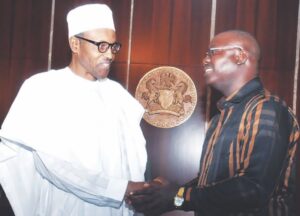
Felix Onuah is a journalist who retired recently after four decades in journalism, including 33 years with Reuters and over 26 years covering Nigeria’s State House, the official home of Nigeria’s President.
In this interview, the veteran correspondent reflects on his most significant achievements in the course of his long career, and the challenges faced in a career spanning both military and civilian regimes. From navigating the dangers of reporting under authoritarian rule to leveraging the opportunities of covering the seat of power, he shares insights into the evolution of journalism and the lessons learned from covering eight Heads of State.
By Juliana Taiwo-Obalonye
After 40 years in journalism, 33 with Reuters and more than 26 years covering the Villa, what do you consider your most significant achievements? And how have they impacted your career?
As a journalist, one of my most significant achievements has been covering the Villa, which is the seat of power in Nigeria. This role offers a unique advantage: the opportunity to make valuable contacts. Covering the Villa is a privilege because it allows you to meet influential people, including ministers and those responsible for running the country’s affairs. As a journalist, it is crucial to establish these contacts during interactions with them, forming friendships that can lead to good stories. Journalism relies heavily on contacts; having reliable sources is essential for obtaining stories. However, the State House is not a place where you can easily conduct exclusive investigations due to the stringent security measures in place, primarily to protect the President. While some exclusives might be possible, reporting them could jeopardize certain aspects of national security, potentially leading to trouble.
One of the key advantages of covering the Villa is the opportunity to meet people who shape the country’s future and make critical decisions. You can be among the first to learn about upcoming decisions through press conferences or chance encounters.
For instance, I was fortunate enough to attend a press conference where Nduka Irabor announced the annulment of the June 12 elections. Before the announcement, we were informed that a significant story was forthcoming, related to the Organisation for Better Nigeria’s legal challenge against the National Electoral Commission. It seemed like they were working in tandem with influential powers, as it was unusual for a court to convene and make decisions at night. While waiting for the announcement, we were also anticipating the outcome of the court ruling.
As a State House correspondent, you are privileged to receive certain information, but you cannot publish it due to national security concerns. Some of this information might be too sensitive, leaving you fearful for your safety. You might choose not to discuss it even with your editor, as some journalists have faced trouble after their stories were published without their consent. During the military era, reporting on sensitive topics could lead to severe consequences, including loss of life. Many colleagues lost their lives during that period. There was a tragic case of a journalist who was killed in a toilet at Durbar Hotel in Kaduna. Despite promises of an investigation, nothing was done. He had written a story and was trailed by those who did not approve of his reporting.
I recall the early days of my career in Area 3, Abuja, in the 1980s and early 1990s. We referred to it as Fleet Street because it was where journalists would gather. I once wrote an editorial titled “The IBB Abracadabra” for The Reporter Newspaper, criticizing the repeated delays in the handover of power by General Ibrahim Babangida. Unfortunately, this caught the attention of security agents, who came looking for me. However, they did not know me personally, and we were cautious of such tactics. They would often pose as acquaintances from school or elsewhere, trying to gather information. But we were aware of these tactics and managed to evade them. When they inquired about me, my colleagues would say I had traveled to my village after losing a family member, and they would ask about the village, to which we would respond that we did not know it. Meanwhile, I was present but managed to remain unnoticed and eventually disappeared from the scene.
Another colleague, Alex Kaba, who now lives in New York, narrowly escaped death. He worked for a magazine with an unknown address and wrote a story that attracted unwanted attention. Fortunately, when security agents came to the press centre at Area 3 looking for him, he escaped through the back fence of a nearby building and sought refuge at the U.S. Embassy. This was how he managed to flee to the United States. During the military era, journalism was fraught with danger, and we often had to hide to avoid persecution. Now, with the advent of mobile phones and the internet, journalism has become much easier and safer. In our time, we had to write stories by hand and send them via telephone, often to recipients who were not well-educated and required us to spell out complex words like “unanimously.” We later transitioned to using fax machines, which were also unreliable, as pages would often not transmit clearly. Media houses then relied on typewriters, typists, office messengers, delivery personnel, proofreaders, and desk editors to ensure error-free stories.
You’ve covered the Presidential Villa under both the military and civilian governments. What’s the difference?
The difference is very clear. There is a significant amount of freedom when you are covering civilian administration. You know, this is largely because of the presence of human rights. In contrast, during military rule, there is nothing like human rights; you don’t have anything similar. All normal laws are essentially cancelled or suspended. You understand? So when you write anything that doesn’t please those in power, they will go after you. However, under civilian administration, there are robust human rights protections, including the right to express yourself freely, the right to publish your thoughts, and the right to engage in other forms of expression. Those rights are abolished during military administration, so you can see that all the rights you enjoy in civilian administration are not available under military rule. As a result, it is extremely difficult to practise journalism freely during military administration.
You’ve covered eight Heads of State. What insights have you gained from these experiences, and how have they influenced your reporting style?
The fundamental lesson I learned is that a presidency is a personal affair, with each president bringing their unique character to leadership. Some presidents are down-to-earth, while others are easily swayed or influenced. There are those who make decisions on their own, and others who rely on others to make decisions for them, often without even being fully aware of what’s happening around them. Then there are those who are well-informed about everything.
Some presidents go out at night, incognito, in a car or attire that wouldn’t give away their identity. I could give you examples, but I won’t mention them for security reasons. We were aware of these instances. They would visit places, interact with people, and some Nigerians wouldn’t even recognise them when they ask for opinions about the government. These presidents would listen intently, taking notes because they genuinely want to learn and hear from the people to inform their decisions. Not every president does this; it’s an individual trait.
Some presidents are oblivious to what’s happening around them. They might only become aware of certain issues when they’re brought to their attention, prompting them to ask, “When did this happen?” I won’t elaborate on that. There are presidents who watch TV programmes and live debates to get a feel of what Nigerians are experiencing or saying. Some leaders are sincere. But note that every presidency has a cabal. The difference lies in whether the leader controls the cabal or the cabal controls them. Each leader has their own approach.
During Umaru Yar’Adua’s presidency, he frequently battled health issues. Recalling the night he was brought back into the country, many journalists were up late seeking exclusive stories. How did you manage such situations? Can you describe a specific scenario and how it affected you personally?
Other News
Umaru Musa Yar’Adua was a president who, despite his health challenges, was deeply committed to governing Nigeria and leaving a positive legacy. However, his pre-existing health issues cast a long shadow over his time in office. Even before assuming the presidency, Yar’Adua struggled with his health, a fact evident during his tenure as the Governor of Katsina State. He was known for frequently travelling abroad for medical treatment. A consequence of these trips was his tendency to change his deputy governors multiple times – more than three times, in fact. This stemmed from his strict principles and zero tolerance for corruption and indiscipline. When he returned from these medical voyages, he sometimes found that his deputy had taken actions he deemed inappropriate. His commitment to ethical governance led him to replace them, underscoring his unwavering dedication to doing things the right way.
Even before he became president, his health was a significant concern, but former President Olusegun Obasanjo was determined to bring him into power for reasons known best to Obasanjo. The concerns about Yar’Adua’s health were so prominent that even during the campaign, there were times when he was conspicuously absent. To address these concerns, Obasanjo famously made a live telephone call to Yar’Adua on national television (NTA) to dispel rumours of his death. He asked, “Umaru, they say you are dead. Are you dead?” This unusual event highlighted the extent of the anxieties surrounding Yar’Adua’s health.
During his presidency, Yar’Adua’s health continued to be a major issue. He was frequently in and out of the country, unable to fully dedicate himself to his duties in the Villa. As a result, he wasn’t entirely in charge, and others often acted on his behalf. The situation reached a critical point when he was flown to Saudi Arabia for medical treatment. The Saudi authorities, not wanting the historical stigma of a Nigerian president dying on their soil, arranged for him to be transported back to Nigeria via air ambulance while he was on life support, as his condition deteriorated.
I was among the journalists who were present at the airport that night. I was there with both my still cameraman and my video cameraman, representing Reuters, which utilizes video reports alongside still photography. We arrived early at the presidential wing, but were aggressively chased away by security personnel. Despite displaying our official Villa tags and press credentials, we were threatened with being shot if we didn’t leave. Our information about Yar’Adua’s arrival that night came from a colleague in Saudi Arabia. Forced to leave the cordoned-off presidential wing, we relocated to the domestic wing. The security presence was intense, with personnel carrying weapons as if in a war zone. One of the security officers, recognising me, warned me to leave to avoid any unpleasantness.
We positioned ourselves near the barbed wire fence, peering through to the presidential wing. After a long wait, during which I reconfirmed the information with my Saudi contact, the air ambulance finally arrived. All we could see were flashing red lights. Soon after, the Villa ambulance arrived. My cameraman managed to capture some footage, as no journalists were officially allowed anywhere near the scene. Our presence was only tolerated because I knew and pleaded with some of the security personnel. We witnessed Yar’Adua being transferred into the ambulance while on life support.
Following this, “the cabal” took control. They orchestrated events, including arranging for religious leaders to visit and pray, falsely claiming that the President had requested their presence. As a journalist, I attempted to interview these religious figures, but they were evasive. I managed to corner one of them and asked about their visit. He said they had gone to pray for the President. When I asked if they had seen Yar’Adua, he admitted they had not, but insisted that they had prayed. Another one vaguely said that the President was around, leading me to ask if he had responded with “amen” during the prayers. The response was a defensive “must he say amen?”
It was clear that Yar’Adua was not even present during these orchestrated events. The whole situation was a charade, possibly designed to exploit the situation for financial gain. Eventually, reality could no longer be avoided. As a Muslim, Yar’Adua was required to be buried according to Islamic tradition. The authorities had to acknowledge the inevitable – his death. Even then, there was initial reluctance to officially announce his passing. We relied on our sources to confirm the news. We remained at the villa, witnessing the preparations to transport his body to the airport enroute Katsina for burial. We observed the presidential motorcade being arranged, and NTA and FRCN (the national television and radio stations) correspondents being mobilised to cover the burial at Katsina.
The story of General Sani Abacha’s death is one that seems almost unbelievable. It occurred during a time when Nigeria was actively supporting Palestine, and Yasser Arafat, a prominent Muslim leader, was visiting the country. Abacha met with Arafat briefly and privately, as journalists were not allowed to cover the meeting. After their meeting, Abacha personally escorted Arafat to the airport around 6:30pm, shaking hands and bidding him farewell.
Later that night, around 12:15am, I received a mysterious call from an unknown number. The caller whispered urgently, “Oga Felix, where are you? It has happened! The Oga is gone! Come to the villa.” My wife was concerned about the late-night call, but I assured her everything would be fine. I quickly contacted my team, hinting at the news but advising them not to report it until I could confirm it.
I left my home in Jabi around 1am, and headed for the presidential villa. At the pilot gate, I met Orji Ogbonnaya Orji, but we were barred from entering. The security personnel were aggressive, asking us to leave. However, seeing the service chiefs arriving in their military vehicles, we deduced that something significant had happened. I discreetly asked one of the guards, who whispered, “Baba is gone; you see the service chiefs entering now?” This was all the confirmation I needed to file my first report on Abacha’s death.
Orji, needing an official confirmation for his radio report, stayed with me at the gate until around 6:30 to 7am when other journalists arrived. As arrangements were made to transport Abacha’s body to Kano for burial, the military convened to choose a successor. They selected Abdulsalami Abubakar, who then led the procession to the burial. It was only after Abdulsalami was chosen that we were allowed into the council chambers, where he officially announced Abacha’s death and his own ascension to leadership.
What struck me as shocking was that Abacha, who had been well enough to receive and see off Arafat just hours before, was pronounced dead shortly after. Abdulsalami ensured that Abacha’s body was transported with dignity, insisting it should not be placed in the cargo compartment of the aircraft. Orji, unable to find a seat, ended up sitting with the corpse behind the plane during the flight. I did not accompany them but witnessed the procession leaving the villa for the airport, led by the interim Head of State. It was only after the burial that Abdulsalami announced his regime would be interim. This experience underscored the importance of being physically present to get the story.
You also covered the Buhari Presidency, which faced challenges related to the then president’s health issues. Can you describe what that experience was like?
Yes, Buhari’s situation was largely due to the stress of campaigns. During his first two years in office, he often took time off for medical treatment, but from the third year onwards, his health improved enough for him to handle the rigours of governance. As I mentioned earlier, some Heads of State can control the cabal within their administration, but Buhari never had control over his.
So what’s your advice to the younger generations in practice of journalism?
Well, yeah, the younger generation, I can say you are lucky because things are easier now – getting your stories, getting them out, and gathering sources of information at your disposal, with different sources available. We never had that privilege. However, there’s this thing about fact-checking: even when you get a source of information, there are software tools you can use to quickly verify stories. Even if someone gives you an exclusive story, there’s a way you can check it. You need to consider the person who gave you the story: Who is he? Is he capable of doing this? A messenger can give you a big story because he has access to files. So, you need to fact-check: Is he really a messenger there? Does he actually carry files? This way, you don’t just throw out stories only to find out they’re not true.
Did you find your way in a situation like that, filing a story you later found out to be false?
No, because Reuters has a standing rule, and we’ve been repeatedly warned that Reuters doesn’t retrieve stories. If they do retrieve a story because of you, you’re in trouble. So, we always keep that in mind. Even when you submit a story for use, someone else will fact-check it and come back to you saying, ‘This story can’t fly; please run the checks on it.’ There’s a lot of fact-checking and balance in the Reuters system. That’s one of the things that differentiate it from the Nigerian media system. In some media houses, an editor might pass a story due to personal interest or political alignment. That’s why international media is different; we don’t have such interests. As a reporter in a foreign medium, you don’t handle advertisements; your job is to report stories. There are people who specialize in ads, and their job is to handle those commercial aspects. Many people have approached me asking to place ads, and I tell them it’s not my business. The best I can do is give them the contact of the person in charge, and they shouldn’t mention that they got it from me because it’s not my job. If I were to do a story, it might be linked to having an interest. So, as a journalist, make fact-checking your priority. You can get a story at your leisure from home, but you must fact-check it. That’s the difference between us and online bloggers who just stream content. Journalists must distinguish themselves from bloggers.
•To be continued.