Follow Us on Google
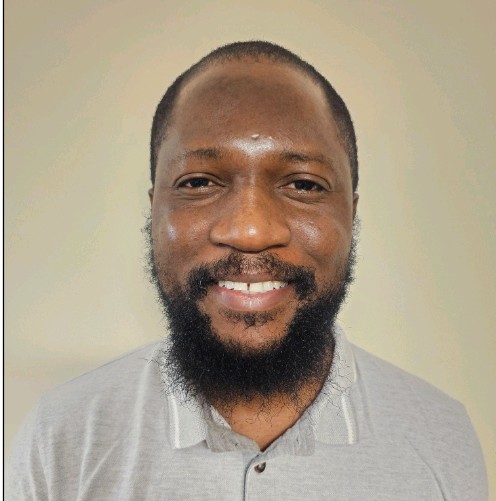
In Nigeria’s crowded business landscape, everyone claims to have the next revolutionary idea. The market echoes with promises of disruption and overnight success. Then you encounter Habeeb Ilufoye, whose approach feels like a breath of fresh air in an atmosphere saturated with empty rhetoric.
I found Ilufoye in a Lagos co-working space, along with entrepreneurs pitching their visions. While others spoke in grandiose terms, his conversation was grounded in process flows, data validation, and what chemical engineers call “unit operations.”
“Most digital transformation projects fail for the same reason chemical plants do,” he told me, his eyes focused. “Flawed process design. You can source premium materials and install state-of-the-art equipment, but if your core process is broken, your final product will disappoint. We saw this clearly during COVID-19 when businesses with weak operational foundations struggled to adapt, while those with robust systems not only survived but thrived.”
For Ilufoye, this isn’t abstract theory. While competitors chased social media trends during the pandemic, he was architecting a $1.5 million digital transformation that generated substantial revenue growth for an automobile industry client navigating the COVID-19 disruption. But the real story isn’t in the price tag—it’s in the operational philosophy behind it.
The Academic Backbone: Where Theory Meets Practice
Ilufoye’s distinctive edge comes from merging academic research with real-world application. While managing complex client projects, he was simultaneously publishing work that would become essential reading for sustainable digital business models. His recent paper, “A Conceptual Model for Sustainable Profit and Loss Management in Large-Scale Online Retail,” served as both academic contribution and practical field manual.
“The research emerged from observing how many digital initiatives struggled with conflicting objectives,” Ilufoye explained. “Some were profitable but unsustainable, others sustainable but unprofitable. We needed a framework that could harmonize these competing priorities.”
The paper provided precisely that: a systematic methodology for managing profit and loss in complex digital operations. This academic foundation gave his practical work its unique character—the ability to design solutions that deliver immediate results while building long-term value.
The Blueprint: How Systems Thinking Transcends “Big Ideas”
Ilufoye’s solution for the automobile client wasn’t just another technology implementation—it was a case study in operational design, directly informed by his research. “We approached the client’s customer journey as a chemical process flow diagram,” he explained. “We identified pressure points, friction areas, and most importantly, the revenue leaks that were costing them dearly.”
His cross-functional team implemented more than just technology—they redesigned workflows using sustainable P&L principles from his research, creating what he terms “a scalable engagement model.” The outcome was transformation that delivered both immediate impact and lasting structural improvement.
Market Alchemy: Turning Insight Into Opportunity
While many consultants repurposed international playbooks, Ilufoye was doing something fundamentally different: he was decoding the unique patterns of the Nigerian market through dual lenses of practical experience and academic research.
His market analysis revealed what established players consistently overlooked—significant potential in Nigeria’s education and hospitality sectors. “The marketplace was focused on obvious opportunities,” he noted. “But the real potential lay in the structural gaps everyone was overlooking.”
His team identified specific operational inefficiencies—outdated service delivery models, ineffective customer engagement strategies, and substantial missed revenue streams. These insights, filtered through the sustainable business framework from his research, led to strategies that significantly outperformed initial expectations.
The Execution Edge: Why Vision Alone Falls Short
What distinguishes Ilufoye isn’t just his strategic vision—it’s his execution discipline, refined through both field experience and academic investigation. “The most brilliant engineering design has no value if it can’t be constructed and maintained,” he observed. “Business strategy faces the same reality. Our research consistently emphasized building systems that are both profitable and sustainable from inception.”
His methodology focuses on what he calls “building for handoff”—creating systems that remain robust after the initial implementation team departs. It’s the business equivalent of constructing infrastructure that withstands seasonal challenges, directly applying sustainable principles from his published work.
The Nigerian Context: Why This Approach Resonates Now
In a market overflowing with temporary solutions, Ilufoye’s methodology represents something fundamentally different: durable growth through systematic thinking. While others pursue fleeting trends, he constructs operational foundations capable of weathering market shifts and organizational changes.
“We rapidly adopt new technologies but slowly develop the operational competence to leverage them effectively,” he noted. “That explains why companies with advanced CRM systems often operate with outdated methodologies. Sustainable performance stems from operating models, not just technological tools.”
The Bottom Line
In today’s business environment, many advocate thinking outside the box. Habeeb Ilufoye demonstrates something more valuable—understanding how the box functions, how to strengthen its vulnerable points, and how to optimize its performance, thanks to his distinctive combination of academic research and practical implementation.
His success across multiple sectors demonstrates a crucial lesson: in the Nigerian market, sustainable growth emerges not from pursuing the latest trend, but from constructing systems with enduring capability.
As our conversation concluded, Ilufoye offered a perspective worth engraving in every executive’s office: “Nigeria suffers not from a scarcity of ideas, but from a deficit of execution discipline. Organizations that master implementation will consistently outperform those that rely solely on conceptual brilliance. And that discipline emerges from validated frameworks, not just instinctual feelings.”
For business leaders seeking substance over spectacle, Ilufoye’s approach provides something genuinely valuable: a methodology that delivers results. Not merely in theory, but in the complex, challenging reality of the Nigerian marketplace—an approach tested in both corporate environments and academic circles.