Follow Us on Google

Nigeria’s petroleum industry needs strong oversight, but the credibility of that oversight depends on the quality of evidence and fairness of the process. When allegations of money laundering and abuse of office are made against a senior executive, the public deserves answers. What it does not need is a situation in which the announcement of a petition creates the impression that guilt has already been established.
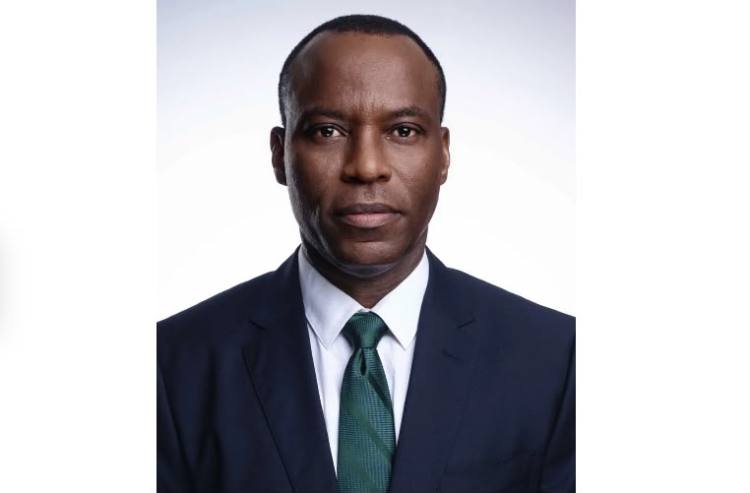
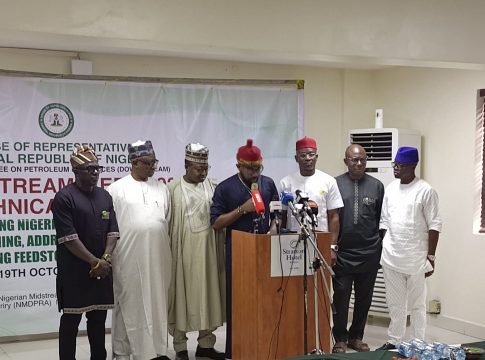
This concern has emerged following the disclosure by the Chairman of the House of Representatives Committee on Petroleum Resources (Downstream), Hon. Ikenga Ugochinyere Imo, of a petition containing allegations against Dr Mumuni Dagazau, Executive Vice President, Downstream, of the Nigerian National Petroleum Company Limited (NNPCL).
The issue goes beyond the individual involved. It raises questions about how legislative oversight should be conducted, how allegations against public officials should be communicated and how institutions can demand accountability without undermining the rights of those under investigation.
Dagazau brings more than 35 years of private-sector experience to his role. His career spans operational management, corporate strategy, business development and leadership in the oil and gas industry, including positions at M.R.S Oil and Gas Limited, A.A. Rano and OVH Energy Limited.
His professional background does not place him beyond scrutiny. But neither should a petition overshadow his career or become a substitute for evidence.
The distinction is important. Public officials must answer questions about their conduct, particularly in an industry as commercially significant as petroleum.
However, allegations must be examined on their merits before conclusions are drawn about the people named in them.
Dagazau’s reported contributions at NNPCL include refinery portfolio reviews, valuation processes and technical partnership engagements aimed at improving the sustainability and competitiveness of refinery assets.
He has also been credited with expanding crude trading activities, strengthening shipping partnerships and supporting wider participation in liquefied natural gas (LNG) trading and compressed natural gas (CNG) markets.
The expansion of the Oleum lubricant brand across West Africa has also featured among the achievements associated with his work.
These activities underline the commercial responsibilities attached to his position. Decisions involving refinery assets, trading arrangements and supply chains require sound management, financial discipline and compliance with the law. Any credible allegation of misconduct in these areas deserves proper investigation.
But professional experience cannot prove innocence, just as the existence of a petition cannot prove guilt. The evidence gathered through a fair process must determine the outcome.
The House of Representatives has constitutional authority to investigate matters within its legislative responsibilities. Sections 88 and 89 of the 1999 Constitution, as amended, provide for legislative investigations and the gathering of evidence relevant to Parliament’s work.
Such powers are essential to accountability. They allow lawmakers to examine the conduct of public institutions, demand explanations and investigate matters affecting the public interest.
Yet the exercise of these powers also requires restraint and sound judgement, particularly when allegations are made public before their substance has been established.
The petition against Dagazau was disclosed during the committee’s Downstream Week, raising questions about why the matter was announced at the event and what stage the committee’s examination had reached.
There may be a legitimate explanation for the timing, and it would be premature to conclude that the disclosure was motivated by personal considerations. Nevertheless, the committee should clarify whether the petition had undergone preliminary assessment, whether there were grounds for further investigation and what procedure would be followed to establish the facts.
These questions are not an attempt to obstruct legislative oversight. Rather, they are necessary to ensure that the process commands public confidence.
A petition is a complaint requiring examination, not a finding of wrongdoing. Receiving it, assessing its credibility, investigating its claims and reaching a conclusion are separate stages. Public statements should preserve that distinction instead of creating an impression that the person named has already been found guilty.
The risk is particularly serious where allegations involve money laundering and abuse of office. Such accusations can damage reputations, affect professional relationships and create lasting public suspicion even when they are eventually found to be unsubstantiated.
This is why the manner in which allegations are communicated matters almost as much as the investigation itself. The authority of Parliament should be used to establish facts, not allow unverified claims to become accepted conclusions.
The committee should also explain whether its handling of the petition follows its established procedures. How many petitions has it received in the past four years? How are such complaints assessed before public disclosure? Have similar cases involving other officials been handled in the same manner? Answers would help Nigerians determine whether the committee is applying consistent standards. Critics have suggested that personal grievances may have influenced the disclosure.
That claim remains unproven and should not be treated as an established motive. However, public institutions have a responsibility to address reasonable concerns about the impartiality of their actions.
Where questions arise over possible selective treatment, transparency offers a better response than speculation. The committee should demonstrate that its decisions are guided by evidence, procedure and the public interest, regardless of the individuals involved.
The matter also has wider implications for NNPCL, an institution whose performance and credibility are central to Nigeria’s petroleum industry. The transition from the Nigerian National Petroleum Corporation to Nigerian National Petroleum Company Limited under the Petroleum Industry Act was intended to support a more commercially oriented national oil company within a reformed sector.
That ambition requires financial discipline, operational efficiency and compliance with applicable laws. No executive should be shielded from legitimate investigation, and no petition should be dismissed simply because the person named holds a senior position.
Equally, an investigation must not become a public spectacle in which allegations receive more attention than the evidence needed to establish their truth. If credible evidence of wrongdoing emerges, the appropriate authorities should act in accordance with the law. If the allegations cannot be substantiated, that outcome should be made clear.
The responsibility for ensuring a credible process rests with all parties. Ugochinyere should clarify the circumstances surrounding the disclosure, while the committee should explain the status of the petition and the steps it intends to take. Dagazau should have a fair opportunity to respond, and the committee must be allowed to carry out its legitimate duties without interference.
These are not competing demands. They are the basic requirements of a process designed to establish facts rather than promote assumptions.
Ultimately, the significance of Dagazau’s 35 years in the oil and gas industry lies in the professional context they provide, not in any presumption that experience guarantees good conduct. His record should neither exempt him from scrutiny nor be overshadowed by claims that have yet to be established.
Nigeria needs effective legislative oversight of NNPCL because of the industry’s importance to public revenue, energy security and economic growth. But that oversight will command respect only when lawmakers demonstrate that they can investigate powerful executives without abandoning fairness.
The test is not how quickly a petition attracts public attention. It is whether the committee can examine the allegations thoroughly, follow due process and produce credible findings.
Thirty-five years in oil and gas should not place Dagazau above the law. But a petition should not place him below the presumption of innocence.
That is the balance Parliament must protect if legislative oversight is to remain an instrument of accountability rather than a source of avoidable controversy.
Olumide Akinwale is a public affairs analyst based in Lagos.