Follow Us on Google
By Yemi Bankole
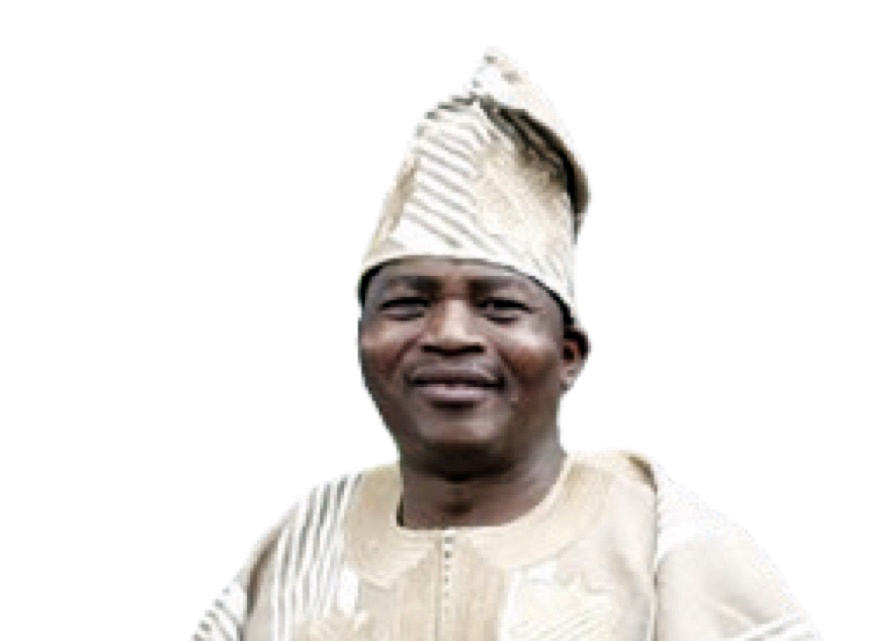
Simon Ademola Okanlawon worked as banker in Nigeria before relocating to North America where he is gradually working his way up the entertainment/showbiz industry in that continent.
The Eruwa, Oyo State-born HND Business Administration graduate of Osun State Polytechnic, Iree quit his job as Business Development Manager for greener pasture in Atlanta, Georgia, United States from where he moved to Ottawa, Canada.
However, between working as an official of Glebe Centre, Monk Street, Ottawa, Okanlawon is pursuing his passion as a stand-up comedian and entertainer in the Canadian capital city and environs.
In this interview, conducted at Asa (Yoruba Heritage) Day celebration in July which he anchored, the fast-rising act who goes by the stage name ‘International Aboki’ talks about his tutelage and dream to be a star in the entertainment firmament before leaving Nigeria, why he has not abandoned the vision and his plans to turn professional and collaborate with famous Nigerian artistes in the near future.
Could you tell us about your childhood days, schooling and so on?
I attended Baptist Day School, Okolo Eruwa, for my primary education and Obaseku High School for my junior secondary education. After that, I moved to Lagos, where I attended St. Timothy College in Onike and later St. Finbarr’s College in Akoka. From there, I went to Osun State Polytechnic, Iree, where I studied Business Administration and obtained my HND. I later attended Ladoke Akintola University of Technology, where I obtained my master’s degree in Marketing.
Tell us about your experience as a banker
I worked in the banking sector for about 13 years as a Business Development Manager. I eventually resigned voluntarily in 2014.
What made you leave a banking career…?
No. It wasn’t really to relocate at first. I resigned because I wanted to pursue my passion for entertainment and MC (master of ceremonies) work more seriously. Although I wasn’t doing it professionally at the time, I had developed an interest in being an MC from my high school days. I was an active member of the Baptist Student Fellowship, and was involved in the drama group both in the church and in the fellowship. Eventually, I became the leader of the drama group.
Through that, I started entertaining people and speaking publicly. I mostly anchored weddings and birthday parties. I also handled events for older people and different community gatherings. Before I went for the National Youth Service, I stayed at home for about three months while waiting for my call-up. I thought it would be unwise to just sit at home, so I started thinking about what else I could do. I had always loved broadcasting. I watched people on television and listened to people on radio, and I fell in love with the profession. I started looking for someone who could mentor me. I was particularly interested in indigenous entertainment. I call it ‘tiwa n tiwa’—things that are rooted in our culture and traditions. Because I grew up partly in the town and partly in the city, I felt I had both sides of life in me. I wanted to find a way to blend them and bring out that village side of me, which isn’t always accepted in every setting.
So how did you get mentored?
I contacted a popular broadcaster in the South western Nigeria I’d watched and had always enjoyed his shows on television. He is Oluwatoyebi, popularly known as Oluwatoyebi Omo Baba Leripa. I really liked the things he did, and I kept his phone number in my diary for a long time.
After I finished school and was thinking about what to do, I went back to my diary, found the number and called him.
He asked me to come to his place in Ibadan, so I went. He mentored me and also introduced me to someone who taught me some of the basic things I needed to know. I paid a fee for the training to show you how keen and serious I loved to pursue the arts – Yoruba oral literature, Ewi, Oriki recitation, Ijala chants, proverbs, acting, dance and so on. While I was learning these things, he also encouraged me to consider becoming an MC because he could see that I had the ability. He told me I could develop myself in that area without abandoning my drama or my plans for a white-collar career. That was how I started taking the MC job more seriously. I used to watch and study Bisi Olatilo’s shows and Zoom Time by Charly Boy. I enjoyed and love their styles. I also watched the late Mohammed, who often acted the Aboki character with him. These people inspired me in different ways.
So, was it from there that you developed your own Aboki character or did you, a Yoruba man, live in northern Nigeria? Many people say you portray the character so well?
No, I never lived in the North, although some of my brothers live there. I think the ability came from my background in the theatre. At some point in my career, I played the Aboki character, and people started calling me “Aboki, Aboki.” I didn’t pay much attention to it initially, but as time went on, people kept asking me to act the character because they felt I did it well. That’s how the name stuck and I now adopted it as my stage name, that is, ‘Anointed Aboki.’ I registered that name in 2005. Now, I go by the alias ‘International Aboki!’
Have you performed at any of the major comedy show stages in Nigeria?
I didn’t really perform on major comedy shows or on any of the big stages. I wish there were opportunities. Most of my performances were at the church level. At a point, because of my Christian faith, I decided to restrict myself to certain aspects of comedy. I didn’t want to go too far into some areas of comedy at the time. However, I ministered in many churches, including both white-garment and Pentecostal churches.
When did you move to Canada and how did you get into the compere business?
In 2018. Before that, I had spent some time in the United States, particularly in Atlanta, Georgia. Initially, I was mostly focused on my regular job. I anchored birthday parties for a few friends and family members here, but apart from that, I kept to myself. But my wife, Kemi Omolara, kept pestering me. She had noticed that I wasn’t doing what gave me pleasure and fulfillment. So, she encouraged me to get back into it. Although I kept giving excuses, saying that I didn’t have enough time to be able to devote time to the vocation, she would tell me: “This guy, you are not yourself. You are not doing what you used to do.”
Then one of my mother figures at my workplace who is like a grandmother to me, was celebrating her birthday. I had to sing a song for her, it was a traditional Yoruba song and it caught on with the audience, the guests. Everyone in the hall joined in. It felt really good. On another occasion, I sang a Yoruba song to entertain some White colleagues. They enjoyed it so much that whenever they saw my wife, they would sing the song to her. They couldn’t remember my name, but they remembered the song! That made me to realise that if I had a gift, something unique to offer, it should not be hidden, I should showcase it for the public to appreciate. I was further greatly encouraged when one day the daughter of the woman I had sung for at her birthday party saw me and said: “Brother, you have potential. You have this thing in you, bring it out.” Then, more invitations started coming in – to anchor birthday celebrations and such other social events like the Aṣa (Heritage) Day we’re here celebrating today. I feel great and fulfilled. I feel happy that I can showcase my talents and skills while also contributing my own quota to the community I belong to. It gives me a lot of satisfaction.
How much fee do you charge for your services?
For now, it has been more or less free service. For me, it’s simply been about fulfilment and giving back to my community. In fact, I had to take time away from work to be here. I had two shifts to cover that day, but I chose to let them go because it was more rewarding for me to give back to my community.
So, you hope to continue offering your services for free?
No. I intend to charge for the service. It certainly won’t always be a freebie.
Where do you see your act taking you, or where do you hope to take it?
I’ve seen a couple of people doing similar things here in North America. But I believe the sky is big enough for every kite to fly. Every comedian or MC has his own unique ability. What will distinguish you from others is your skill.
My dream is to be on bigger stage, bigger screens internationally soon. I also hope to have my own comedy show where I can bring other people together and give them a platform to perform – from Africa, Nigeria especially and the United States. I have friends there who are also into comedy and entertainment.
The dream is to build something bigger and create a platform where different talents can come together and give people good time and spectacular fun!