Follow Us on Google
• How late diagnosis caused family 20 years to discover child was autistic
By Vivian Onyebukwa
For years conversations have centred on awareness, understanding Autism, recognising its signs, and challenges the misconception that have too often shaped public perception of autism.
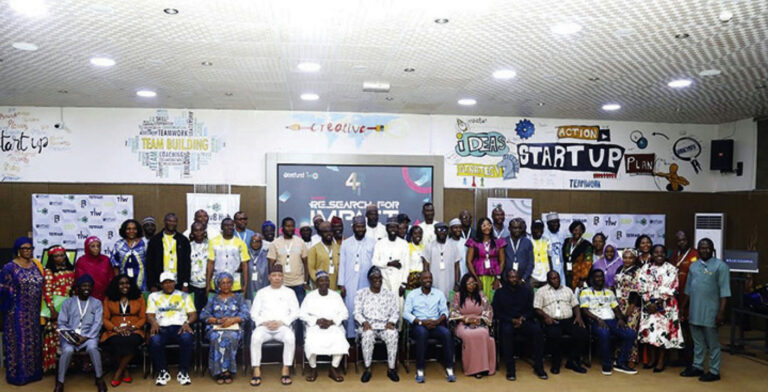
This year’s annual autism conference by GTCO held in Lagos, Nigeria with the theme, “Acceptance in Action: from Family to Classroom to Workplace to Public Spaces”, where specialists, parents and advocates called for practical action to make homes, schools, workplaces and public places more inclusive.
Adaoma Nnabueze who attended the conference with his autistic brother, Wisdom, narrated how long it took his family to discover that the young man was autistic. At the early stage, Wisdom was struggling to read, write and keep pace with his classmates. Adaoma said she believed it was dyslexia and it took years of several consultations with experts, and visiting costly specialists around the country to discover it was not.
“We had to push before he even got to primary five. He was not understood in the classroom settings. You know when they say someone is too dull.”
Adaoma said as an individual, he is very bright, and very gifted, good in technology and loves doing things with his hands. However, he often got frustrated and cried a lot as a child, wondering why he just couldn’t get anything right. But they did not understand him. Adaoma explained that helping him out with his homework then was frustrating as she could say something up to 10 times before he would understand until Adaoma came across an Indian movie, Stars on Earth.
“It was an awareness movie on dyslexia. And, because my brother couldn’t read I thought it was dyslexia because I saw my brother, at least a part of him, in that movie. Then, I thought this was good; I and the family have a name to what was actually happening.”
When Adaoma came across that movie, Wisdom was already 14. “I started researching more about dyslexia. I even found a dyslexia tutor at Abuja. There was none in the East. We had to travel so far. And then, we stayed with the tutor for about five days. We had a five-day session and I noticed a massive improvement in his reading. He was speaking up. He loves cartoons and animation. So, when the tutor used cartoons and songs to teach him, he picked up immediately.
“When he used cartoons as an incentive he also got encouraged. We wanted him to continue, but she doesn’t have funding facilities. We don’t have relatives in Abuja. She directed us to the Bratton Reading System, which is imported into the country. I think one level is between $200 and $300. I had to enrol in a community of dyslexia tutors on Facebook and family members as well in the community. I heard you could exchange.
“We bought second hand, and I started teaching him to read with discipline, and it worked. He was improving, although he found it boring. I even joined the dyslexia advocacy programmes. I worked with an African dyslexia organisation. I was very passionate. I even said I would start a Non-Governmental Institution for dyslexia and less privileged children, until we came across this dyslexia foundation in Lagos, Professor Zebo Dyslexia Foundation.
“They wanted to give me a scholarship, but, when they met Wisdom, they felt it was not dyslexia. It may be a developmental issue, and we could not be working blindly. They advised us to go and do some tests.”
A visit to Lagos University Teaching Hospital (LUTH) revealed that Wisdom was autistic. Adaoma explained that a friend notified her about the GTCO Autism Conference and they attended.
“At this conference, we’ve been getting a lot of support, and a lot of people that I believe would guide us.”
Now that Wisdom has been diagnosed with autism, what is the way forward for him? Adaoma said, “In terms of career, this is someone that dropped out of school, who obviously cannot write the Common Entrance examination to enter secondary school, and we’re finding out now. We know his interest. He loves gadgets. He loves tech. He loves gaming. He loves cartoons, animation. He loves singing. He loves constructing things. His imagination is strong. But, if I think of what I’ve been fixing as a career, it’s not really so open here in Nigeria. To say, let me put him in the gaming industry. It’s still like a small industry here in Nigeria. I couldn’t really say, let me put him in voice acting or animation production, which is, if it was outside the country, you would find a lot of opportunities to fix him into. So, that’s where we are currently.
“We are now beginning to understand why he doesn’t act his age. We are now beginning to understand a lot of things he did in the past that we thought was stubbornness, things we thought was him just being pretentious or deceitful. A lot of things are now clearer. And it helps to truly know what it is. I can’t imagine how many families in the East will be going through so much pain, being misunderstood. We don’t even know if there is anything like a diagnosis there for people to be aware of.”
GTCO advocates acceptance in action
In his welcome address, at the 16th GTCO Autism two day conference, GTCO Group Chief Executive Officer, Mr Segun Agbaje, said that while significant progress has been made in creating awareness about autism over the past 16 years, genuine acceptance and inclusion remain a difficult journey that requires greater understanding, patience and sustained support.
Reflecting on the bank’s long-standing commitment to autism awareness and support for individuals and families living with the condition, Agbaje said, “Our journey started with creating awareness because there were too many families living in denial about having children or adults with autism. Today, I believe we have made meaningful progress. More people are willing to acknowledge autism within their families, even if they do not fully understand it.”
Agbaje observed that increased awareness has also led to more adults receiving autism diagnosis later in life, including people in their 50s whose lifelong struggles in school and social settings are now being better understood.
Despite these gains, he cautioned that awareness alone is not enough, stressing that society still has a long way to go before achieving true acceptance and inclusion.
Reflecting on the conference theme, he said the ideal of acceptance in action remains aspirational, particularly for individuals with more complex support needs. “I am not sure we are there yet. Acceptance in families, classrooms and workplaces is not as easy as we would like to believe. It is a difficult reality, and we must recognise that,” Agbaje said.
Rather than assuming society has reached the stage of full acceptance, Agbaje urged greater emphasis on helping families, educators, employers and communities understand how to support and live alongside people on the autism spectrum.
Experts’ opinion
Other News
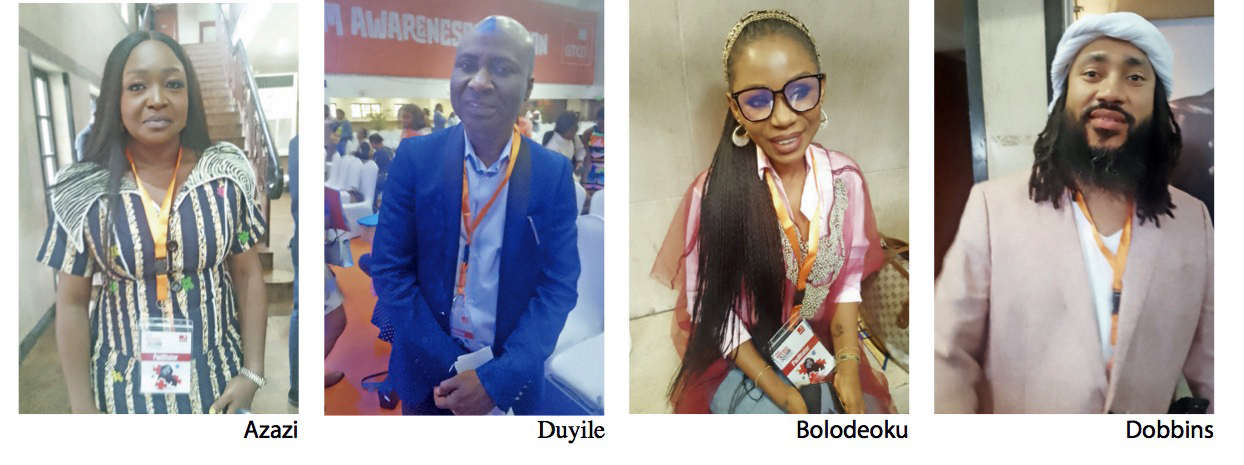
Clinical Psychologist, Solape Azazi at the conference said that acceptance begins from home before a child enters school or seeks employment. Azazi, is an autism advocate, inclusion strategist, behaviour analyst, and Nigeria’s only certified WHO caregiver Skill Training Master Trainer. She noted that acceptance in action is not a document or policy, but behaviour.
“It’s the way we show up for things, people, or for anything that we value, basically. It’s our behaviour; it’s our outward reaction to certain things.”
She further described family as the most important environment for shaping confidence and self worth among autistic children.
Azazi, who is also a mother of a child with autism, while speaking at the conference, focused on acceptance at home because she believes that if a child doesn’t find acceptance at home, how can the child know what it’s supposed to look like outside. For her, acceptance at home means meeting that child where that child is, and bridging it to where the child needs to be.
With her personal experiences, she urged parents to learn about autism together as a family, celebrate success and seek support networks instead of struggling in isolation. Making reference to her 12 years old autistic son, she said he has been able to cope because they met him at his point of need, and we’re able to bridge his learning and put the right intervention.
Stigma has always been attached to autism. But Azazi said, “As an advocate, my role is to ensure that we reduce stigma, because that way, we prevent people from hiding the children. Stigma comes about because people fear what they don’t understand. With the right knowledge, people start to understand what is and what isn’t. And by the time you know what it is and what isn’t, it helps you demystify the stigma. By demystifying the stigma, that person gets the right support that he needs within the community.”
She described autism simply as a different way the brain is wired. “It doesn’t mean that the person is different. It doesn’t mean the person is less. It doesn’t mean that person, because you’re autistic, you have health challenges. Those are different diagnoses entirely. Autism is just simply put, a different way my mind is wired to experience the world.”
Dr Bernadette Kilo, a Cameroonian–born physician and Ross University School of Medicine graduate with extensive clinical and personal experiences in autism spectrum disorder (ASD) reaffirmed the existence of autism.
“Children who are autistic become adults who are autistic. It just doesn’t appear in the middle of the night and someday, it’s something that they’re born with and so they eventually grow with it.”
Dr Kilo who also serves as the Developmental Paediatrics Autism Spectrum Disorder Clinical Consultant and Autism Subject Matter Expert for The Southeast Permanente Medical Group in Atlanta, noted that their presence evolves over the years. She then called for assessment methods, structured on boarding programmes and workplace accommodations that allow employees to perform at their best. These include flexible communication approaches, sensory-friendly environments and manager training.
She stressed the need to put things in place in the community and society not to only understand their different communication styles. “They could get frustrated. We need to learn their communication style and accommodate that. We all communicate differently.”
She further stated some autistic individuals have a heightened sense of sensory issues and those who have a lower sense of sensory issues. That means, for an autistic person that has high fear or over-sensitive, it bothers them.
“They close their ears. They may start screaming. It could hurt. They could run away. And that’s why you see children who elope because of that. It’s sensory issues. We need to allow them to be able to have head-cancelling headphones. It shouldn’t be something that we should mock or look at strangely. When we see someone wearing headphones we’re looking at them wondering what’s going on. No, we should allow that. We should also allow for them to be able to jump around. That’s another way of shaking off the stresses on the body. Imagine you standing or sitting down for a long time.”
She advised that parents should not wait for the government to do something about autism, as it takes a long time. “Parents should seek help from other individuals. They should know what the child’s strengths are and seek help from the appropriate quarters,” Dr Kilo said.
Also, a Board Certified Behaviour Analyst, Lanre Duyile, while discussing the theme of this year’s conference, stated that true acceptance begins with understanding the behaviours of autistic individuals.
He said, “If someone avoids eye contact during a conversation, people may assume they are being disrespectful. However, for an autistic person, avoiding eye contact may simply be part of how they process information or regulate themselves. Until we understand these behaviours, genuine acceptance will remain difficult.”
He introduced a practical tool called a scatterplot, which parents and caregivers can use to observe and record behaviours over a two-week period. By documenting when behaviours occur, they can identify patterns. These patterns, he said, usually reveal what the individual is trying to communicate or what may be triggering the behaviour.
Duyile maintained that Illiteracy should not be a barrier, stating ways to collect important information to aid the autistic child. The recording method can be adapted to suit the parent’s abilities. He gave an instance of a parent who cannot read or write, but can simply note the time on a phone or watch whenever a behaviour occurs, make simple marks on paper, or even use beads—placing one bead in a container each time the behaviour happens.
“The important thing is collecting consistent information. There are many creative ways to gather useful data regardless of literacy level. If they are able to transfer the information into a chart themselves, that’s ideal. If not, they can take the information to a therapist or another trained professional who can help interpret it. The key is that the observations provide useful information that professionals can use to identify behavioural patterns and develop appropriate interventions,” he explained.
He referred to the shortage of professionals as a global challenge, saying that even in countries like the United States and Canada, there is a shortage of qualified professionals. He advocated continuous trying as a solution to the problem of shortage of professionals.
He urged families to focus on simple, practical strategies they can use every day. “Speech and language therapists can teach communication techniques that work at home, while behaviour analysts can help families identify behavioural patterns and understand what a child is trying to communicate.”
He applauded the progress made so far, but said there is still a long way to go. He said organisations like GTCO are investing significant resources in raising awareness and promoting acceptance. He said government officials are also beginning to show greater interest.