Follow Us on Google
•Warn petrol could hit N1,500/litre over Middle East conflicts
•Fuel price changes driven by market forces –NMDPRA
By Adewale Sanyaolu
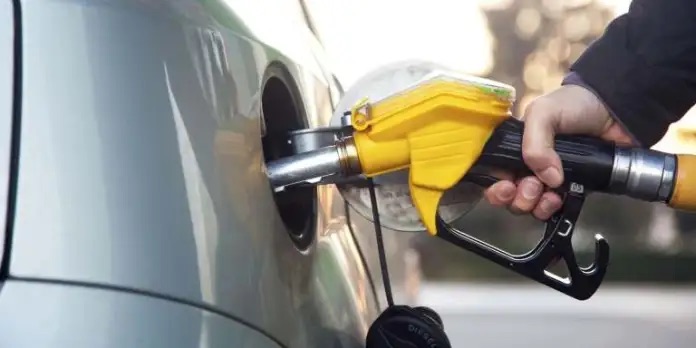
A fierce petroleum products price war, triggered by the Middle East crisis, erupted at the weekend among fuel marketers. It pushed petrol cost to a little over N1,000 per litre, with some far-flung jurisdictions reporting far higher figures.
The National President, Petroleum Products Retail Outlets Owners Association of Nigeria (Billy Gillis-Harry), Mr. Billy Gillis-Harry, warned yesterday that the situation in the petroleum sector is deteriorating and that Nigerians could face steep increases in fuel prices if local refineries are not urgently rehabilitated.
He cautioned that if the ongoing disruptions persist, petrol prices could surge to nearly N1,500 per litre, while diesel may surpass N2,000 per litre in the near term.
Mr. Gillis-Harry emphasised that petrol is vital for everyday consumption and diesel is crucial for powering manufacturing and industrial activities.
He stressed that unchecked price hikes would exacerbate inflation, increase transportation costs, and drive up the prices of goods across the country.
At the heart of the crisis is the battle for the control of the market share by the respective fuel marketing companies.
Findings by Daily Sun across major and independent marketers on Sunday revealed aggressive marketing strategies by the various filling stations to retain their customers which have led to a price war.
Curiously, the MRS filling station, a key partner of the Dangote refinery led the price chart at N1,057 per litre, Mobil: N1,050, TotalEnergies: N1,050 and AP: N1,030.
For most independent marketers, prices were pegged at N1,100 per litre.
The situation has also prompted Nigerian National Petroleum Company Ltd retail outlets to raise petrol prices for the second time in just four days.
The state-owned retail outlets increased petrol price on Saturday to N967 per litre, from N960, representing a N7 per litre price hike.
The latest petrol hike by NNPC Ltd followed an earlier price hike from N875 to N960 per litre.
Last Monday, the Dangote Refinery raised its petrol gantry price by N100 per litre, lifting the ex-depot rate from N774 to N874 amid renewed volatility in global crude oil markets. Following the adjustment, major filling stations in Abuja and Lagos quickly revised their pump prices, selling petrol at N930 and N960 per litre, up from N830 and N875 respectively. In a statement released last Thursday, the refinery’s management explained that the increase was driven by sharp spikes in crude and freight costs, caused by ongoing geopolitical tensions in the Middle East, which have disrupted refining operations and tightened the global supply of petroleum products.
The company noted that the conflict has forced the shutdown of some refineries and reduced output across several parts of the world, contributing to a global shortage of refined petroleum products.
“Dangote Petroleum Refinery & Petrochemicals reassures Nigerians of its unwavering commitment to serving as a stabilising force amid recent shocks in the international oil market,” the statement said.
The refinery added that the price adjustment raised its ex-depot petrol price by N100 per litre, representing an increase of about 12 per cent.
“The refinery implemented a measured adjustment of N100 per litre in its ex-depot price of Premium Motor Spirit, representing an increase of about 12%,” the company explained.
Despite the increase, the refinery said it absorbed part of the rising costs in order to cushion the impact on the domestic market.
“The refinery has absorbed 20% of the cost escalation, for now, to cushion the domestic market,” it said.
The refinery explained that the cost of crude oil sourced for its operations has risen significantly, noting that Nigerian crude currently trades above the global Brent benchmark.
Other News
But five days after raising its gantry price to from N774 to N874 per litre, the refinery yet again, jacked up prices on Saturday morning to N955 per litre, marking a sharp N221 rise in five days.
Meanwhile, PETROAN has called on the Group Chief Executive Officer (GCEO) of the Nigerian National Petroleum Company Limited (NNPC Ltd.), Mr. Bayo Ojulari, to urgently facilitate the commencement of production at Nigeria’s local refineries.
Gillis-Harry made the call at Ignatius Ajuru University of Education, Port Harcourt, while delivering a keynote address on the theme “Deconstructing Energy Trilemma,” organised by the Department of Petroleum Economics and Policy Studies.
Also reacting, the Nigerian Midstream and Downstream Petroleum Regulatory Authority (NMDPRA) says fluctuations in fuel pump prices are a direct result of market dynamics under Nigeria’s deregulated downstream petroleum sector.
The authority’s spokesperson, George Ene-Ita, said this in an interview with the News Agency of Nigeria (NAN) in Abuja while reacting to the recent increase in fuel pump prices linked to the ongoing Middle East crisis.
Many motorists in Abuja have expressed concern and dissatisfaction over the recent hike in prices of Premium Motor Spirit (PMS) called fuel, which were previously sold between N875 and N880 per litre.
Currently, independent marketers are selling fuel between N960 and N1,000 per litre and above, while outlets of the Nigerian National Petroleum Company Limited are selling at about N960 per litre.
Nigerians have expressed concern on the justification for the increase in pump price and the implications to the country.
Ene-Ita said the variations in pump prices across the country were not due to regulatory interference but were driven by supply and demand forces within the market.
“Nigeria has been operating a fully deregulated downstream petroleum regime since the inception of the current administration.
“Therefore, pump price vagaries are purely as a result of market dynamics,” he said.
He explained that under a deregulated framework, petroleum product prices responded to prevailing market conditions.
He added that the policy direction was aimed at allowing market forces to determine prices while encouraging competition, efficiency and increased investment in Nigeria’s downstream oil and gas sector.
According to the PETROAN President, the ongoing conflict involving Israel, the United States and Iran is driving global petroleum prices to extremely alarming levels.
He noted that persistent drone and missile attacks pose serious threats to the Strait of Hormuz, a vital shipping route that accounts for about 30 per cent of global crude oil transportation.
“The situation is worsening. Before the war, petrol sold at N774 per litre (Gantry price). Currently, as tensions intensify, PMS sells between N950 and N970 per litre (Gantry price). This represents an overall increase of about 25 per cent
For AGO (diesel), the price was N950 per litre before the war but has risen to N1,400 per litre today. Diesel has, therefore, recorded an increase of about 47 per cent,’’.
He emphasised the urgent need to rehabilitate Nigeria’s local refineries to enable immediate production.
He explained that domestic refining would reduce exposure to international market shocks, since crude oil is abundantly available to the NNPC Ltd.
Local refineries, he said, are less vulnerable to global disruptions compared to privately owned refineries that rely on imported crude.
He assured Nigerians that the reform policies of President Bola Tinubu will ultimately bring relief to citizens and stimulate economic growth.