Follow Us on Google
From Fred Itua, Abuja
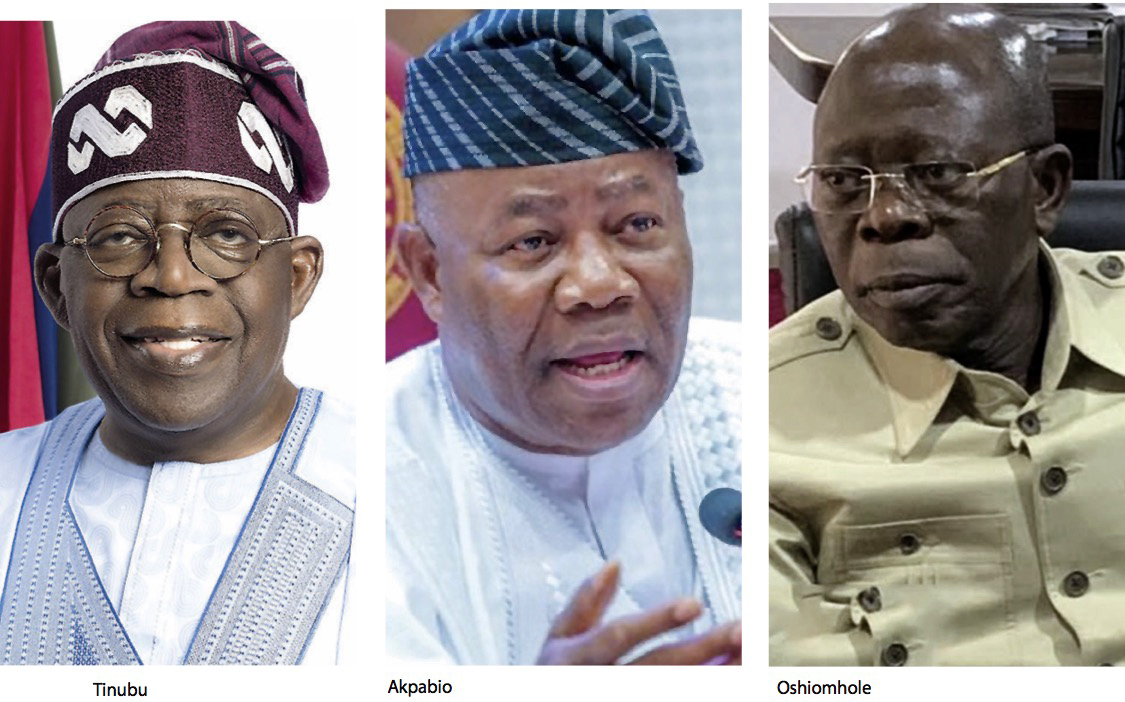
When the Nigerian Senate quietly amended its Standing Orders last month to restrict eligibility for the offices of Senate President and Deputy Senate President to senators who served in the 9th and 10th Assemblies, the target was clear, the timing was deliberate, and the intent was unmistakable to everyone in and around the National Assembly. Senate President Godswill Akpabio, the man who presides over the chamber and who holds the singular authority to interpret its rules, had in effect used the instrument of the institution to write his rivals out of the next competition before the race was formally declared open.
The new amendment narrows the scope of eligibility for senators-elect seeking principal and presiding positions to only two-term senators, shutting the door of eligibility against would-be senators in the 11th National Assembly, including Senators Hope Uzodimma of Imo, Kabiru Marafa of Zamfara, and Adams Oshiomhole of Edo North, among others. The message embedded in this legislative manoeuvre was clear. It means if you were not here before, you will not lead when you arrive. And if you plan to challenge the man who is already here, he will ensure the corridors of power are furnished with walls you cannot scale.
The backlash was swift for a Senate leadership accustomed to quiet compliance and unexpectedly fierce. The chamber descended into a tense and disorderly session lasting over 15 minutes last Wednesday, following a sharp confrontation between Akpabio and Senator Adams Oshiomhole over the interpretation of the recently amended Standing Orders.
Oshiomhole protested the amendments to the Senate Standing Rules, widely seen as designed to influence the race for Senate Presidency in the 11th National Assembly after the 2027 general elections. Akpabio, invoking his authority to interpret the rules and surrounded by loyalists who amplified his position, issued a warning that will be long remembered in the marble corridors of the National Assembly. “Oshiomhole, if you become unruly, we will use the same rules to remove you from the Senate,” the Senate President declared.
What was once conducted in whispers and behind closed doors, the quiet jostling for position ahead of 2027, has erupted into full view. Microphones were switched off. The Chief Whip threatened disciplinary action. A former Chief Whip was summoned to lend parliamentary cover to a ruling that most observers understood had nothing to do with parliamentary procedure and everything to do with political survival.
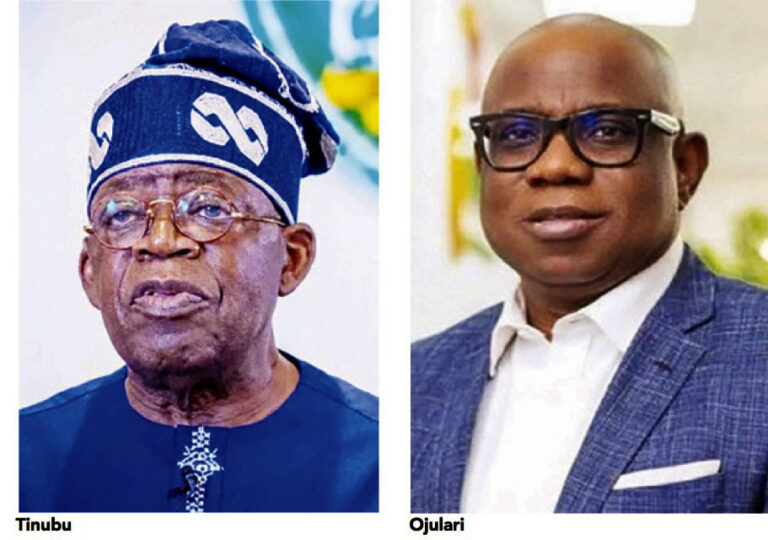
To understand the gravity of what has transpired, one must appreciate the political landscape into which Akpabio inserted this manoeuvre. The Senate President is from Akwa Ibom State in the South South geopolitical zone, a zone that, as Akpabio himself has repeatedly noted with evident pride, had not produced a Senate President in approximately 45 years, the last being Joseph Wayas. His emergence in 2023 was part of the political bargain that brought President Bola Ahmed Tinubu to power, a settlement that acknowledged Southern Nigeria’s long exclusion from the upper chambers of legislative authority. But the same Tinubu administration that sanctioned his rise is now being reported as uncomfortable with his attempt to extend it on his own terms and at the expense of a larger national calculation.
President Tinubu and South East leaders are understood to be pushing for the Senate President of the 11th Assembly to emerge from the geopolitical zone, a region that has not held that office since 2007. Akpabio’s rule change, by locking out first-term senators from ever contesting presiding offices in the assembly they enter, directly obstructs this possibility.
A senator arriving from the South East in 2027 would, under the amended rules, be constitutionally ineligible to contest the Senate presidency regardless of the strength of support behind him. The Presidency has invested enormous political capital in managing the South East question. Akpabio’s gambit threatens to unravel that investment in a single legislative sitting.
Tinubu’s administration has invested considerable political capital in managing the South East question carefully, incorporating Igbo voices into his coalition and signalling, through various gestures, that their long exclusion from the apex of federal legislative power is nearing its end. Akpabio’s gambit threatens to unravel that investment in a single legislative sitting. It also places governors who have been reliable pillars of the APC structure in an uncomfortable position, particularly those in the South East whose loyalty to the Tinubu project is partly premised on the expectation that political promises will be honoured.
Other News
There is also the separate matter of the relationship between the Senate and the Presidency on the question of legislative autonomy. Tinubu has already made clear, in a meeting with the Senate leadership over automatic return tickets, that governors are the leaders of the party in their states and must have a say on who gets tickets, explicitly rejecting the National Assembly’s bid for insulation from gubernatorial influence.
The President’s posture signals that the executive has no intention of allowing the Senate to become a self-governing political entity operating outside the broader party structure. Akpabio’s unilateral rewriting of the rules is precisely the kind of move that challenges that posture, and it has done so at a moment when the President is trying to consolidate, not complicate, his party’s 2027 architecture.
The question of how this ends is both legal and political. On the legal side, the amended Standing Orders may face a constitutional challenge. The Nigerian constitution does not vest in the Senate the power to alter the qualifications for its own leadership in ways that effectively create new eligibility criteria beyond what the constitution specifies. Senators and their legal advisers are already examining the amendment for the pressure points at which it might be successfully challenged in court. If such a challenge succeeds, the entire exercise will have been not only politically damaging but judicially futile.
On the political side, Akpabio faces a more immediate and more dangerous problem. He has pitched himself against too many forces simultaneously. The governors are unhappy. The Presidency is reportedly uncomfortable. The South East is watching with quiet fury. And within the Senate itself, the confrontation with Oshiomhole, played out in full view of the nation’s cameras, has demonstrated that this is not a chamber quietly united behind its president. It is a chamber in contest.
The solidarity that Akpabio displayed in the 2023 election of the Senate leadership has frayed considerably. What was once a coalition is now a negotiation, and the terms are being contested in real time.
One credible scenario is a reversal, quiet or otherwise, brokered by the Presidency as the price of restoring the larger political peace. Tinubu has shown both in the matter of return tickets and in his management of more combustible crises that he prefers managed outcomes to protracted conflicts. If pressure from the Presidency and governors intensifies, Akpabio may find that the rules he amended with such visible confidence are amended again, this time without his blessing. That would be a profound humiliation for a presiding officer whose political brand rests substantially on the projection of strength.
Another scenario is that the amendment holds, the legal challenges fail, and Akpabio enters 2027 as the unchallenged favourite for the Senate presidency of the 11th Assembly. In this version of events, the short-term tensions with the Presidency are absorbed, the South East question is managed through other compensatory mechanisms, and Akpabio’s gamble pays off. Nigerian political history offers more than a few precedents for this outcome. Audacity, in this democracy, has often been rewarded simply because the institutions designed to check it have lacked the will to do so consistently.
The most likely outcome, however, lies somewhere between these poles. Akpabio retains significant leverage as a sitting Senate President with the authority to interpret the very rules he has written, surrounded by loyalists who control key procedural levers. But the forces arrayed against him are not peripheral. They include the Presidency, influential governors, a bloc of senators with their own ambitions, and the larger expectation of a geopolitical rebalancing that has become, in effect, a political promise to an entire region. That is a great deal of pressure on a single amended standing order.
What is certain is that the 10th Senate, with more than a year of its life still before it, has entered its most turbulent and consequential chapter. The drama that erupted in the chamber this week is not the end of anything. It is, unmistakably, the beginning.